Village building or garden
Close a door between the animal and people if you can do so without nearing it. Keep children and pets inside and note the last place you saw it.

Mulgoa has a village centre, creek-side land and larger rural blocks. If a snake appears, first keep people and pets away. Snakes in the City can discuss professional capture and removal without asking you to approach, identify or corner the animal.
Licensed NSW snake catcher · licence MWL000102655. Availability is confirmed when you call; no response time is promised.
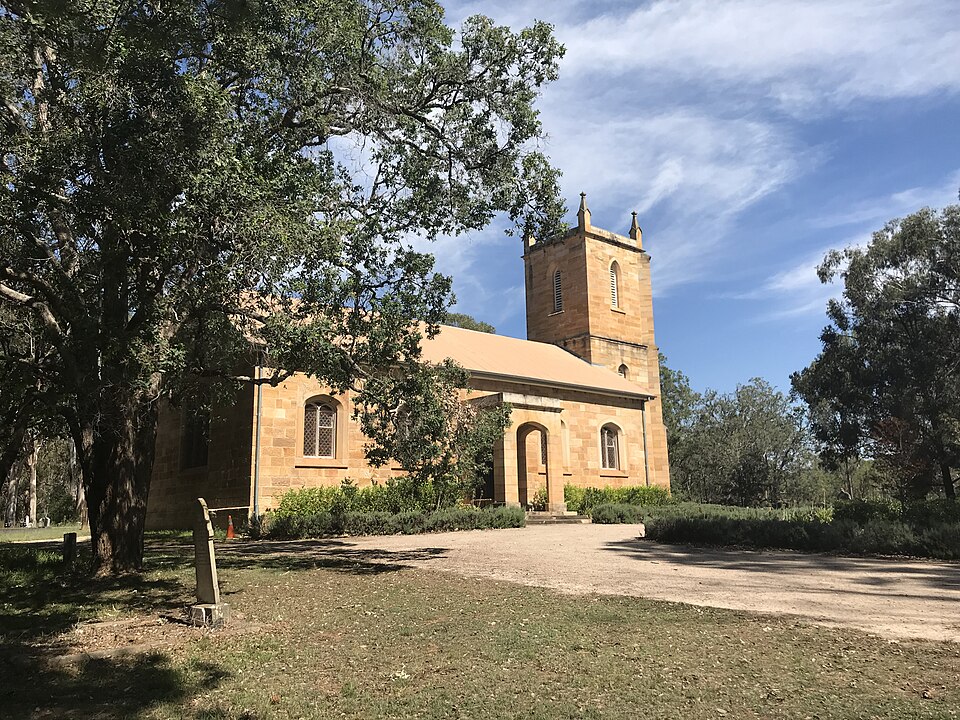
Penrith City Council describes Mulgoa Valley as a rural landscape of creek flats, undulating agricultural land, wooded hills and estate gardens, running from Wallacia toward the Glenmore Park urban fringe. Its Mulgoa and Wallacia village study places Mulgoa village on the valley floor, with land falling east towards Mulgoa Creek and open forest around St Thomas’ Church to the north. These are landscape descriptions, not a record of snakes at an individual property.
Close a door between the animal and people if you can do so without nearing it. Keep children and pets inside and note the last place you saw it.
Stop work and hold people back from stored materials, machinery and long grass. Leave the gate and access route clear for a professional; do not dismantle a stack to look for the snake.
Stay on a safe path or cleared area. Do not enter thick vegetation, a gully or the adjoining reserve to follow an animal that has moved away.
Move away calmly and give the animal an escape route. Do not handle, trap, kill or attempt a close photograph. If it is still visible, watch only from a safe distance. If it disappears, remember the last confirmed position and keep that part of the property undisturbed.
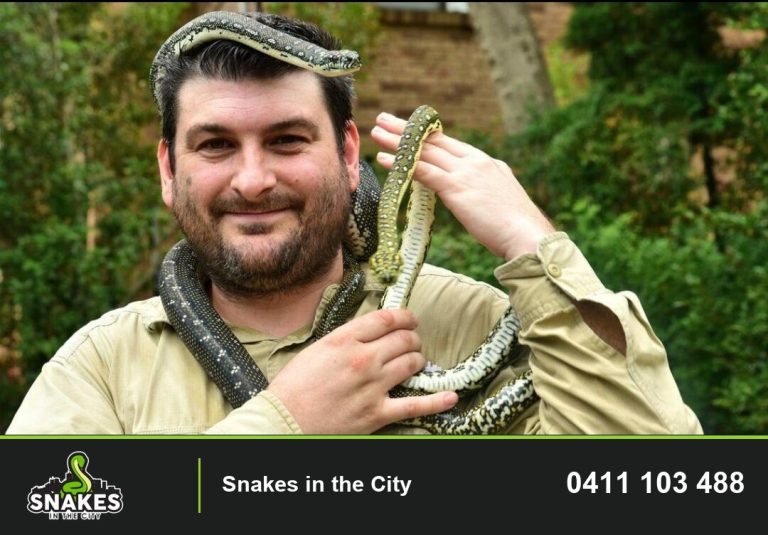
Tell the catcher the road entrance and gate, whether a dog or other animal is secured, whether anyone could have been bitten, and the animal’s last known position. Say if the sighting was inside a building, beside a shed or out in a paddock. You do not need to name the species. Snakes in the City will confirm whether help can be arranged when you call 0411 103 488.
The NSW National Parks page for Mulgoa Nature Reserve confirms a protected reserve in the area. It does not mean a snake seen near the reserve came from it, or that a caller should enter it to search.
Healthdirect treats every suspected snakebite as a medical emergency, even if the person initially feels well. Ask for an ambulance. Keep the person still. For a bitten limb, apply a firm pressure-immobilisation bandage over the bite and along the limb, then splint it; follow the emergency operator’s instructions. Do not wash the bite, use a tourniquet, cut or suck the wound, or try to catch the snake. Do not have the person walk or drive themselves.
Nepean Hospital, Derby Street, Kingswood NSW 2747, has a 24-hour emergency department. The ED entrance is Gate 7, Somerset Street. Hospital switchboard: (02) 4734 2000. For suspected snakebite, call 000 first rather than driving in.
If a pet may have been bitten, keep it as still as practicable and call a vet immediately. Nepean Animal Hospital, 50 Mulgoa Road, Regentville NSW, lists 24/7 emergency care including public holidays: (02) 4733 3456. Call first to confirm the right care and alert the team before travelling. This is a veterinary hospital, not the human Nepean Hospital.
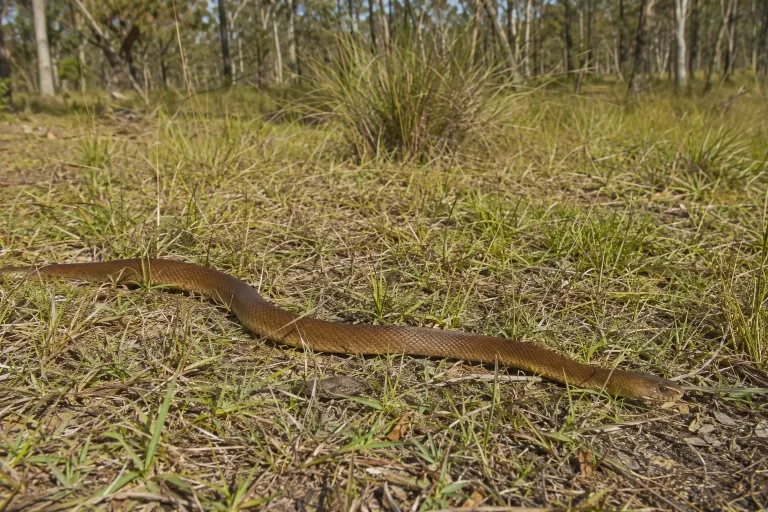
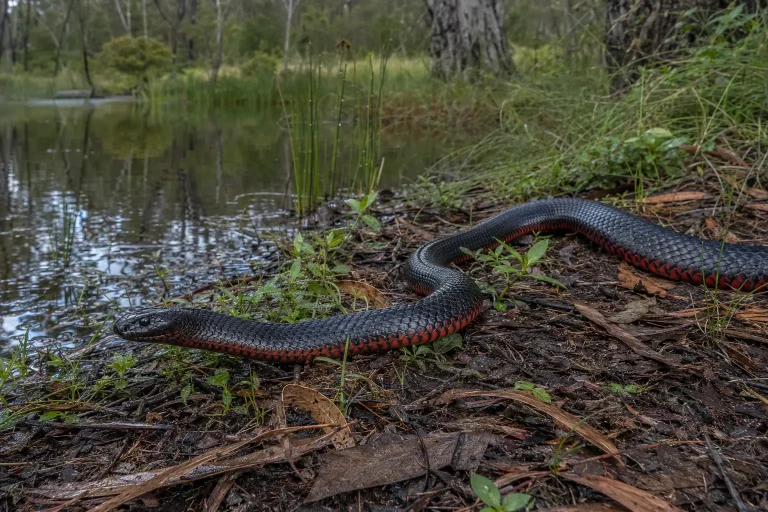
The Australian Museum’s eastern brown snake account and its red-bellied black snake account describe species that occur in eastern NSW. The latter is often associated with moist habitats such as creeks and farm dams. These are regional possibilities, not confirmed Mulgoa sightings. Colour and a quick glimpse are not a safe basis for identification.
Only when the animal is gone and it is safe to do so, reduce easy shelter close to buildings: maintain grass, tidy loose materials, manage rodent attractants and keep doors and gaps in good repair. Do not reach into a pile or under a shed where a snake may still be present. On a larger block, focus on the immediate living and work areas rather than assuming every creek line or paddock can be made snake-free.
For broader advice, use the site’s snake safety guidance and removal services. This page does not claim a particular Mulgoa sighting, call-out or response time.
Looking for broader wildlife context? The mapped place point for Mulgoa falls in square B5 of our 2025 Sydney-region observation report. A suburb can extend into neighbouring squares; this is an orientation guide, not a suburb boundary map.
View square B5 around Mulgoa in the observation report →
Counts apply to the whole square, not each suburb listed. A suburb appearing in a square does not mean a snake was recorded in that suburb. These are public observation records, not SITC call-outs, unique snake totals or a measure of danger.
