Move back, then secure people
Move everyone away from stables and feed rooms. Bring pets and children behind a shut door by a route that stays well clear of the animal.

LOCAL THE HILLS SNAKE REMOVAL
A Kenthurst call may involve a homestead, orchard, nursery, stable yard, dam or machinery shed spread across several hectares. The safest first step is to protect people and animals, then give an exact property location rather than searching.
Good scene control in Kenthurst begins with distance and one reliable observer. Leave nurseries and machinery sheds unchanged, and do not test a snake’s behaviour by approaching it.
Move everyone away from stables and feed rooms. Bring pets and children behind a shut door by a route that stays well clear of the animal.
Choose a protected view suited to Kenthurst: glass, a vehicle, an upper landing or another solid barrier. If no such view exists, retreat and keep the final location in mind.
Anchor the report to dams, troughs and irrigation: name the exact wall, gate, bay, paddock, path or object and the direction the snake took. Do not step closer for a photo.
Call Snakes in the City with the Kenthurst address or entrance pin, the last-seen time, horse properties access and any people, animals, machinery or locked areas involved.
Keep the patient completely still at the Kenthurst scene and call Triple Zero. Apply a broad pressure immobilisation bandage over the bite and along the whole limb if available, splint it, and follow the operator. Do not wash, cut or suck the bite, use a tourniquet or pursue the snake. NSW Health requires emergency assessment for every suspected bite.
Kenthurst belongs to the semi-rural Hills landscape. Large lots, sandstone ridges, remnant bush, dams, creek lines, paddocks and commercial horticulture create a broad wildlife interface. Feed stores and sheds can sustain rodents, while irrigation, troughs and dams support frogs. Those resources may influence snake movement without meaning the property is poorly maintained.
The Hills Shire Council identifies Pitt Town Road in Kenthurst as a crossing over Cattai Creek. It also lists nearby Blue Gum Creek Reserve as a bushcare site protecting Cattai Alluvial Tall Forest. For nearby properties, tell the catcher which road, bridge, driveway or creek-facing side the snake was last seen on, and do not enter wet vegetation to search.
Long driveways and multiple gates can cost valuable time if the location is vague. Send a map pin, describe the entrance, unlock only the necessary gate and nominate a person who can meet the catcher without walking through the sighting area. Note whether electric fences, livestock, dogs, machinery or chemical stores are present.
Kenthurst’s landscape can plausibly support eastern brown snakes around open ground and rodent-rich sheds, red-bellied black snakes near water and frogs, diamond pythons around wooded homesteads and roofs, and smaller species beneath rocks or vegetation. Conditions change within one property, so the paddock, building and last line of travel are more useful than the postcode.
Hay, pellets, poultry feed and tack storage can attract rodents and provide cover. Stop work, keep horses in a separate yard and do not pull bales apart.
Water and frogs can draw reptiles into shaded margins, pumps and pipework. Keep vehicles and stock back and avoid entering reeds or long grass.
Pots, pallets, weed mat, timber, engines and stored materials create many hiding places. Quarantine the aisle or bay and leave items in place for a planned search.
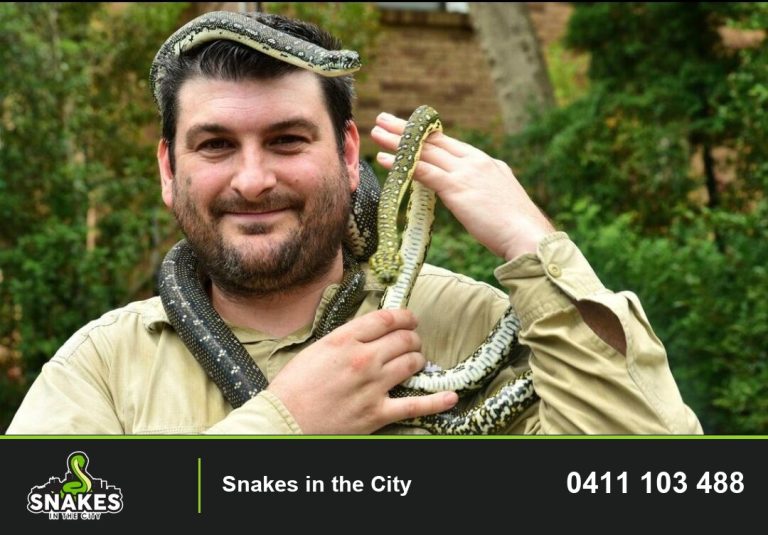
The photographs below come from Snakes in the City field work in northern Sydney. They show Harley and examples of eastern brown snake and other habitat-linked reptiles, not animals recorded at this particular Kenthurst property. Use them for context, never as a reason to move closer.
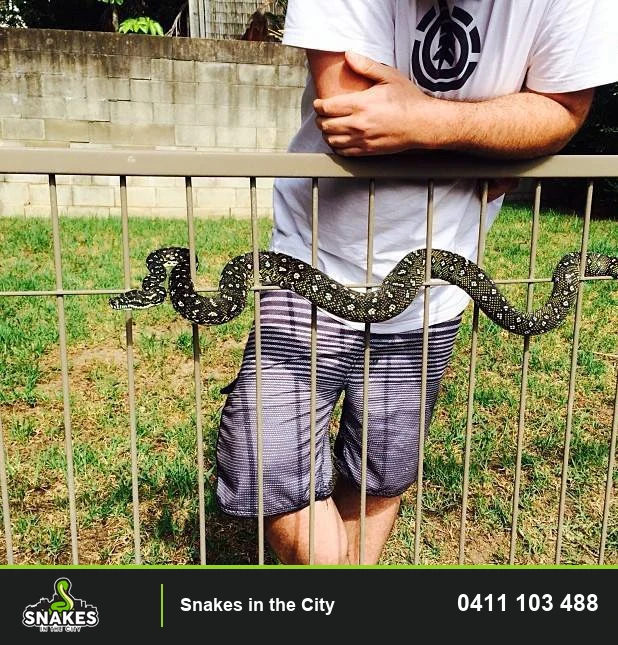
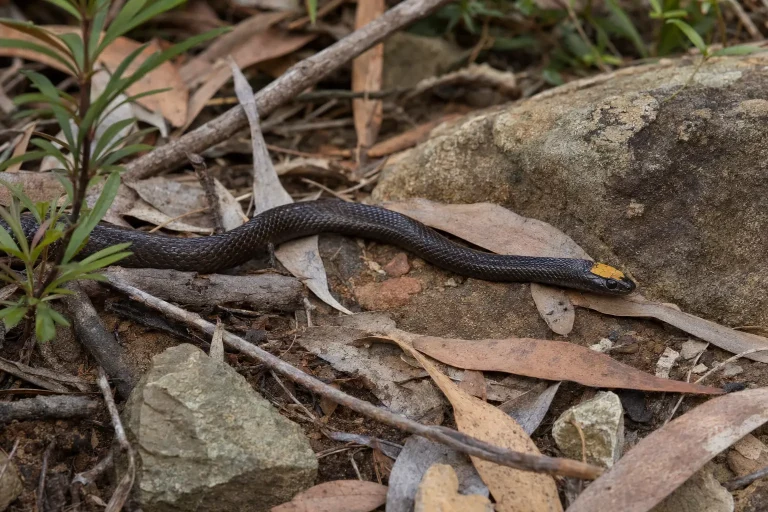
Kenthurst contains the conditions described below, but that does not make every listed species common at every address. Age, shadow, camera exposure and viewing angle alter markings. Keep the same safety margin until the individual animal is assessed.
A serious possibility in dry paddocks, feed areas, coops and sheds. Young animals may be banded, and adults range widely in colour.
May occur beside dams, creeks, trough overflows and irrigated garden areas. Keep stock and dogs from investigating.
Can occupy trees, shed rafters and homestead roof spaces while following rodents. It is protected wildlife and should not be trapped or moved by an unlicensed person.
Fast and slender, sometimes crossing sunny ground or taking cover under materials. Leave a wide buffer.
Small and secretive around sandstone, leaf litter and damp cover. Gloves do not make handling safe.
Move horses only via a route well away from the sighting. Keep dogs restrained, close the relevant yard and provide the stable, paddock or arena name.
Stop picking, mowing, spraying and forklift movement in the affected row. Mark the last pot stack, irrigation valve or pallet from a distance.
Keep doors closed between the sighting and occupied rooms. For sheds, leave roller doors, bales and machinery exactly as they were when the snake disappeared.
A snake lost beneath hay, pallets or machinery is not a reason to move those items. Isolate the bay, switch equipment off, remove ignition keys and note the final visible direction. On open acreage, stop people spreading out in a line to search. A large uncontrolled search increases exposure and destroys the most useful clue: the undisturbed last-seen point.
Around Kenthurst horse properties, maintenance can expose travel lines and reduce prey or shelter near people. It cannot seal a property from native wildlife. Treat “snake-proof” guarantees and plug-in, solar, vibration or chemical repellent claims with caution.
A suspected human bite in Kenthurst is a Triple Zero emergency; keep the patient still and wait for ambulance direction. The hospital below is shown for local orientation, not as an instruction to drive. If a pet may have made contact near stables and feed rooms, phone the emergency veterinarian and follow its movement and transport advice.
Call 000. Keep the patient and affected limb still; apply pressure immobilisation if available.
Corner Darcy and Hawkesbury Roads, Westmead
See the provider’s website for contact details
7/2 Capital Place, Rouse Hill
(02) 9129 5800
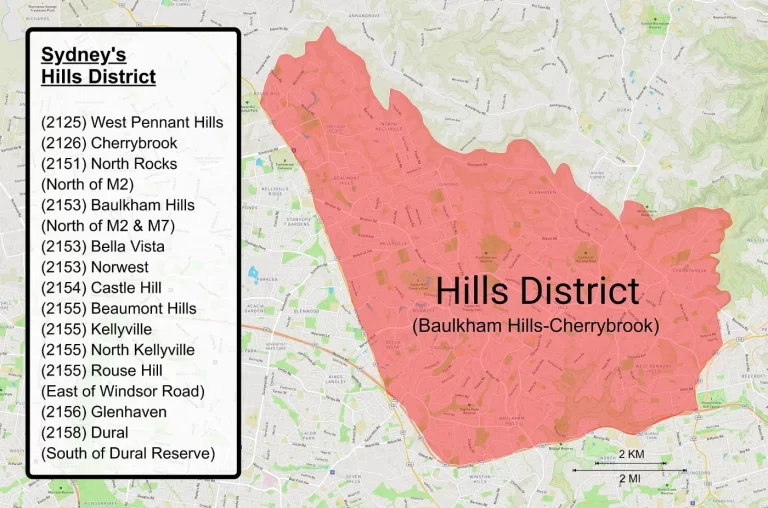
Use this Kenthurst map to confirm the correct suburb, then send the actual driveway, gate, building or campus entrance. On horse properties, a dropped pin can prevent delay; place it from safety rather than walking back into the affected zone.
Send a dropped pin, give the gate and driveway description, name the paddock or building and arrange a safe meeting point. Mention locked gates and animals before arrival.
No. Moving heavy cover can expose a concealed snake at close range and may drive it deeper into the stack.
Keep people and horses away without crossing its route. If a horse may have been bitten, contact a veterinarian urgently and minimise movement as directed.
Feed and rodents can create hunting opportunities. Secure feed and address rodents, but never assume a snake at a coop is harmless or there only for eggs.
No. Water is part of the rural landscape. Maintain safe sightlines and access around regularly used infrastructure rather than relying on an impossible guarantee.
The scene can be assessed, but access and safe disassembly depend on the machine. Turn it off, remove keys and do not start or tow it.
See how capture, scene assessment and humane removal apply beyond this Kenthurst guide.
Find adjacent coverage while keeping the detailed guidance on this page specific to Kenthurst.
Build a response plan for orchards and nurseries before another active-season encounter.
The Kenthurst landscape, first aid and emergency contacts were verified against council, NSW Health, hospital and veterinary material. Use the linked council, health and veterinary sources for further information, and phone the provider to confirm current arrangements.
For a nearby sighting, use the service guide for the suburb where the snake is located.
View local snake safety and contact information for Glenhaven.
View local snake safety and contact information for Dural.
View local snake safety and contact information for Annangrove.
On a large property, the gate, building and last-known position matter more than the street address alone.
Give the gate number, a dropped pin and a landmark on the driveway. Name the exact area: house yard, stable aisle, tack room, feed shed, nursery bay, machinery shed, dam, trough or orchard row. Secure dogs before the catcher enters and explain any livestock movement that cannot be done safely.
If anyone may have been bitten, call 000, keep them still and follow emergency instructions. Do not attempt to collect the snake.
Kenthurst sits within The Hills metropolitan rural area. Council records Cattai Creek crossings in the locality and identifies Kenthurst parks and natural areas in its land-management work. Acreage properties may combine permanent water, irrigation, animal feed, greenhouses, timber, machinery and older outbuildings across one site.
Each feature changes the search and the risk. Rodent activity around feed is relevant. Frogs around wet areas are relevant. A warm shed or roof space is relevant. None proves which species is present, so the animal should remain unidentified until assessed.
Horse property: Move horses only if a safe route avoids the snake. Close the stable aisle to people and leave feed, hay and bedding in place.
Nursery or orchard: Give the row, bench, greenhouse or irrigation landmark. Stop forklifts, trolleys or spray work in the immediate zone. Do not lift pots or ground sheets.
Machinery and storage: Park equipment and prevent anyone entering from a second doorway. State whether the snake moved under a vehicle, pallet, corrugated sheet or wall.
Keep clear of the snake, secure people and animals, preserve the last-known route and call Snakes in the City with precise Kenthurst access details.
Suspected human snake bite: call 000.
