
1
Local snake removal · available 24/7
Snake Catcher Hills Shire
Snakes in the City arranges licensed snake capture and humane relocation across the Hills District and Hills Shire for homes, strata properties, workplaces and managed sites. Keep people and pets clear, note the last-seen position from safety, and call 0411 103 488 with the actual suburb and street address. Our team confirms catcher availability, the call-out fee and estimated arrival before attendance is arranged.
✓ Experienced local snake catcher✓ Homes, schools and commercial properties✓ Clear safety guidance while help is arranged
Choose the guide for your address
For a Kellyville address, use our Kellyville snake-removal guide. For Beaumont Hills homes or managed sites, see the Beaumont Hills local snake-removal guide; for a Baulkham Hills address, use the Baulkham Hills property-access guide. For a property in North Kellyville or a home, strata property or workplace in Norwest, choose that suburb’s guide. Give the exact street and entrance when calling; the wider Hills district name alone is not enough to arrange access.What to do when you see a snake in Hills Shire
Create distance first. Do not identify, corner, touch, trap or kill the snake. Never put yourself between it and an escape route.
2
Watch safely
If it is safe, watch from behind a closed window, fence or other secure position. Note its last-known location without chasing it.3
Call Snakes in the City
Provide the address, access instructions, where the snake was last seen and whether it is indoors, outside, injured or trapped.Suspected snakebite: call 000 immediately
Keep the person still, apply a pressure immobilisation bandage if available, and wait for an ambulance. Do not wash the bite, cut or suck the wound, use a tight tourniquet, or try to catch the snake.Why snakes may turn up around Hills Shire
The Hills Shire includes natural creeks and rivers, rehabilitated channels, constructed wetlands, detention basins, urban bushland and rural land. Council planning material identifies extensive waterway environments and large areas of vegetation across the Shire. Local conditions therefore vary sharply between established suburbs, growth areas, business precincts and semi-rural properties. Within Hills Shire, conditions vary from street to street. Property layout, nearby open space, drainage, vegetation, construction activity and prey are more useful indicators than the suburb name alone. A snake may be passing through rather than living on the property. Water, prey, warmth and temporary shelter matter more than suburb boundaries.Three snake-removal settings across the Hills district
A suburb name alone does not tell a catcher where a snake may have gone or how to reach it. New estates, established bush and creek suburbs, and working acreage call for different access details. These guides include nearby Hills district service areas across council boundaries.
Growth corridor and new estates
In developing streets, a sighting may be beside temporary fencing, stored materials, drainage works or new landscaping. Keep children, workers and pets clear. Do not lift building supplies or enter long grass to search. Give the street access, lot or house number and last confirmed direction. See the Rouse Hill guide for expanding neighbourhoods, North Kellyville guide for newer residential blocks and Box Hill guide for new estates and worksites.Established bush and creek suburbs
Mature gardens, retaining walls, reserve boundaries and drainage lines can put concealed cover close to everyday paths. If a snake is near a door, play area or garden edge, redirect people and watch only from safety. Report the gate, side passage or last-seen hiding place; do not reach into foliage or rockwork. Explore the Castle Hill guide to parks and established gardens, Cherrybrook guide to bush-adjacent homes, Baulkham Hills guide to suburban creek corridors and West Pennant Hills guide to leafy, sloping properties.Acreage and rural Hills properties
Stables, feed and hay storage, nurseries, dams, sheds and machinery can spread a sighting across a large property. Pause work in that area and move people and animals away without passing the snake. Give the correct gate or access track and nearest paddock, shed or growing row; leave equipment and stored material untouched. Read the Dural guide for acreage and nurseries, Kenthurst guide for large rural blocks, Galston guide for horse properties and growing areas and Annangrove guide for sheds and acreage access.For any setting, keep your distance and call Snakes in the City on 0411 103 488 with the last confirmed location. A suspected bite is a Triple Zero (000) emergency.
Recent Hills field work
Locating a concealed snake at Box Hill
At a Box Hill property, Harley used an inspection camera to locate a red-bellied black snake beneath stored sheet metal before safely removing it. The published field report explains how locating the animal helped guide the removal. Read the Box Hill sheet-metal call-out report, or see our Box Hill snake-removal guide for homes and worksites.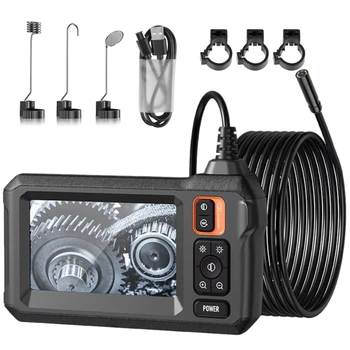
Places to check without putting yourself at risk
Do not search by reaching into concealed spaces. These are details to report to the catcher from a safe position.
Around buildings
- gaps under doors, gates and sheds
- garage edges, laundries and utility areas
- openings around pipes or wall penetrations
Gardens and yards
- dense groundcover and fence lines
- rock walls, pots and retaining structures
- pool equipment, compost and garden storage
Stored materials
- timber, roofing and building supplies
- pallets, machinery and stacked equipment
- areas showing rodent or frog activity
From the field: a Winston Hills pool rescue
A red-bellied black snake took shelter beneath concrete pool edging at Ulanda Place. Read how Harley Jones completed the three-hour poolside snake rescue in Winston Hills before the snake was humanely relocated.
Meet Harley and see regional snake habitat
These first-hand Snakes in the City photographs introduce Harley Jones and illustrate snakes and habitat relevant to the wider region. Our office confirms the available catcher for each booking. Species cannot be confirmed from a description alone; keep a safe distance and call for advice.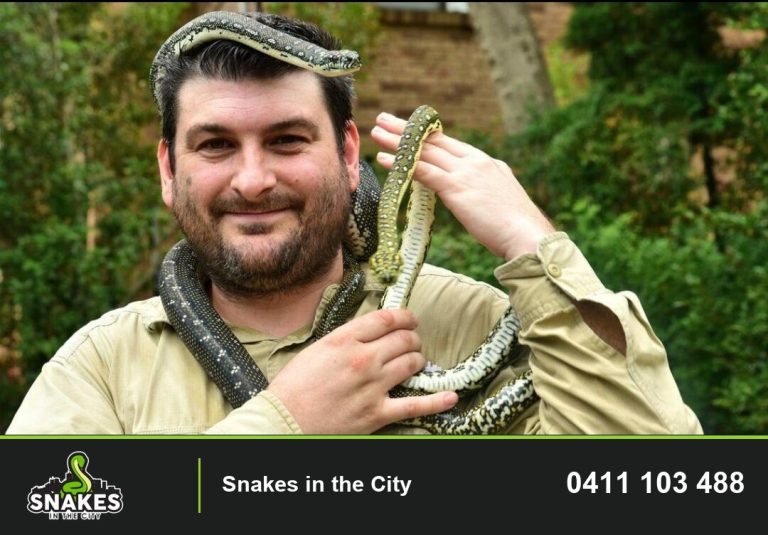
Snakes that may occur in The Hills and north-west Sydney
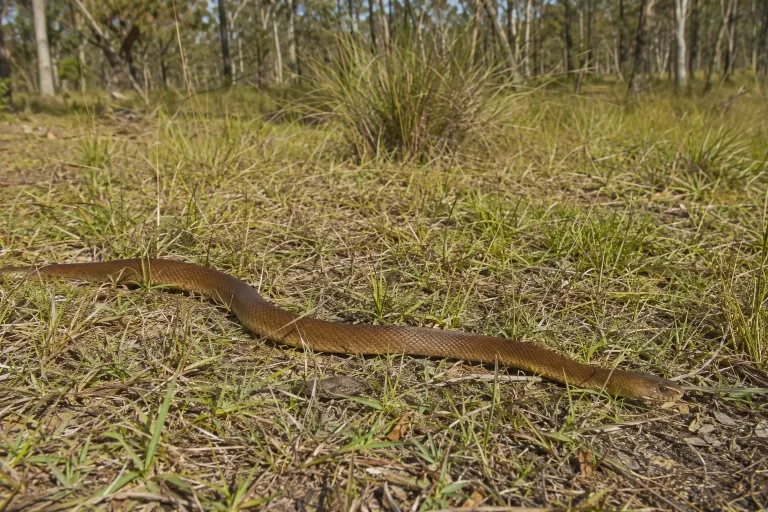
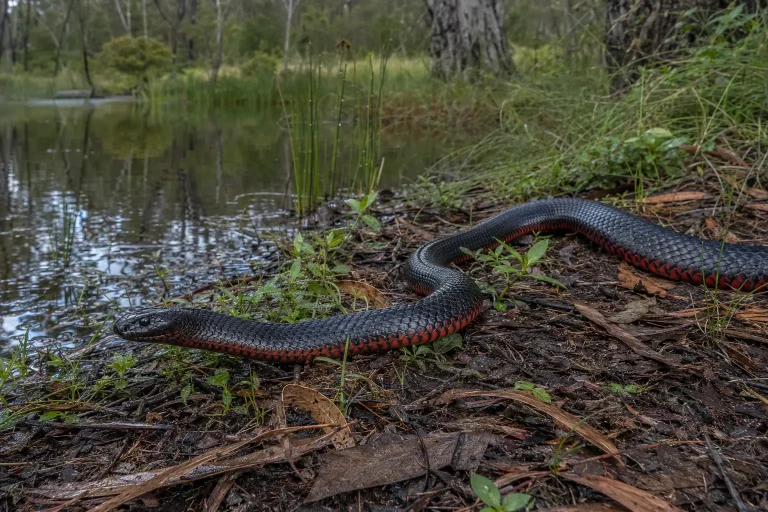
This is regional context, not a promise that either species occurs on every Hills Shire property. Never rely on colour alone: age, lighting and natural variation make quick identification unreliable.
Eastern brown snake
May use open ground and modified habitat where prey is present. Colour varies, so a brown-looking snake cannot be identified safely by colour alone.Red-bellied black snake
May occur around wetter corridors, creeks and drainage areas. Do not move closer to look for identifying markings.Making a Hills Shire property less attractive to snakes
No garden design can guarantee a snake-free property. The practical goal is to reduce concealed shelter and the food sources that attract prey.- maintain grass and garden edges so the ground is visible
- raise stored timber and materials where practical
- seal appropriate building gaps with pest-proof materials
- control rodents and clean spilled pet, bird or poultry feed
- trim dense vegetation away from commonly used doors and paths
- wear enclosed footwear and gloves around concealed outdoor areas
Urgent medical and veterinary contacts for the region
These verified contacts are included for safety, not as endorsements. A human snakebite is always a 000 emergency; do not drive the patient to hospital yourself unless emergency services direct you.
Westmead Hospital
176 Hawkesbury Road, Westmead NSW 2145 Hospital information: (02) 8890 5555 Suspected snakebite: call 000, not the hospital switchboard.SASH Western Sydney
1 Rowood Road, Prospect NSW 2148 24/7 veterinary option: (02) 8609 9444 Keep pets away from the snake and call the veterinary team for transport advice.Frequently asked questions
How quickly should I call after seeing a snake?
Call while you still know where it is, provided you can do so safely. A snake can disappear into vegetation, a roof space or stored material quickly.Should I send a photograph?
Only take a photograph from a safe distance using zoom and a physical barrier. Never move closer or block the snake to get a clearer image.Can I shut the snake in a room?
If it is already inside a room and you can close the door without going near it, do so and place a towel along the door gap. Do not re-enter.Does a tidy yard stop every snake?
No. Maintenance can reduce cover and prey activity, but snakes can still pass through well-kept Hills Shire properties.What should I tell the catcher?
Give the exact address, safest access point, last-known position, whether the snake is indoors or outside, and any nearby pets, people or site hazards.More snake safety information
Removal services
View snake removal servicesService areas
View Greater Sydney service areasSafety guidance
Read snake safety adviceMore service areas in The Hills
Explore other Snakes in the City service pages for this part of Greater Sydney.Snake Catcher Kellyville
View local safety, property and contact information for Kellyville.Snake Catcher Kellyville Ridge
View local safety, property and contact information for Kellyville Ridge.Snake Catcher Kenthurst
View local safety, property and contact information for Kenthurst.Snake catcher service areas across The Hills
Choose a local suburb guide below, including Dural, Galston and Winston Hills. For all other locations, call with the exact address to confirm current availability.
Snake Catcher Annangrove
Local snake safety, property and contact information for Annangrove.Snake Catcher Baulkham Hills
Local snake safety, property and contact information for Baulkham Hills.Snake Catcher Beaumont Hills
Local snake safety, property and contact information for Beaumont Hills.Snake Catcher Bella Vista
Local snake safety, property and contact information for Bella Vista.Snake Catcher Box Hill
Local snake safety, property and contact information for Box Hill.Snake Catcher Castle Hill
Local snake safety, property and contact information for Castle Hill.Snake Catcher Cherrybrook
Local snake safety, property and contact information for Cherrybrook.Snake Catcher Dural
Local snake safety, property and contact information for Dural.Snake Catcher Galston
Local snake safety, property and contact information for Galston.Snake Catcher Glenhaven
Local snake safety, property and contact information for Glenhaven.Snake Catcher Kellyville
Local snake safety, property and contact information for Kellyville.Snake Catcher Kellyville Ridge
Local snake safety, property and contact information for Kellyville Ridge.Snake Catcher Kenthurst
Local snake safety, property and contact information for Kenthurst.Snake Catcher Middle Dural
Local snake safety, property and contact information for Middle Dural.Snake Catcher North Kellyville
Local snake safety, property and contact information for North Kellyville.Snake Catcher Norwest
Local snake safety, property and contact information for Norwest.Snake Catcher Rouse Hill
Local snake safety, property and contact information for Rouse Hill.Snake Catcher West Pennant Hills
Local snake safety, property and contact information for West Pennant Hills.Snake Catcher Winston Hills
Local snake safety, property and contact information for Winston Hills.Snake Catcher Glenorie
Local snake safety, property and contact information for Glenorie.Need a snake catcher in Hills Shire?
Keep your distance and call Snakes in the City. If anyone may have been bitten, call 000 immediately.Explore the Sydney-region snake observation report
Our 2025 public-data report provides broader regional context. A verified single-square reference is not available for this page, so no specific grid square is assigned. The report covers a defined rectangle, not every area served by SITC.
Explore the observation report and its coverage →
Counts apply to the whole square, not each suburb listed. A suburb appearing in a square does not mean a snake was recorded in that suburb. These are public observation records, not SITC call-outs, unique snake totals or a measure of danger.