
Local guide
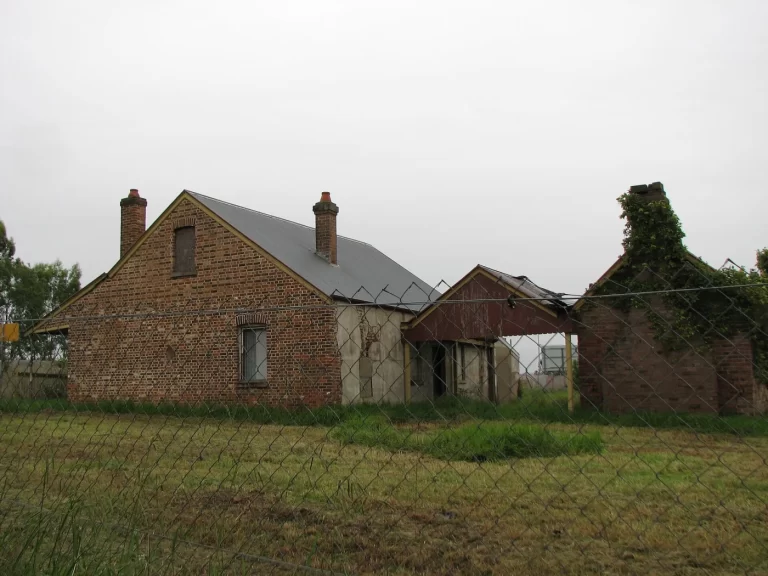
Old Box Hill and new Box Hill meet at the fence line
The former Box Hill Inn is a reminder that this was a Windsor Road rural district long before today’s estates. Council now describes a roughly 973-hectare release area, with new parks, raingardens and waterways being delivered as development progresses.
For snake behaviour, that transition matters. Cleared blocks provide warmth and open travel; long grass and temporary materials provide cover; and the Killarney Chain-of-Ponds and First Ponds Creek catchments keep water and prey moving through the precinct. Calls can come from brand-new homes as readily as acreage sheds.
On the ground
Box Hill property situations we plan for
Homes beside unfinished stages
A completed backyard may share a boundary with long grass, stockpiles or active earthworks. Keep the snake in view from inside rather than walking the boundary.
New turf and retaining walls
Irrigation attracts frogs and insects, while sleepers and blockwork create shaded gaps. Do not dismantle a wall after a sighting.
Rural sheds and feed stores
Grain, bird seed and animal feed support rodents. The safest inspection keeps clear access around shelving and machinery.
Stormwater and raingardens
Designed drainage areas are valuable habitat as well as infrastructure. A snake nearby may be following frogs or moving along the vegetated edge.
A Box Hill call-out beneath stored sheet metal
Our published Box Hill field report describes how Harley used an inspection camera to locate a red-bellied black snake hidden beneath sheet metal before removing it. Read the Box Hill sheet-metal call-out report for the circumstances and the equipment used.
Local habitat
Snakes that may be encountered around Box Hill
Open ground and water-managed estates create different niches within the same suburb. These species are relevant to the broader north-west Sydney landscape, but every sighting still requires case-by-case identification.
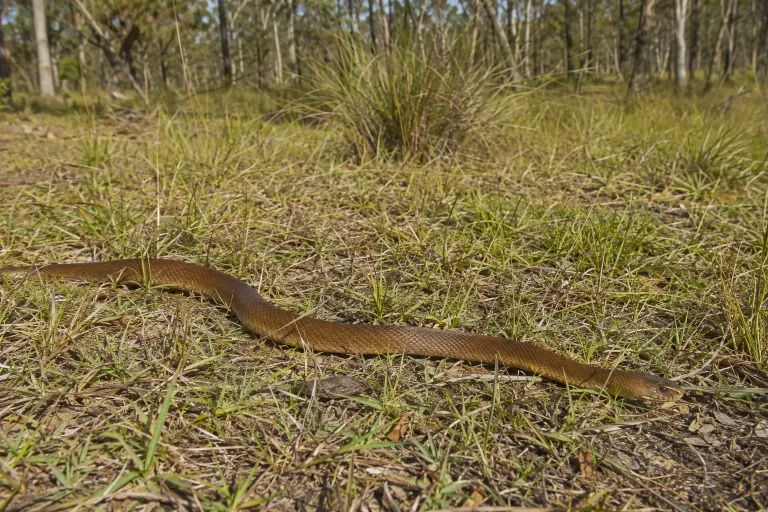
Eastern brown snake
Well suited to open country and places where mice are available. It can move quickly through sparse grass and is highly venomous.
Red-bellied black snake
More likely around drainage lines, wetlands, farm dams and frog habitat, though it can travel across drier ground between them.
Yellow-faced whip snake
A smaller garden visitor that hunts lizards and may shelter beneath thin materials, garden edging or warm paving.
If you see one
A calm response protects everyone
Most risky encounters happen when someone tries to catch, hit or force a snake out of cover. The safest useful action is to reduce activity and preserve the last known location.
Stop work
Turn off mowers or machinery and move workers, children and pets away.
Watch from cover
Use a window, vehicle or solid barrier. Do not follow the snake across an open lot.
Share site access
Give the street, lot or stage details and mention construction fencing or locked gates.
Leave materials alone
Do not lift sheeting, pallets or turf rolls after the snake disappears beneath them.
Construction and new-estate calls
A Box Hill call often begins with a safe site handover
If the site is in North Kellyville rather than Box Hill, use our North Kellyville snake-removal and property-access guide. Give the registered suburb, street and lot number as well as the controlled entrance; a development or estate name alone may not identify the right property.
A finished home can share a boundary with active earthworks, temporary fencing and stored materials. On a civil or building site, the immediate job is not to search for the snake: it is to stop activity in a defined area, preserve the last reliable sighting and give one person responsibility for access.
Set a stop-work zone
Pause machinery, deliveries and foot traffic around the sighting. Keep the exclusion area larger than the last-seen point and do not send workers through long grass to look.
Fix the last position
Use a lot number, survey peg, fence panel, stockpile or machine as the landmark. A dropped pin is useful on streets that are not yet shown correctly in navigation apps.
Nominate one site contact
Give the catcher the supervisor’s mobile number, gate or compound entry and the safest place to meet. Mention induction requirements before arrival.
Leave cover undisturbed
Do not lift pallets, turf rolls, pipe bundles, formwork or landscaping materials. Disturbing the refuge can send the animal into a less visible part of the site.
Hills Shire planning describes Box Hill as a roughly 973-hectare release area with Killarney Chain-of-Ponds and First Ponds Creek waterways, detention systems and public raingardens. Those verified landscape facts explain why drainage, new housing and retained rural edges can sit close together; they do not prove a particular species is frequent at any address.
Around the property
Practical ways to reduce surprise encounters
Nothing can make an Australian property completely snake-proof. These simple changes remove shelter and make movement easier to notice without harming native wildlife.
Which gaps deserve a final check on a new Box Hill home or building site? After the snake is gone, review the lower corners of garage doors, openings around pipes and conduit, meter-box surrounds, drainage-pit edges and offcuts left beside fences. Ask the appropriate builder or licensed trade to close structural gaps with durable materials. Do not push mesh into a void that may still contain wildlife, and never block stormwater, ventilation or essential services.
- Keep temporary building waste and spare materials in raised, orderly stacks.
- Seal garage-door corners and pipe penetrations once construction is complete.
- Mow usable yard areas and maintain a clear line along boundary fences.
- Store animal feed and grass seed in hard, lidded containers.
- Inspect pool equipment, meter boxes and outdoor toys after nearby earthworks.
- Ask landscapers to check before moving sleepers, rock or rolled turf.
Do not try a DIY capture
Do not use a shovel, net, bin, glue trap or chemical repellent. Snakes are protected native wildlife, and an attempted capture sharply increases the chance of a bite.
Keep the scene quiet and call 0411 103 488.
People and pets
Emergency care near Box Hill
These contacts are included so local families can act quickly. They do not replace emergency instructions: for any human snake bite, call 000 and wait for an ambulance.
Call Triple Zero
A suspected snake bite needs an ambulance. Keep the person still; do not wash the bite or try to catch the snake.
Blacktown Hospital
Blacktown Road, Blacktown. The 24-hour emergency department provides acute care. Ambulance control should choose the hospital for a bite patient.
VECA Norwest
7/2 Capital Place, Rouse Hill. Open around the clock for pet emergencies and no appointment is required.
Finding the right property
Some Box Hill streets and estate stages are still new. Include the postcode, nearest cross street and any access instructions when you call so the catcher reaches the correct side of the property.
Straight answers
Box Hill snake questions
Do construction sites make snakes move?
Earthworks can remove shelter or disturb an animal already using a block. That may produce a visible crossing, but it does not mean snakes are being “sent” deliberately into nearby homes.
What if the street is too new to appear on a map?
Send a pin, estate stage, nearest established road and clear gate instructions. Stay on the phone if access is confusing.
Can I hose a snake away from my garage?
No. Hosing can make its movement unpredictable and may push it into clutter or the house. Close the internal door and call.
Are snakes attracted to new pools?
Water itself is only one factor. Frogs, landscaping, warm paving and sheltered pool equipment can make a pool zone useful habitat.
Nearby service areas
Snake removal around Box Hill
Adjacent suburbs have different combinations of new housing, drainage, open land and established properties.
Local references
Useful sources behind this guide
Habitat, emergency and place information has been cross-checked against government, museum and service-provider sources. Image credits and reuse licences are linked with the photographs.
Local and nearby snake-catcher guides
These links connect Box Hill with nearby service pages and its wider regional service area.
