If it is outdoors
Bring children and pets away from the area. Observe from a doorway, window or other protected position if you can; otherwise simply report the last place it was seen. Do not follow it along a fence, creek bank or garden edge.
North St Marys has quiet residential streets, industrial yards and a vegetated Ropes Creek edge. If you see a snake in any of those settings, keep your distance and call Snakes in the City with its last-known position.
There is no need to identify the snake before asking for help. The useful information is where it was, whether it is still visible and whether anyone may have been bitten.
Bring children and pets away from the area. Observe from a doorway, window or other protected position if you can; otherwise simply report the last place it was seen. Do not follow it along a fence, creek bank or garden edge.
Clear the room. Close a door only if you can reach it without moving toward the snake. Keep others from reopening it. Never try to pin, trap or handle the animal with a broom or container.
Call 000 and ask for an ambulance. Keep the person still; apply a pressure-immobilisation bandage and immobilise the limb following Healthdirect’s guidance. Do not wash the bite, use a tourniquet or spend time trying to identify or catch the snake.
Penrith City Council’s urban study describes older houses and substantial private gardens, an industrial area with large units and hard-standing space, and the Ropes Creek corridor on the suburb’s east. This is local context for a safer call, not evidence of a sighting at any listed place.
In a garden, note the fence, shed or path nearest the last sighting without checking under cover. Council lists Wattle Avenue Reserve and Poplar Park as local public spaces; keep children away from any affected area.
Stop work around a loading bay, stock pile or fence line. Tell staff which zone is out of bounds, and give the catcher the correct vehicle gate and site-contact number. Do not shift pallets to locate the snake.
Council’s Ropes Creek Bushcare page describes woodland restoration near Debrincat Avenue and Boronia Road. A walker or worker should move away from long grass and allow space, not search the bank.
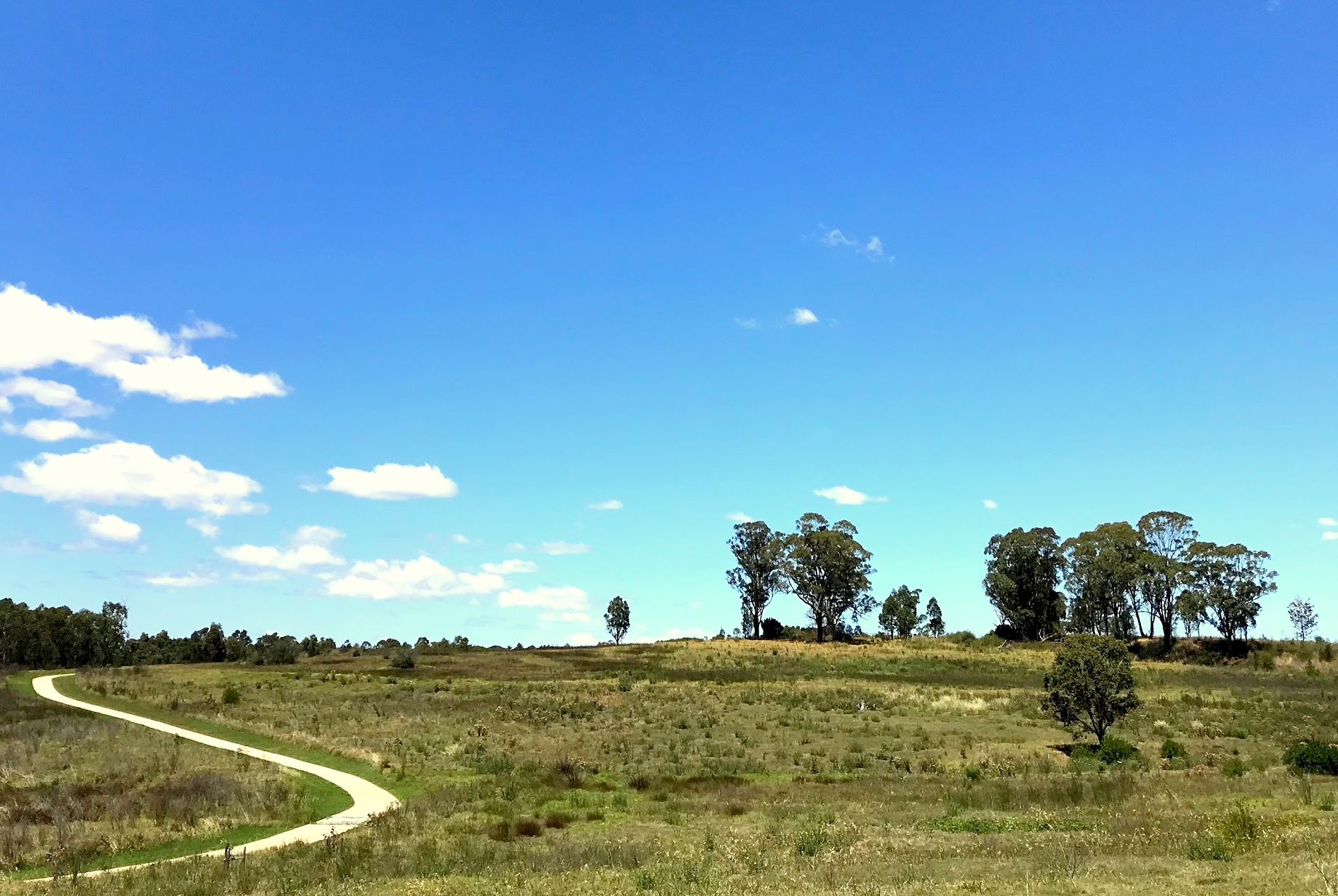
Western Sydney’s grassy woodland is helpful background to the broader landscape, but the picture below was not taken in North St Marys. Nor does its presence mean a snake was seen on a particular street or at the Bushcare site.
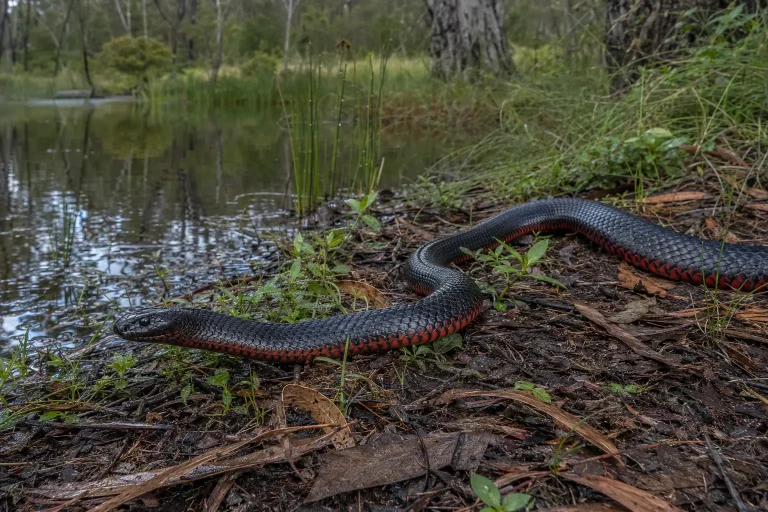
The Australian Museum says eastern brown snakes use open and modified habitats; its red-bellied black snake account links that species more often with moist creek and wetland areas. These are regional possibilities only—not verified North St Marys records. Do not decide safety from colour or habitat alone.
Do not delay the ambulance call to drive to hospital. NSW Health lists Mount Druitt Hospital as a nearby public emergency department: 75 Railway Street, Mount Druitt NSW 2770, (02) 9881 1555. The emergency operator can direct the safest next step.
SASH Western Sydney lists 24/7 emergency care at 1 Rowood Road, Prospect NSW 2148; (02) 8609 9444. Keep the pet as still as practical, keep people clear of the snake and call the clinic before transport for advice.
The links follow the adjoining town centre, western rail-side suburbs and Ropes Creek corridor.
See the Penrith and Lower Blue Mountains area hub, removal services and snake-safety guidance for more.
Landscape: Penrith City Council’s urban study, playspaces and Bushcare group. Species and first aid: Australian Museum and Healthdirect, linked above. This guide does not assert a Snakes in the City visit, customer review or snake sighting at North St Marys.
Tell us where the snake was last seen; stay back. For a suspected bite, call 000.
Looking for broader wildlife context? The mapped place point for North St Marys falls in square C4 of our 2025 Sydney-region observation report. A suburb can extend into neighbouring squares; this is an orientation guide, not a suburb boundary map.
View square C4 around North St Marys in the observation report →
Counts apply to the whole square, not each suburb listed. A suburb appearing in a square does not mean a snake was recorded in that suburb. These are public observation records, not SITC call-outs, unique snake totals or a measure of danger.
