
Move people away
Bring children and pets inside. If the snake is indoors, close a door only if you can do so without approaching it. Do not block its exit or chase it through the property.

If a snake appears around a Colyton house, shop or worksite, leave it room to move, take people and pets away, and tell Snakes in the City where you last saw it. Do not try to catch it.
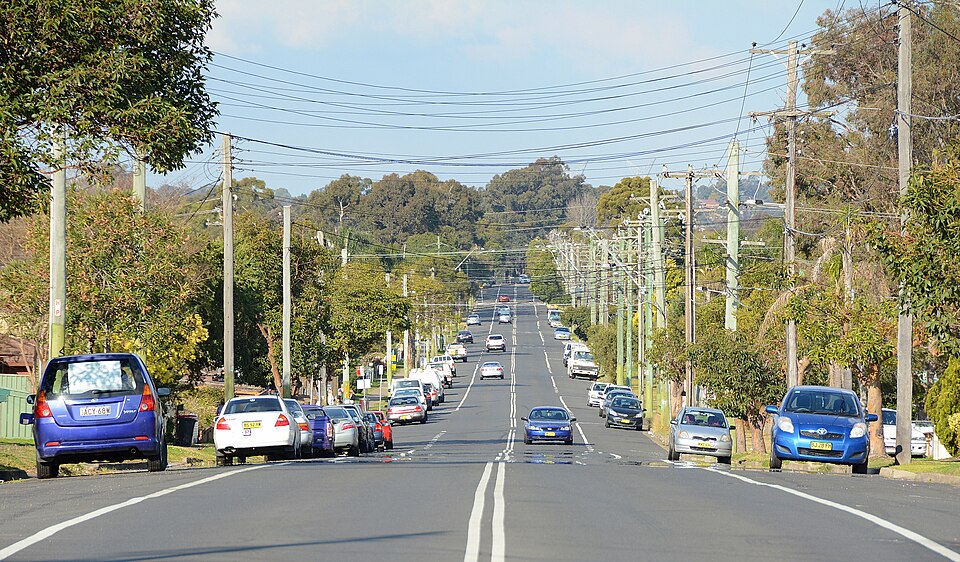
Penrith City Council describes Colyton as an established residential suburb between the Great Western Highway and M4, with Ropes Creek at its eastern boundary. Its study identifies a smaller industrial pocket near Roper Road. That mix matters more than a generic “bush property” description: most calls would involve houses, yards, sheds or business premises, while the creek corridor has a different access pattern.
Council’s playspace register lists Barr and Bass Street Reserve, Kevin Dwyer Park on Roper Road and Ted Little Park on Lennox Street. These are orientation points, not claimed snake-sighting locations. Council’s Little Creek study also includes parts of Colyton, Oxley Park, St Marys and North St Marys. A drainage catchment is useful landscape context; it does not predict a snake at a particular address.
Is the last-known location a fenced back garden, garage threshold, stack of materials at a business, or open land near a watercourse? Give the street address and safe entry point. Do not enter vegetation or lift stored items to improve the description.
Bring children and pets inside. If the snake is indoors, close a door only if you can do so without approaching it. Do not block its exit or chase it through the property.
Note the last place you saw it from behind a barrier or at generous distance. Do not move bins, garden cover, pallets or sheet metal to look for it.
Tell the catcher the address, gate or loading-bay access, whether anyone may have been bitten, and where the snake was last visible. Avoid sending anyone to inspect a hiding place.
Call 000 for an ambulance. Keep the person still, apply a pressure-immobilisation bandage and immobilise the limb as Healthdirect advises. Do not wash the bite, use a tourniquet or try to catch the snake. Follow the emergency operator’s directions.
The useful action is to remove access for people and pets, not to “clear” the snake’s hiding place yourself.
From a safe position, consider where an animal could move unseen: long grass, dense planting, retaining-wall gaps, stored timber or a shed threshold. The Australian Museum notes that eastern brown snakes can use human-made cover. Keep pets and children out of that part of the yard until it is safe.
At a commercial site, stop work in the immediate zone and tell other staff which stock pile, loading bay or fence line is affected. Do not ask a worker to reach into materials or move a pallet to confirm the species.
For longer-term prevention, keep vegetation managed and storage orderly when the area is clear. No tidy-up measure guarantees that a snake cannot pass through a property.
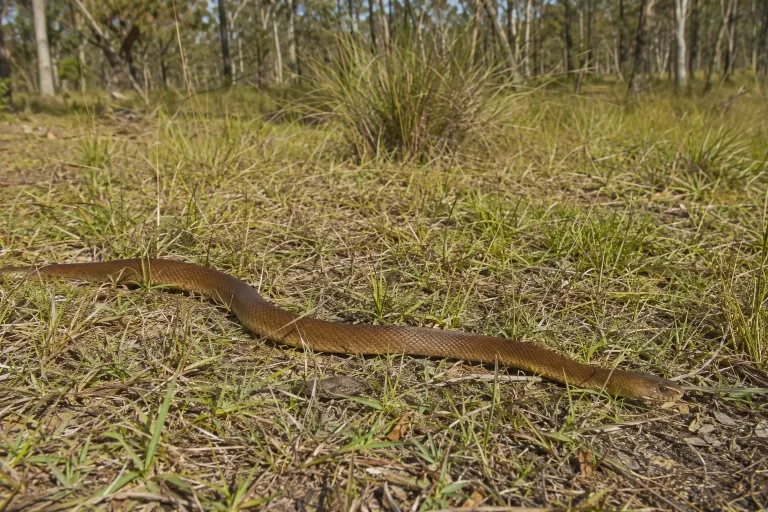
The Australian Museum describes eastern brown snakes in open woodland, grassland and modified land, sometimes at suburban edges. Its red-bellied black snake guide associates that species more often with moist habitats such as creeks and wetlands. Neither source confirms that either species was seen at a Colyton address, and colour alone is not a safe identification method. Treat an unidentified snake as potentially dangerous and keep clear.
75 Railway Street, Mount Druitt NSW 2770 · (02) 9881 1555. NSW Health confirms emergency care at this nearby public hospital. For any suspected snakebite, call 000 first rather than driving yourself.
SASH Western Sydney, 1 Rowood Road, Prospect NSW 2148 · (02) 8609 9444. Its official page confirms 24-hour emergency veterinary care. Keep the pet still and call the vet before transport for case-specific advice.
These links follow neighbouring suburbs and the Little Creek catchment, not an alphabetical sequence.
For the broader region, see Penrith and Lower Blue Mountains service areas. The Penrith operating-base guide explains the wider local dispatch context; for general advice see snake safety.
Landscape and reserve descriptions: Penrith City Council Urban Study, Council playspaces, and Council floodplain management. Medical and species guidance: Healthdirect and Australian Museum, linked above. These are general public sources, not a record of Snakes in the City call-outs.
Keep clear and call about removal. For a possible bite, call 000 first.
Looking for broader wildlife context? The mapped place point for Colyton falls in square C4 of our 2025 Sydney-region observation report. A suburb can extend into neighbouring squares; this is an orientation guide, not a suburb boundary map.
View square C4 around Colyton in the observation report →
Counts apply to the whole square, not each suburb listed. A suburb appearing in a square does not mean a snake was recorded in that suburb. These are public observation records, not SITC call-outs, unique snake totals or a measure of danger.