Erskine Park · homes and employment precinct

Snake Catcher Erskine Park

A sighting beside a loading bay calls for a site supervisor and a stopped work zone; one in a home garden calls for keeping family and pets inside. Snakes in the City provides licensed, humane snake removal with 24/7 phone support. Call 0411 103 488 and describe the exact place without approaching the animal.

NSW reptile licence MWL000102655 · Fully insured · No fixed arrival time promised

A stop-work decision at a loading bay

On a warehouse or worksite

Tell the site supervisor and stop plant, forklifts and stock movement around the last-seen point. Keep staff out of the affected aisle, loading bay or service yard. Do not shift a pallet, start a parked vehicle, open a cabinet or flush a drain to find the snake. Arrange a safe meeting point for the catcher that does not require entering the zone.

At a home or local shop

Move children and pets into a secure indoor space and leave the animal an escape route. Keep away from outdoor furniture, storage, bins or a garage door if that is where it disappeared. Watch only from a safe position. No photo is worth moving closer.

NSW Environment and Heritage advises people not to handle or kill snakes and to use a licensed reptile handler where removal is needed. A safe cordon is more useful than an improvised capture attempt.

Two halves of the suburb change the access plan

Penrith City Council’s Erskine Park study describes a largely residential north and employment land to the south, with Ropes Creek at the eastern edge and St Clair adjoining the north-west. The council’s urban reinvestment page also describes residential subdivision and civil works in local open-space sites. These facts explain why an address may mean a cul-de-sac, a construction site or an industrial lot—not that a snake has been seen at any of them.

At a residence, give the side gate and last-seen garden feature. At an employment site, give the building, reception, gate, bay number and the person who can authorise entry. Advise of induction, vehicle routes and any restricted area before a catcher arrives.

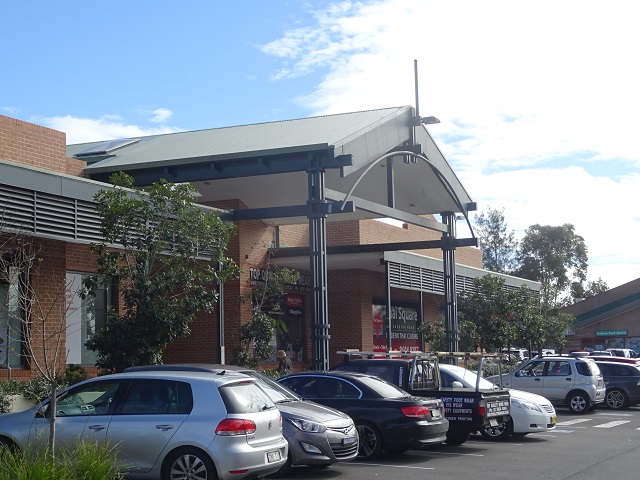
Erskine Park shopping centre with parked cars and a covered entrance
Erskine Park shopping centre, photographed in 2015; not a snake sighting. Photo: Crico / Wikimedia Commons, CC BY-SA 4.0. Original image uploaded unchanged to this site.

A handover note for the person in charge

Before calling, gather the last-seen time and location, a safe observation point if one exists, and whether anyone is injured. Name the nearest gate or reception desk, a site contact’s phone number, and hazards such as moving vehicles, stacked goods or an open drain. If the animal goes out of sight, mark that place on a site plan rather than searching by hand.

Regional species are possibilities, not local records

The Australian Museum describes the eastern brown snake across eastern Australia, and its red-bellied black snake account covers eastern NSW. Both are relevant regional examples, not verified Erskine Park sightings. Treat any unknown snake as potentially dangerous and give it room to leave.

Drainage edges, grass, gardens, stacked stock and sheltered building margins can all make an animal harder to see. Their presence is not evidence that one lives at a particular property. Do not disturb cover to test the possibility.

A possible bite changes the priority

Person: call 000 for an ambulance immediately, including if symptoms have not appeared. Keep the person still; Healthdirect’s snakebite guidance explains pressure-immobilisation bandaging and splinting for a bitten limb. Do not wash, cut or suck the bite, apply a tourniquet or try to catch the snake. Follow ambulance instructions, not a catcher’s availability.

Nearby public emergency department: Mount Druitt Hospital, 75 Railway Street, Mount Druitt NSW 2770, (02) 9881 1555. NSW Health lists its ED among those open 24 hours, seven days. For a suspected bite, call 000 first and let paramedics direct care.

Pet: contact an emergency vet without waiting for snake removal. Animal Referral Hospital Greater Western Sydney at 5/1 John Hines Avenue, Minchinbury NSW 2770, (02) 8610 3400, states emergency care is open 24/7. Call first to confirm advice, capacity and the best way to bring the animal in; no clinic is promised to accept every case.
What the service covers—and what it does not promise

Snakes in the City’s 24/7 phone support coordinates available licensed catchers according to known locations and proximity. Travel, other jobs and site conditions affect timing; there is no guaranteed fixed response window. A call-out fee applies, with no weekend or public-holiday loading. Discuss the fee, scope and any search for a no-longer-visible snake before booking.

Capture and relocation are performed by a licensed catcher under NSW licence MWL000102655. The service does not ask residents or warehouse staff to restrain an animal. See Harley Jones and the business and the independent Google review panel; this page does not attribute any review or call-out to Erskine Park.

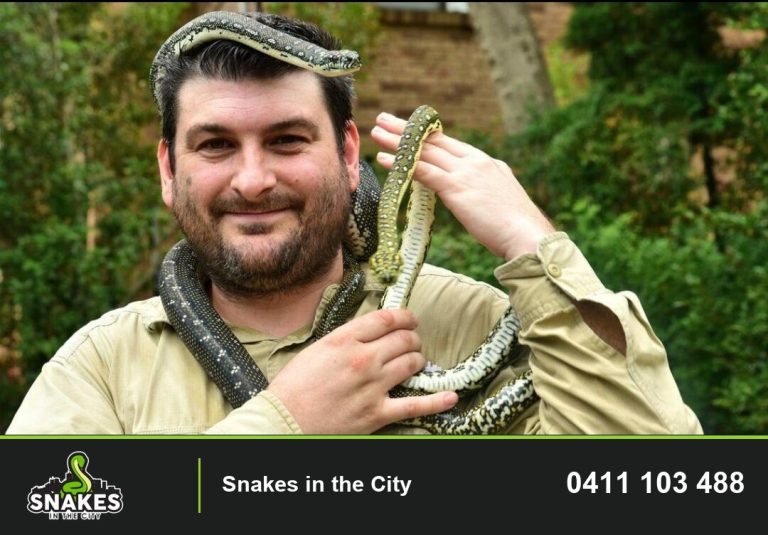
Harley Jones holding a diamond python in a Snakes in the City branded photograph
Harley Jones with a diamond python. Genuine Snakes in the City business photograph; not an Erskine Park call-out or a promise that Harley attends every job.

Continue with nearby eastern Penrith guides

The Penrith and Lower Blue Mountains service area leads to related guides. Council mapping places Erskine Park beside St Clair and close to Colyton and Orchard Hills in its eastern-side network.

Snake visible at an Erskine Park address?

Keep the immediate area clear. Have the last-seen point and safe access details ready for the call.

Call Snakes in the City: 0411 103 488

Explore public snake observations around Erskine Park

Looking for broader wildlife context? The mapped place point for Erskine Park falls in square D5 of our 2025 Sydney-region observation report. A suburb can extend into neighbouring squares; this is an orientation guide, not a suburb boundary map.

View square D5 around Erskine Park in the observation report →

Counts apply to the whole square, not each suburb listed. A suburb appearing in a square does not mean a snake was recorded in that suburb. These are public observation records, not SITC call-outs, unique snake totals or a measure of danger.