1
Move people and pets
Bring children and animals indoors or into a secure area without crossing the snake’s path.

Cambridge Park is an established suburb of family homes, granny flats, schools and mature gardens. Its older blocks can hold more small sheds, under-house spaces and layered storage than a newer estate, while Lincoln Park and the Werrington Creek system put real open space and drainage into the local picture.
Give it room. Do not corner, touch, trap or kill it, and never put yourself between the snake and the way it appears to be travelling.
Bring children and animals indoors or into a secure area without crossing the snake’s path.
Watch from behind glass, a fence or another protected position. If it disappears, remember the last fixed marker and direction.
Give the exact address, access details, last position and whether the snake is indoors, outside, injured or trapped.
Keep the person still and follow the emergency operator’s instructions. Apply a pressure immobilisation bandage if available. Do not wash, cut or suck the bite, use a tight tourniquet or try to catch the snake.
Most streets are conventional suburban streets, but the details vary: an original house may share a block with a granny flat; a narrow side path may lead to two separate yards; a carport may open directly onto stored timber or a shed. These layouts can make it surprisingly hard to explain where the snake went unless the caller uses a fixed fence panel, door or structure.
Lincoln Park is more than a playground. Penrith Council lists 2.5 hectares of bushland there, with Shale Plains Woodland entered from Lincoln Avenue and Aberdeen Street. Werrington Creek and nearby playing fields also form a green and drainage corridor through the wider Cambridge Park-Werrington area.
If the snake is in a shared yard, make sure every household knows which route to avoid. On school or sporting land, choose one staff member to control the scene and give the exact gate. Do not send several people around an oval or creek edge to keep the animal in sight.
These named places are included because they explain the suburb’s real terrain. They do not prove that a particular snake occurs at a particular address.
Council records 2.5 hectares of Shale Plains Woodland at Lincoln Park. That remnant vegetation sits within an ordinary residential suburb and adds real local context beyond a generic park name.
The creek and sporting-complex area are part of Council’s waterway-monitoring network. Drainage, playing fields and suburban boundaries meet here across the Cambridge Park-Werrington district.
Cambridge Park’s schools and recreation grounds mean some sightings happen on managed land rather than in a private backyard. Gate names, field numbers and crowd control become the practical priorities.
Do not search these spaces yourself. Use the descriptions below to give our team a clear, undisturbed starting point.
Tell both households, keep the shared path clear and identify which dwelling, fence and door are closest to the last sighting. Do not move bins or outdoor furniture between the buildings.
Leave roofing sheets, timber, mower covers and boxes where they are. Watching the entry point from inside is safer than opening a shed or reaching behind stored material.
Move students and players well away, pause activity and have one staff member meet the attending catcher at the correct gate. A school name alone may not identify the safe access point.
These are Harley’s own regional field images. They show two very different habitat settings, but neither photograph is presented as a Cambridge Park call-out.
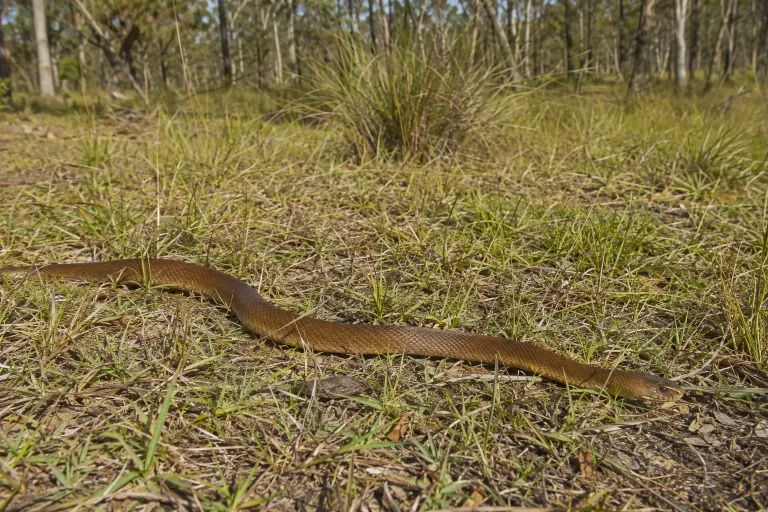
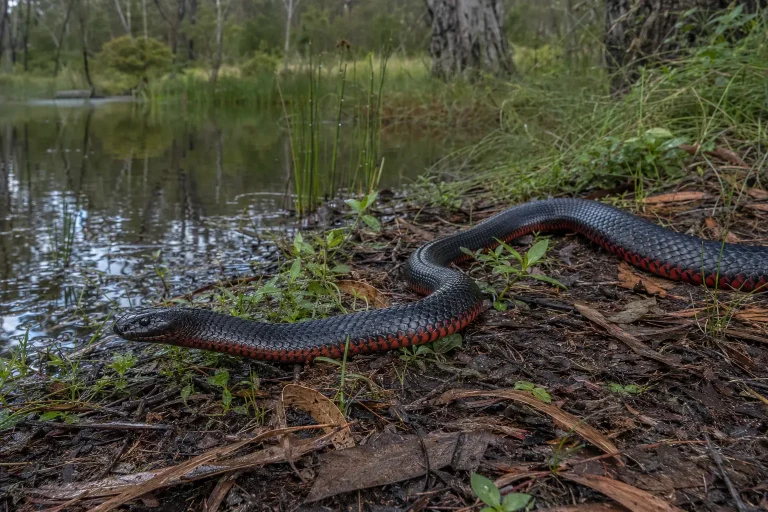
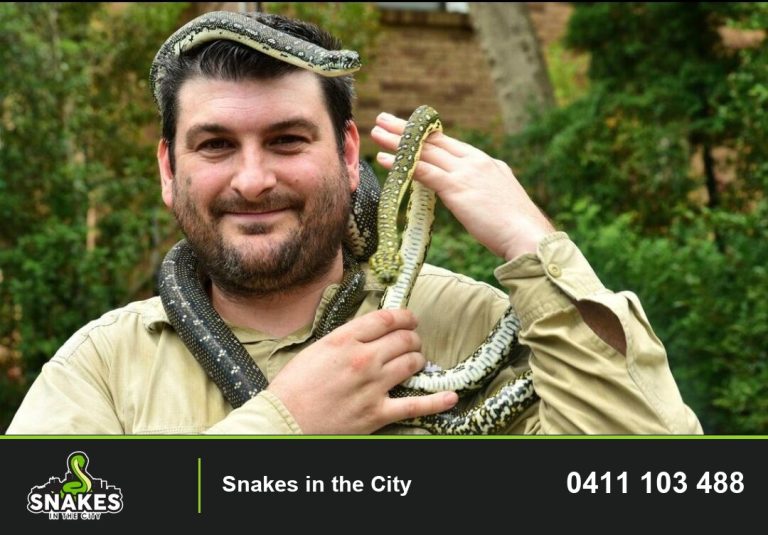
Harley Jones, Snakes in the City.
This photograph identifies the catcher who may attend. It is not a staged local sighting or a stock photograph.
Cambridge Park combines dry built edges with creek and drainage habitat. The following are wider-district possibilities, not a list of animals expected at every property.
Open ground, sheds, building edges and places with rodent activity can provide useful habitat clues. Colour is wildly variable, so a tan, grey or dark snake should never be identified from colour alone.
Creeks, wetlands, dams, drains and frog-rich gardens are the habitat clues people often associate with this species. The red flank is not always visible, especially from above or at a distance.
This slender, quick-moving snake may use gardens and open woodland edges. It is venomous and is sometimes confused with a young eastern brown snake, which is another reason not to rely on a hurried look.
An unknown snake stays unknown until it is assessed properly. Natural variation, juveniles, shadows and distance make colour matching unreliable.
No normal home, garden or rural block can be guaranteed snake-free. The useful goal is better visibility, fewer concealed shelter points and less food for rodents.
These verified contacts are included for safety, not as endorsements. A human snakebite is always a 000 emergency; do not drive the patient to hospital yourself unless emergency services direct you.
Derby Street, Kingswood NSW 2747
Hospital information: (02) 4734 2000
Suspected snakebite: call 000, not the hospital switchboard.
1 Rowood Road, Prospect NSW 2148
24/7 veterinary option: See the provider’s website for contact details
Keep pets away from the snake and call the veterinary team for transport advice.
Keep everyone inside the separate dwellings and do not use the shared side path. Give our team the safest entrance and the last fence panel, door or structure beside the snake.
That is not a useful conclusion. The park provides local woodland context, but property layout, weather, prey and shelter vary street by street.
Yes. Stop activity in the immediate area, move people away and have one staff member with keys and site knowledge meet the attending catcher at the nominated gate.
No. Do not seal an occupied gap or reach underneath. Keep the area quiet, note the entry point and explain access around the shed when you call.
It could be, but do not handle an unknown reptile to test the idea. A safe photo using zoom may help; otherwise give a calm description from a distance.
Local landscape facts were checked against: Lincoln Park · Werrington Creek corridor · Schools and playing fields. Snake safety follows Healthdirect and NSW Environment. Local details reviewed 28 August 2026.
These links connect Cambridge Park with nearby service pages and its wider regional service area.
Regional guide: View Penrith and the Lower Blue Mountains service area.
Keep your distance, bring people and pets away and call Snakes in the City with the last safe location. If anyone may have been bitten, call 000 immediately.
Looking for broader wildlife context? The mapped place point for Cambridge Park falls in square C4 of our 2025 Sydney-region observation report. A suburb can extend into neighbouring squares; this is an orientation guide, not a suburb boundary map.
View square C4 around Cambridge Park in the observation report →
Counts apply to the whole square, not each suburb listed. A suburb appearing in a square does not mean a snake was recorded in that suburb. These are public observation records, not SITC call-outs, unique snake totals or a measure of danger.
