1
Make space
Bring children and animals inside or behind a secure barrier. Move away calmly. Do not corner, trap, hose or attempt to catch the snake.

A snake near a Cambridge Gardens doorway, garden or shared path calls for distance and a clear last-seen point—not a closer look. Move people and pets away, then call Snakes in the City on 0411 103 488 for a licensed snake-removal enquiry. Our phone line is open 24/7; attendance depends on availability.
NSW licence MWL000102655 · Fully insured · Humane capture and relocation · A call-out fee applies
Penrith City Council lists Trinity Drive Bushland Reserve in Cambridge Gardens as a 0.5-hectare Shale Plains Woodland reserve, entered from Trinity Drive. Council also lists a Trinity Drive playspace. Those are useful landmarks for describing an incident; they are not evidence of a snake at any particular address.
Council’s urban study places Cambridge Gardens within its established Werrington-area neighbourhood analysis. This is an established residential setting. A house boundary, shed, garage, fence line or park edge may change where a person can safely stand and how a catcher can enter. If the animal is on public land, keep away from the spot and alert the relevant land manager; do not follow it through vegetation or across a path.
When calling, say whether the snake is in a private yard, on the footpath, near the reserve entrance or inside a building. A street address, gate location and last safe observation help more than a guess about species or where it came from. Do not approach to confirm those details.
Bring children and animals inside or behind a secure barrier. Move away calmly. Do not corner, trap, hose or attempt to catch the snake.
If it vanishes beneath a shed, into garden cover or beside stored material, stop there. Note the opening and time, but do not lift items or put a hand into a gap.
Tell us about locked gates, rear-lane access, pets, a shared driveway or a room that can be isolated without approaching the animal. No search can guarantee a hidden snake will be found.
Call 000 for an ambulance immediately, even if the person seems well. Keep them still; apply a pressure-immobilisation bandage and splint the limb as directed by the operator. Do not wash, cut or suck the bite, use a tourniquet, or catch the snake. Healthdirect explains the full steps; the NSW Poisons Information Centre also provides snakebite advice.
Do not delay to photograph or identify the snake. The nearby public emergency department is Nepean Hospital, Building A, entry via Gate 7 on Somerset Street, Kingswood NSW 2747. Its ED operates 24/7; the hospital switchboard is (02) 4734 2000. For a suspected bite, call 000, not the switchboard, and follow ambulance directions about transport.
Keep the animal quiet and away from the snake. Nepean Animal Hospital, WellPet Vets, 50 Mulgoa Road, Regentville NSW, lists 24/7 emergency care including public holidays on (02) 4733 3456. Call first to discuss current capacity and safe transport; this listing does not guarantee treatment of every case.
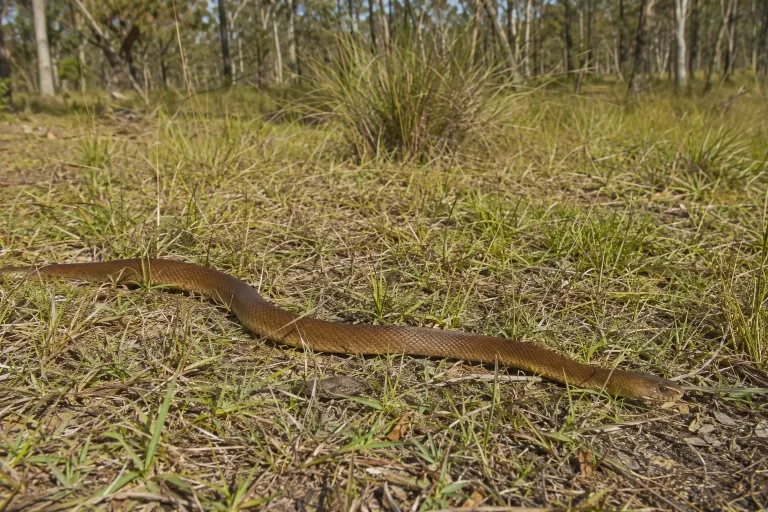
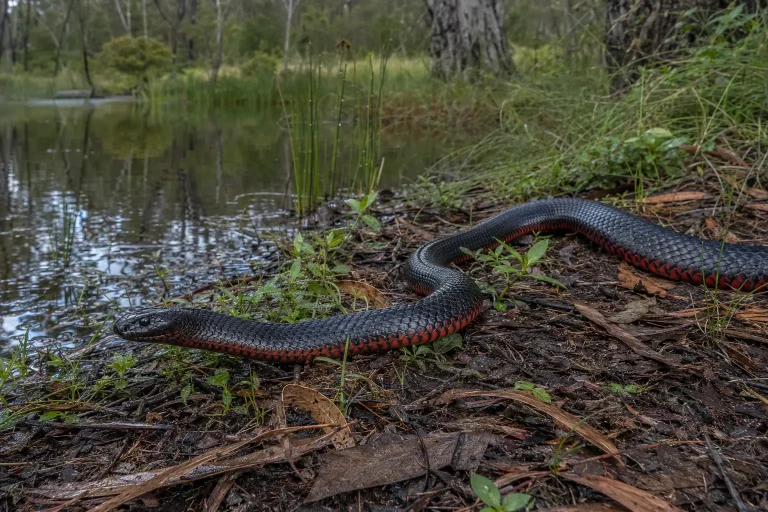
The Australian Museum describes eastern brown snakes in varied, often modified habitats, while red-bellied black snakes are commonly associated with wetter habitat. Both are regional possibilities—not confirmed Cambridge Gardens sightings. Colour, habitat and a brief description cannot safely identify the animal in front of you.
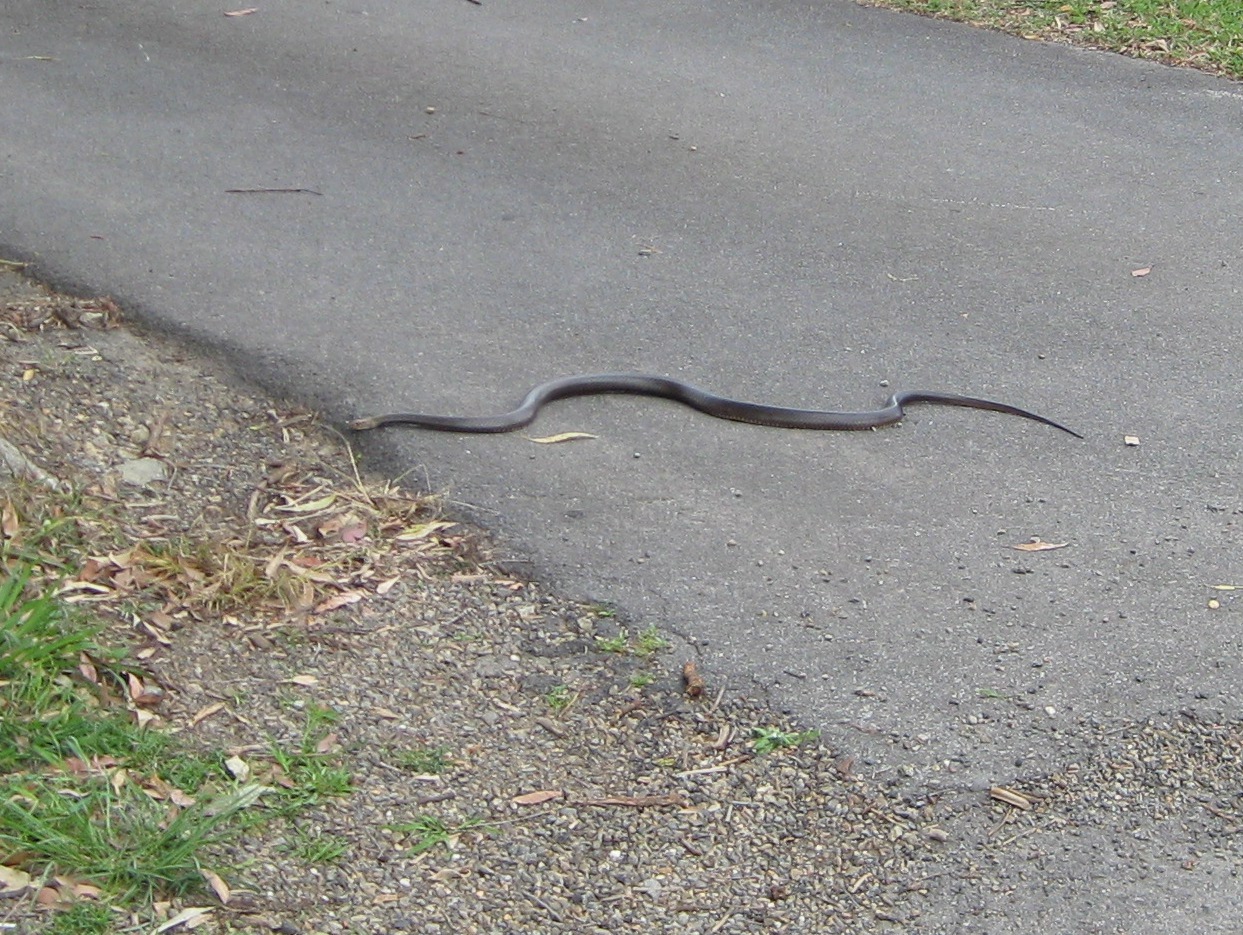
This licensed image illustrates why a snake may be difficult to judge by colour at a distance. It does not document local presence. If you already have a photograph taken safely, it may help the catcher, but never move closer to obtain one.
Existing Snakes in the City field photographs below similarly show the wider region, not a Cambridge Gardens call-out.
Snakes in the City arranges humane capture and relocation under NSW licence MWL000102655. Our back office confirms who is available; traffic and existing work affect timing, so we do not promise a fixed arrival time. Ask about the call-out fee and what can be done if the snake is no longer visible. Meet Harley Jones and see independent Google reviews of the business.
Once the immediate situation is resolved, keep paths and doorways clear, store timber and equipment neatly, and avoid spilled pet or bird feed that attracts rodents. Check garden edges before working and wear enclosed shoes outdoors. These are practical risk-reduction steps, not a promise that an urban property can be snake-proofed. Never start clearing a last-seen hiding place while the animal may still be there.
Call from a safe position with the address, last-seen point and access details. If anyone may have been bitten, call 000 first.
Looking for broader wildlife context? The mapped place point for Cambridge Gardens falls in square C4 of our 2025 Sydney-region observation report. A suburb can extend into neighbouring squares; this is an orientation guide, not a suburb boundary map.
View square C4 around Cambridge Gardens in the observation report →
Counts apply to the whole square, not each suburb listed. A suburb appearing in a square does not mean a snake was recorded in that suburb. These are public observation records, not SITC call-outs, unique snake totals or a measure of danger.
