Emu Heights · foothills of the Blue Mountains
Snake catcher in Emu Heights
In Emu Heights, a useful response starts with the exact location: an enclosed room, a garden edge, or a path beside bushland. Keep people and pets back; let the snake move without pursuing it. For licensed removal advice call Snakes in the City on 0411 103 488. A suspected human bite is a 000 emergency.
A foothill address can have more than one kind of edge
Blue Mountains City Council places Emu Heights on the eastern boundary of the Eastern Escarpment, alongside Emu Plains and Leonay, with Glenbrook and Lapstone on the mountain side. That broad setting does not mean every block adjoins bushland.
At the finer scale, Penrith City Council identifies Greenhaven Drive Reserve opposite Litton Street as a small sandstone-woodland reserve. Its Clissold Reserve Bushcare account locates the site at Litton Street opposite Dempsey Street and describes a natural drainage line. Those features explain why a fence-line, garden and public path may meet at one address; they are not records of snakes there.
If the animal disappears, stop at the last safe observation
Do not move pot plants, timber, tools or outdoor furniture to search. Keep a room closed or an outdoor area clear if that can be done without going near the animal. A safe-distance photograph may help only if it does not require a closer approach; no photo is better than an unsafe one. NSW National Parks advises giving snakes space and not attempting to handle them.
For a visible snake, move calmly away, bring people and pets indoors where practical, and avoid blocking an exit. If it is in a shared path or near a doorway, warn others from a distance. Call 0411 103 488 to discuss removal rather than trying to catch or kill it. Snakes in the City lists NSW licence MWL000102655; confirm availability and the call-out fee before booking.
A possible bite changes the priority completely
For any suspected human snakebite, call 000 immediately—even without symptoms. Keep the person still and lying down. Apply a firm pressure-immobilisation bandage over the bite and along the entire affected limb, then splint the limb; follow the ambulance operator’s instructions. Do not wash, cut or suck the bite, use a tourniquet, catch the snake or drive the person yourself.
Based on NSW Poisons Information Centre and Healthdirect guidance. Emergency staff decide the destination and treatment.
Public hospital emergency department
Nepean Hospital Emergency Department is in Building A; the ED entrance is Gate 7, Somerset Street, Kingswood NSW. Main hospital phone: (02) 4734 2000. The NSW Health ED guide gives access information. In a suspected bite, call 000 instead of choosing your own transport or waiting for a snake catcher.
Pet emergency? Contact the clinic before moving the animal
Separate the pet from the snake without putting anyone at risk and limit the pet’s movement. Ask a veterinarian how best to transport it. Nepean Animal Hospital lists 50 Mulgoa Road, Regentville NSW, (02) 4733 3456, and 24/7 emergency opening, including public holidays. Ordinary consultation hours are shorter. Call first to describe the suspected bite and confirm the current pathway; do not assume every case can be treated at every clinic.
What the landscape image can—and cannot—tell us
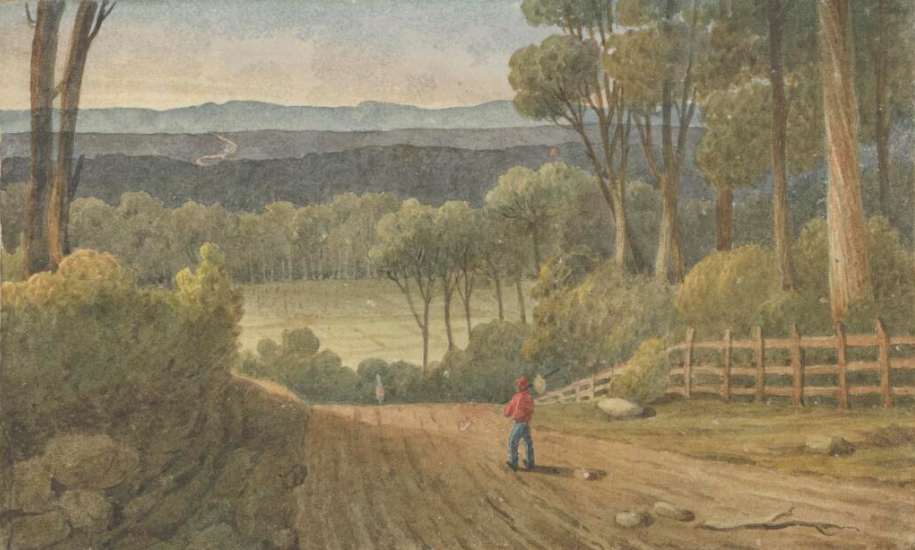
The escarpment has long been a landmark, but a historical view cannot describe current gardens or animal activity. The image below helps locate the broader foothill setting, not a present-day Emu Heights address.

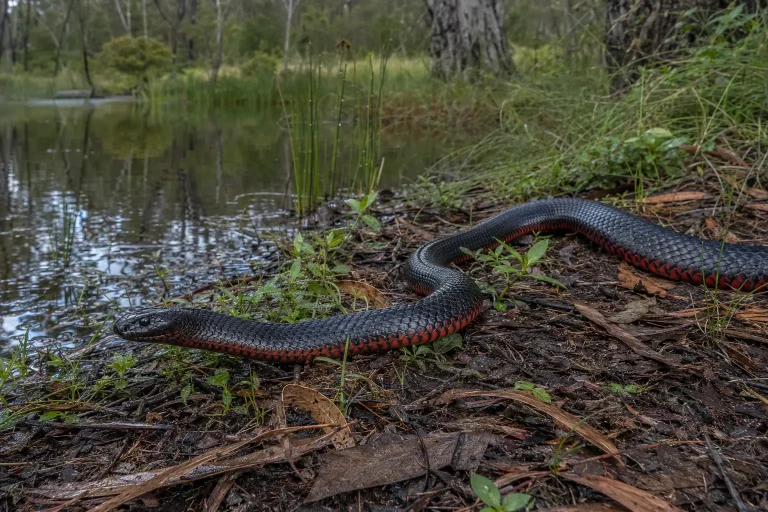
Eastern brown snakes can occur in open and modified eastern Australian habitats; red-bellied black snakes are associated with waterways and moist areas, according to the Australian Museum. These are regional possibilities, not verified records at Clissold Reserve, Greenhaven Drive or any Emu Heights property. Never identify an unknown snake by colour alone.
After the immediate risk: reduce hiding places without making new ones
- When the area is known to be clear, keep grass manageable and maintain visibility around paths, doors and storage—not while a snake is present.
- Store loose materials so you can see the ground around them. Do not reach into a hidden space with a bare hand.
- Manage rubbish and food sources that attract rodents. This is general property care, not a promise of a snake-proof yard.
- Where a property meets a drainage corridor or reserve, respect the boundary. Do not clear public bushland or enter it to look for a snake.
Read the wider snake safety guide for prevention and first aid.
Snakes in the City and neighbouring foothill guides
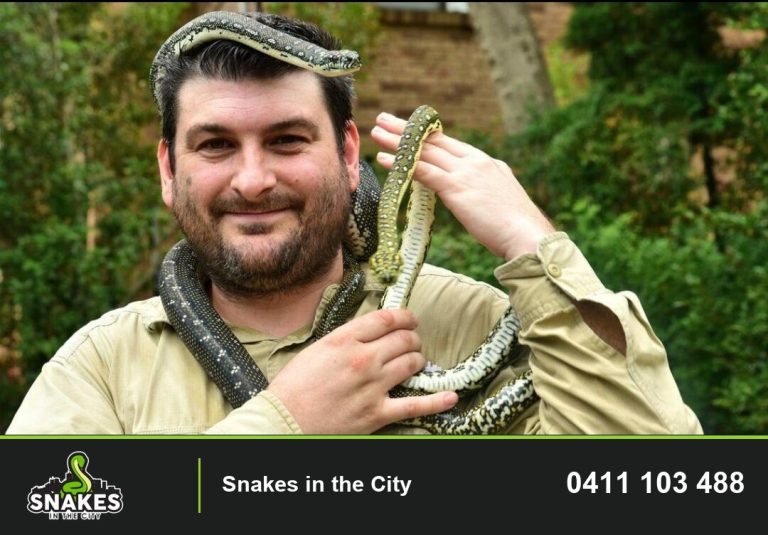
For a removal enquiry, phone 0411 103 488. Harley Jones is shown in this original business portrait; it does not document an Emu Heights visit. The second image is a genuine wider-Sydney field photograph, not a suburb sighting or customer job.
See the removal services and the Penrith and Lower Blue Mountains hub. For nearby settings, choose the guide that matches your location:
Local landscape: Penrith City Council and Blue Mountains City Council. Species: Australian Museum. Human first aid: NSW Poisons Information Centre and Healthdirect. Hospital and veterinary details: linked official providers. No claim is made here of a local sighting, response time, customer or call-out.