1
Move people and pets
Bring children and animals indoors or into a secure area without crossing the snake’s path.

Local snake removal · available 24/7
Castlereagh is river flats, horse properties, market gardens, dams and woodland—not a stretched-out version of suburban Penrith. Large blocks make the directions harder and the hiding places more numerous. A useful call starts with the right gate, the last fixed structure and where the animals are secured.
Give it room. Do not corner, touch, trap or kill it, and never put yourself between the snake and the way it appears to be travelling.
Bring children and animals indoors or into a secure area without crossing the snake’s path.
Watch from behind glass, a fence or another protected position. If it disappears, remember the last fixed marker and direction.
Give the exact address, access details, last position and whether the snake is indoors, outside, injured or trapped.
Keep the person still and follow the emergency operator’s instructions. Apply a pressure immobilisation bandage if available. Do not wash, cut or suck the bite, use a tight tourniquet or try to catch the snake.
The Nepean River forms the western landscape while Castlereagh Road runs north through rural properties toward Agnes Banks. Paddocks, stables, machinery sheds, hay, irrigation gear and water troughs bring dry shelter and wet edges onto the same block. A snake seen near a dam may move differently from one disturbed beside feed storage, but neither should be guessed at from habitat alone.
Castlereagh Nature Reserve covers about 490 hectares and protects rare Cumberland Plain vegetation, including habitat for the endangered nodding geebung. Penrith Council also monitors the Nepean River at Devlin Road. Western Sydney Lakes and the broader floodplain add open water, grass and revegetated land to the local setting.
When a catcher is coming to an acreage, give the numbered gate, a location pin if asked, the internal driveway branch and the nearest shed, yard or paddock name. Secure horses and dogs from the opposite side of the property. Do not start a mower, move hay or dismantle equipment to flush the snake into view.
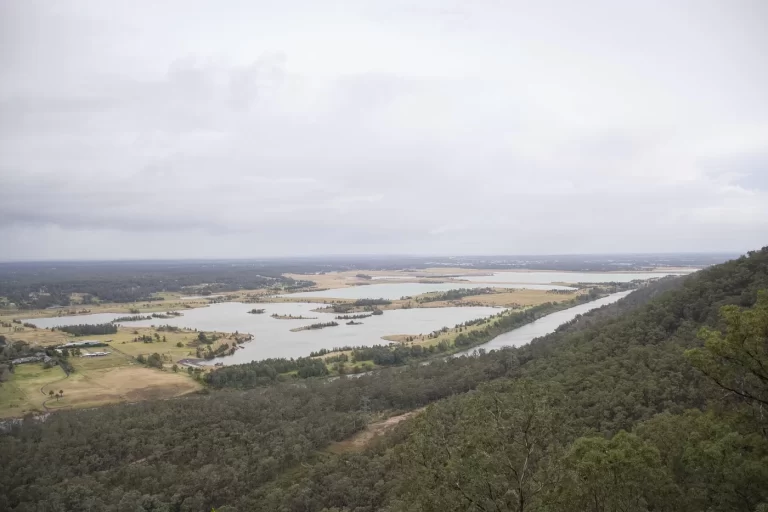
These named places are included because they explain the suburb’s real terrain. They do not prove that a particular snake occurs at a particular address.
NSW National Parks records a 490-hectare nature reserve protecting rare Cumberland Plain vegetation. It is conservation land, not a place to pursue or relocate a snake yourself.
Penrith Council includes this Castlereagh reach of the river in its waterway-monitoring program. It anchors the wet side of an otherwise broad rural landscape.
The lakes precinct adds open water, grass and restored land north of urban Penrith. It is regional landscape context for Castlereagh, not evidence about a species on a private farm.
Do not search these spaces yourself. Use the descriptions below to give our team a clear, undisturbed starting point.
Keep horses, dogs and people in a separate yard. Do not shift hay, feed bags or tack. Tell our team whether the snake is inside the shed, beneath an edge or moving along a wall.
Stay away from the water edge and do not walk the bank trying to regain sight. Note the fence, trough, pump or gate nearest the last position.
Turn equipment off and leave it off. Sheets, timber, pipes and machinery bases should remain untouched until the area is assessed.
These are Harley’s own regional field images. They show two very different habitat settings, but neither photograph is presented as a Castlereagh call-out.
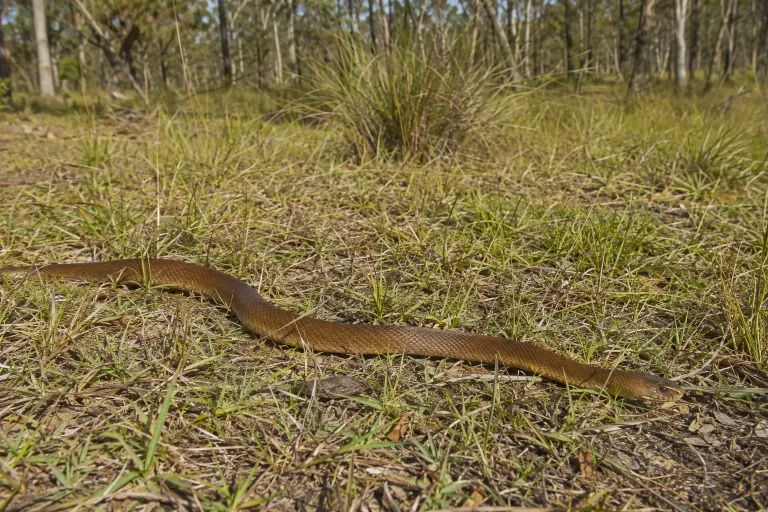
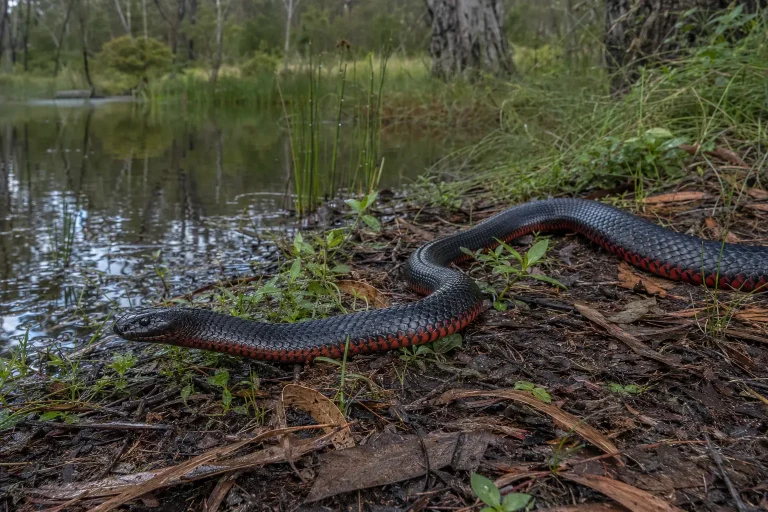
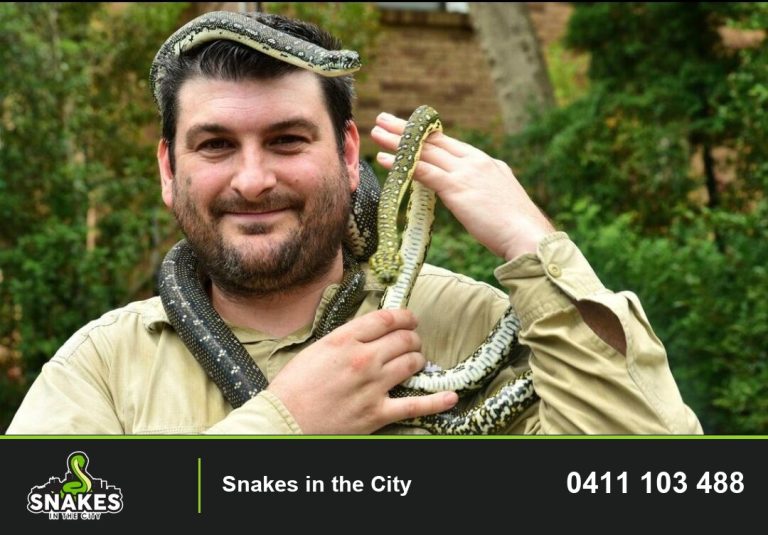
Harley Jones, Snakes in the City.
This photograph identifies the catcher who may attend. It is not a staged local sighting or a stock photograph.
Castlereagh puts dry paddock and shed habitat beside dams, drains, river flats and woodland. That breadth allows several regional species to occur, but the property setting is still only a clue.
Open ground, sheds, building edges and places with rodent activity can provide useful habitat clues. Colour is wildly variable, so a tan, grey or dark snake should never be identified from colour alone.
Creeks, wetlands, dams, drains and frog-rich gardens are the habitat clues people often associate with this species. The red flank is not always visible, especially from above or at a distance.
Mature trees, roof spaces, rockwork and sheltered gardens can suit a diamond python. It is non-venomous, but an unknown snake still needs space and should not be handled by a householder.
An unknown snake stays unknown until it is assessed properly. Natural variation, juveniles, shadows and distance make colour matching unreliable.
No normal home, garden or rural block can be guaranteed snake-free. The useful goal is better visibility, fewer concealed shelter points and less food for rodents.
These verified contacts are included for safety, not as endorsements. A human snakebite is always a 000 emergency; do not drive the patient to hospital yourself unless emergency services direct you.
Derby Street, Kingswood NSW 2747
Hospital information: (02) 4734 2000
Suspected snakebite: call 000, not the hospital switchboard.
1 Rowood Road, Prospect NSW 2148
24/7 veterinary option: See the provider’s website for contact details
Keep pets away from the snake and call the veterinary team for transport advice.
Give the correct road gate, a visible mailbox or sign, any internal fork and the nearest named shed, stable, yard or paddock. A pin can help when numbering is hard to see.
Secure them from the side of the property that does not require passing the snake. Dogs are especially likely to investigate. If a pet may have been bitten, call a vet immediately.
No. Wet habitat is a clue, not an identification. Different species can use the same ground, and the snake may simply be passing through.
No. Stop machinery and keep it off. Noise and movement can hide the snake, injure it or put the operator at risk.
No. A snake may be moving between food, water, shelter or seasonal habitat. One sighting does not establish a den or a group of snakes.
Penrith and Lower Blue Mountains service area
Local landscape facts were checked against: Castlereagh Nature Reserve · Nepean River at Devlin Road · Western Sydney Lakes. Snake safety follows Healthdirect and NSW Environment. Local details reviewed 28 August 2026.
Keep your distance, bring people and pets away and call Snakes in the City with the last safe location. If anyone may have been bitten, call 000 immediately.
Looking for broader wildlife context? The mapped place point for Castlereagh falls in square B3 of our 2025 Sydney-region observation report. A suburb can extend into neighbouring squares; this is an orientation guide, not a suburb boundary map.
View square B3 around Castlereagh in the observation report →
Counts apply to the whole square, not each suburb listed. A suburb appearing in a square does not mean a snake was recorded in that suburb. These are public observation records, not SITC call-outs, unique snake totals or a measure of danger.
