1
Move away
Bring children and pets indoors or into a closed room. Give the snake several metres of space and avoid sudden movement.

On Middle Cove’s steep, bush-connected blocks, a snake can disappear quickly beneath groundcover, into sandstone gaps, behind retaining walls or towards a roof-access point. Keep people and pets well back, watch from a secure position if possible, and call Snakes in the City for professional capture and removal.
Create distance first. Do not identify, corner, touch, trap or kill the snake. Never put yourself between it and an escape route.
Bring children and pets indoors or into a closed room. Give the snake several metres of space and avoid sudden movement.
If it is safe, watch from behind a closed window, fence or other secure position. Note its last-known location without chasing it.
Provide the address, access instructions, where the snake was last seen and whether it is indoors, outside, injured or trapped.
Keep the person still, apply a pressure immobilisation bandage if available, and wait for an ambulance. Do not wash the bite, cut or suck the wound, use a tight tourniquet, or try to catch the snake.
Willoughby City Council describes Harold Reid Reserve as a 37.7-hectare reserve and the city’s second largest bushland reserve. It links north to North Arm Reserve and south to the Castlecrag Northern Escarpment. Homes meet its western boundary, while bushland and the shores of Sugarloaf Bay wrap around the other sides.
The reserve is steep in places and rises abruptly to about 100 metres above the surrounding landscape. Its northern half lies in the Scotts Creek catchment and its southern half in the Sugarloaf Creek catchment, both within the wider Middle Harbour system. Nearby, North Arm Reserve follows the northern shoreline of Sugarloaf Bay across 45.5 hectares of steep sandstone slope.
Those are landscape facts, not proof that a snake came from a reserve or that a particular species is present at an address. For a resident, the practical issue is that rock shelves, shaded gullies, retaining walls, drainage, rooflines and mature vegetation can give any moving animal several concealed routes.
If the sighting is outside, stay on the house side of the boundary and use the snake-in-the-yard guidance; do not climb down a slope or enter the reserve to follow it. If it crosses a doorway, close the room only when this can be done without approaching it and follow the indoor snake guidance.
Do not search by reaching into concealed spaces. These are details to report to the catcher from a safe position.
These first-hand Snakes in the City photographs help identify the person attending and illustrate snakes and habitat relevant to the wider region. Species cannot be confirmed from a description alone; keep a safe distance and call for advice.
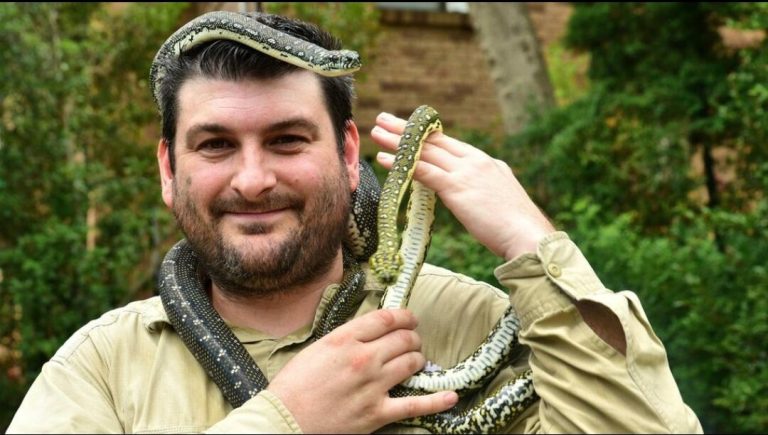
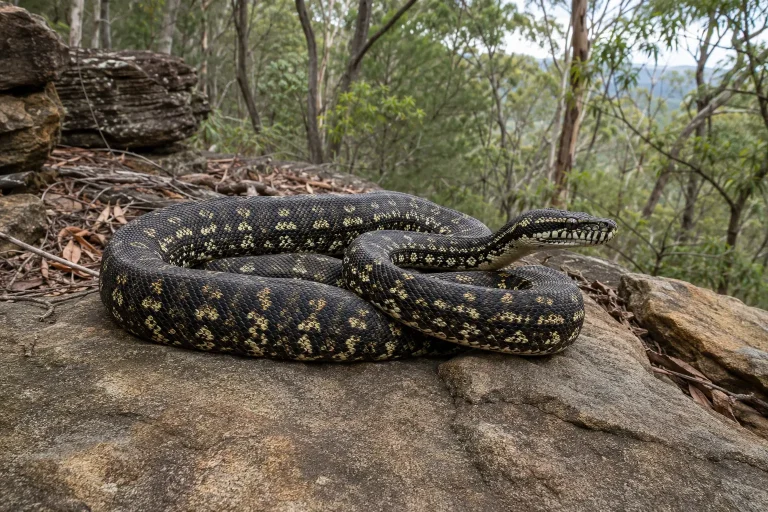
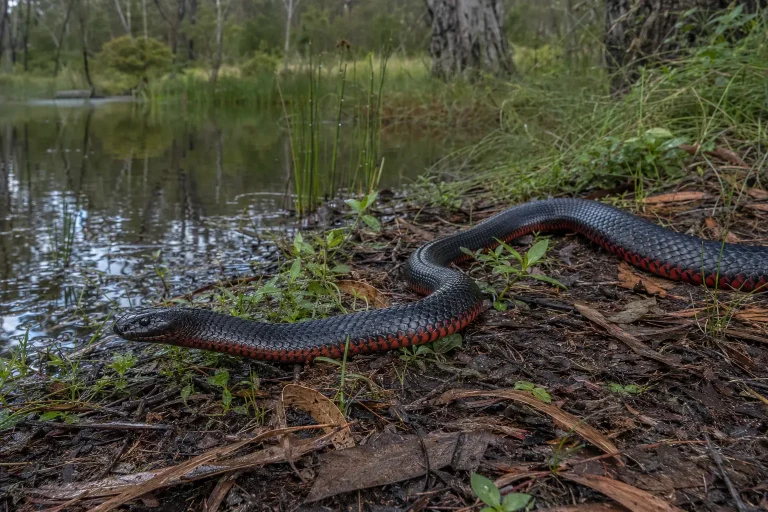
This is regional context, not a claim that either species occurs on every Middle Cove property. Never rely on colour alone: age, lighting and natural variation make quick identification unreliable. If a clear photograph can be taken from behind a barrier without moving closer, see the safe Sydney snake-identification guide.
A non-venomous python associated with bushland areas around Sydney. Roof spaces, rock features and dense cover can offer temporary shelter.
May occur around wetter corridors and creek habitat. It is venomous; do not approach to look for a red underside.
No garden design can guarantee a snake-free property. The practical goal is to reduce concealed shelter and the food sources that attract prey.
These verified contacts are included for safety, not as endorsements. A human snakebite is always a 000 emergency; do not drive the patient to hospital yourself unless emergency services direct you.
Reserve Road, St Leonards NSW 2065
Hospital information: (02) 9926 7111
Suspected snakebite: call 000, not the hospital switchboard.
63 Herbert Street, Artarmon NSW 2064
24/7 veterinary option: See the provider’s website for contact details
Keep pets away from the snake and call the veterinary team for transport advice.
Call while you still know where it is, provided you can do so safely. A snake can disappear into vegetation, a roof space or stored material quickly.
Only take a photograph from a safe distance using zoom and a physical barrier. Never move closer or block the snake to get a clearer image.
If it is already inside a room and you can close the door without going near it, do so and place a towel along the door gap. Do not re-enter.
No. Maintenance can reduce cover and prey activity, but snakes can still pass through well-kept Middle Cove properties.
Give the exact address, safest access point, last-known position, whether the snake is indoors or outside, and any nearby pets, people or site hazards.
These guides answer different immediate questions. Use the one that matches the situation rather than searching the property for more evidence.
Stop gardening, pool work and play in that part of the property. Read the snake-in-the-yard steps.
Move everyone out of the room and leave furniture and appliances untouched. Read the snake-in-the-house steps.
Call the animal away if safe and seek urgent veterinary advice if contact is possible. Read the pet-safety steps.
For broader information, see all snake-removal services, the Lower North Shore service area and the main snake-safety guide.
These links connect Middle Cove with nearby service pages.
View local safety, property and contact information for Castle Cove.
View local safety, property and contact information for Castlecrag.
View local safety, property and contact information for Chatswood.
Service information for the established streets and shared sites west of Middle Cove.
Nearby guidance for sandstone ridges and Middle Harbour reserve edges.
Keep your distance and call Snakes in the City. If anyone may have been bitten, call 000 immediately.