Schofields snake removal · available 24/7

Snake Catcher Schofields

If a snake is visible at a Schofields home, building site, school or workplace, move people and pets away and keep a safe line of sight. Harley Jones provides professional snake capture and humane relocation across north-west Sydney.

NSW General Licence MWL000102655 · Snakes in the City · Medical emergency: 000

A visible snake: protect the scene, not the photo

The useful information is where the snake is now and where it can move next. Do not step closer for identification or begin shifting garden, construction or storage material.

1

Create distance

Bring children and pets inside or behind a closed barrier. Do not block the snake’s escape route.

2

Watch from cover

Use a window, vehicle, fence or other solid barrier. If it disappears, note the precise last-seen point and direction.

3

Call with access details

Tell our team whether the snake is indoors, beside a drain, under stored material or within an active work area, and identify the safest entry point.

Why Schofields needs a property-by-property assessment

Schofields is not one uniform habitat. It combines established streets around the railway with rapidly developing neighbourhoods, drainage land, recreation areas and creek corridors. Those contrasts matter more than the suburb name when assessing a sighting.

Creeks and water management

Blacktown City’s Schofields planning documents provide for water-cycle infrastructure and environmental or drainage land. First Ponds Creek and the wider Eastern Creek system create wet or vegetated connections through an increasingly urban landscape.

Frogs, rodents and shelter can concentrate around drainage edges, but this does not mean a snake lives at every nearby property.
New streets and construction

Subdivision work can leave temporary fencing, service trenches, stacked materials, retaining-wall gaps and sparsely established gardens close together. Disturbance can reveal animals already using the landscape or provide short-term shelter.

Workers should stop activity around the sighting rather than moving pallets, pipes or spoil to search.

Established homes and transport edges

Older yards around Railway Terrace and the Richmond rail corridor may include sheds, mature vegetation and long-settled fence lines. Newer homes may have compact side access, utility penetrations and landscaped drainage features.

Give the catcher the gate code, parking constraint or rail-side access detail that will matter on arrival.

Local context checked against Blacktown City’s Schofields precinct infrastructure planning and the Council’s First Ponds Creek rehabilitation update.

Three Schofields situations that need different information

Snake beside a new home or vacant lot

Keep clear of temporary fencing, drainage pits and stored building products. From a safe position, report whether the animal moved toward a neighbouring lot, wall cavity, drain or road verge.

Snake inside a garage, laundry or ground-floor room

If you can close an internal door without approaching the snake, do so. Keep exterior exits available where safe, isolate pets, and do not push towels or objects toward the animal.

Snake at a school, park or workplace

Move people to another supervised area, stop vehicles or machinery around the sighting and nominate one person to maintain a safe view. A crowd makes scene control harder.

Harley and regional snake habitat

These are genuine Snakes in the City field photographs. They identify the catcher and illustrate broader Sydney habitat; none is represented as a Schofields call-out.

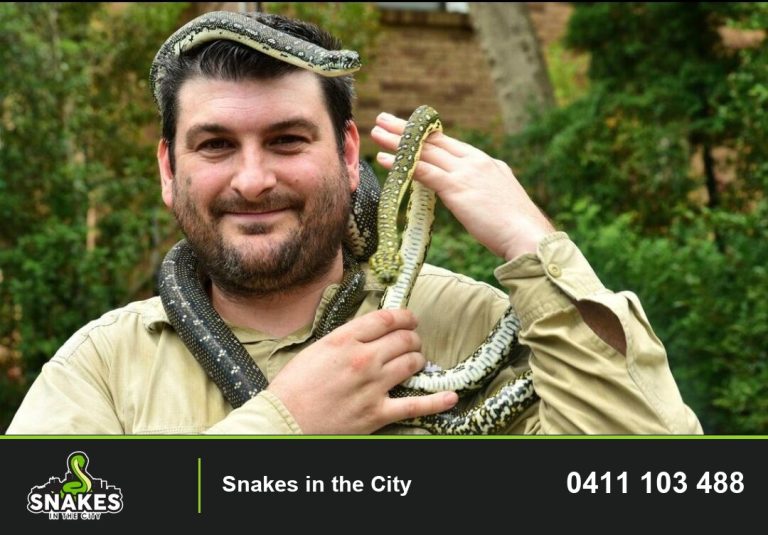
Harley Jones from Snakes in the City
Harley Jones, Snakes in the City. A first-party photograph used to identify the attending catcher. Photo: Snakes in the City.
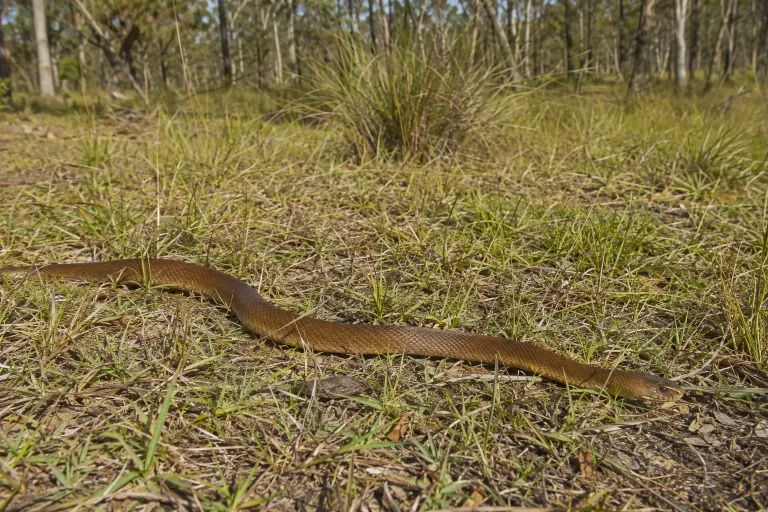
Eastern brown snake in Western Sydney grassland
Eastern brown snake in Western Sydney grassland. Regional habitat example, not a Schofields record. Photo: Snakes in the City.
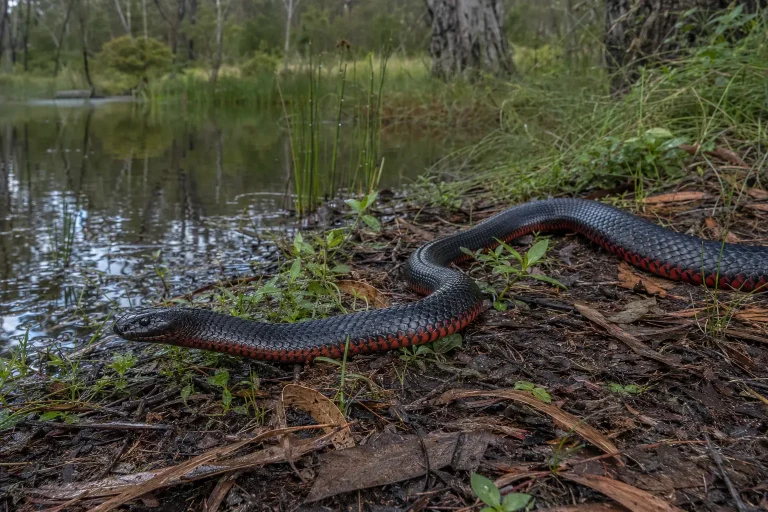
Red-bellied black snake in Sydney wetland habitat
Red-bellied black snake in wet habitat. Regional habitat example, not a Schofields record. Photo: Snakes in the City.

Species context without guessing from colour

Eastern brown snakes occur widely through eastern Australia and eat small vertebrates, particularly introduced rats and mice. Open or heavily modified ground can still provide prey and temporary cover. They are highly venomous and must not be approached.

Red-bellied black snakes are more closely associated with swamps, creeks and ponds, where frogs and tadpoles are available. Schofields’ drainage and creek corridors make that habitat association useful context, but it is not evidence of a confirmed sighting at a particular address.

Colour, size and a hurried photograph are not enough for safe identification. Maintain distance and treat every unidentified snake cautiously.

Species information: Australian Museum — Eastern Brown Snake and Australian Museum — Red-bellied Black Snake.

Emergency contacts for Schofields

These services do not endorse Snakes in the City. For a suspected human snakebite, call 000 and follow the ambulance operator’s instructions rather than driving the patient yourself.

VECA Norwest emergency vet

7/2 Capital Place, Rouse Hill NSW 2155
Phone: (02) 9129 5800
Open 24 hours, seven days.

Keep your pet away from the snake and call ahead for immediate transport advice.

Verify veterinary details

Nearby service pages chosen by geography

Schofields connects directly with the Riverstone, Tallawong, The Ponds and Quakers Hill parts of Blacktown’s north-west growth area. These links are based on neighbouring geography and practical road connections—not page-list order.

See the complete Blacktown and North-West Sydney service area · View snake-removal services · Read snake-safety guidance

Schofields questions

Should I search a drainage pit after the snake disappears?

No. Keep people away from the last-seen point and tell our team which pit, grate, wall or vegetation edge it moved toward. Reaching into drainage infrastructure can put you close to a concealed animal.

Can construction continue elsewhere on the site?

Stop work in and around the sighting area first. Vehicle movement, vibration and material handling can change where the snake moves. The team can assess scene controls from the details you provide.

Does a creek nearby mean the snake is a red-bellied black snake?

No. Habitat can guide an assessment, but it cannot identify an individual animal. Several reptiles may occur across western Sydney and appearance varies with age, light and distance.

What if the snake enters a neighbouring property?

Do not follow it over a fence. Keep a safe view if possible, warn the neighbour without approaching the snake, and report its direction of travel.

Schofields: additional local response guidance

This update adds practical detail for the places, access conditions and property types that distinguish this suburb. It complements the safety and service information already on this page.

Protect the last-seen area

Stop people, pets, vehicles and machinery from crossing the snake's route. Photograph only from a position that was already safe. A caller does not need to identify the animal; the catcher needs the last exact point, time, direction and type of cover.

If anyone may have been bitten, call 000, keep the person still and follow emergency instructions.

A suburb still being built

Schofields sits in the North West Growth Area, where new streets and higher-density housing meet older residential and semi-rural land. Regional planning also preserves creek-line corridors, including the First Ponds Creek network. During construction, trenches, pipe stacks, formwork, fencing and temporary storage continually change the ground-level environment.

The useful content on this page is therefore operational. A resident should know how to secure children and pets in a small yard. A builder needs to know how to stop work without surrounding the snake. A school or childcare site needs a clear supervisor and a controlled route for the catcher.

Housekeeping that actually helps

Clear loose building waste, store pipes and materials on racks, fit appropriate door seals, contain pet food and address rodents. Keep the strip beside side gates and outdoor equipment visible. These actions reduce concealment near people; they do not create a guaranteed barrier to wildlife.

Need a snake catcher in Schofields?

Keep your distance, control access to the area and call Snakes in the City. If anyone may have been bitten, call 000 immediately.