1
Move away
Bring children and pets indoors or into a closed room. Give the snake several metres of space and avoid sudden movement.

For a snake at a South Turramurra home, near Comenarra Reserve or beside a bushland access point, keep people and pets back and tell us the exact last-seen location. Give the safest street entrance, gate and property level when calling Snakes in the City.
Create distance first. Do not identify, corner, touch, trap or kill the snake. Never put yourself between it and an escape route.
Bring children and pets indoors or into a closed room. Give the snake several metres of space and avoid sudden movement.
If it is safe, watch from behind a closed window, fence or other secure position. Note its last-known location without chasing it.
Provide the address, access instructions, where the snake was last seen and whether it is indoors, outside, injured or trapped.
Keep the person still, apply a pressure immobilisation bandage if available, and wait for an ambulance. Do not wash the bite, cut or suck the wound, use a tight tourniquet, or try to catch the snake.
South Turramurra calls need a precise meeting point. A residential driveway, a playing-field entrance and a bushwalking access point can require quite different approaches, even when the caller uses the same nearby landmark.
Ku-ring-gai Council lists Comenarra Reserve on Comenarra Parkway in South Turramurra. For a sighting around a sporting or recreation area, give the actual gate, field edge or building involved. Keep participants away from that area and nominate one adult contact; do not gather a group around the animal.
Council’s Browns Waterhole track study identifies the Kissing Point Road end of the track and the Lane Cove River crossing. Tell us whether the sighting is at a home, the road-end access or further along a track. A walking connection is not a vehicle entrance. Do not follow a snake downhill or into vegetation to keep it in view.
These landmarks explain access, not where a particular snake came from. A bushland boundary or creek nearby cannot identify a species or prove that a snake lives on your property.
At a South Turramurra property with steps, a sloping garden or a rear bushland boundary, “in the backyard” may leave several possible search areas. From safety, describe the route in relation to a fixed feature.
Say which level the snake reached and which side of the wall or steps it passed. Keep the route undisturbed. Do not lift decking, reach into drainage gaps or pull plants aside.
Name the exact doorway, equipment enclosure or object where sight was lost. Secure pets elsewhere and leave tools, boxes and stored timber in place until the scene can be assessed.
Note the direction and time from your safe position. Do not enter a neighbour’s property or follow into bushland. Explain whether access needs a key, another household’s permission or a different gate.
When calling, provide the full South Turramurra address, a safe meeting point and any stairs or locked passages. Our office confirms catcher availability and the proposed access; a sighting does not guarantee the animal will remain available for capture.
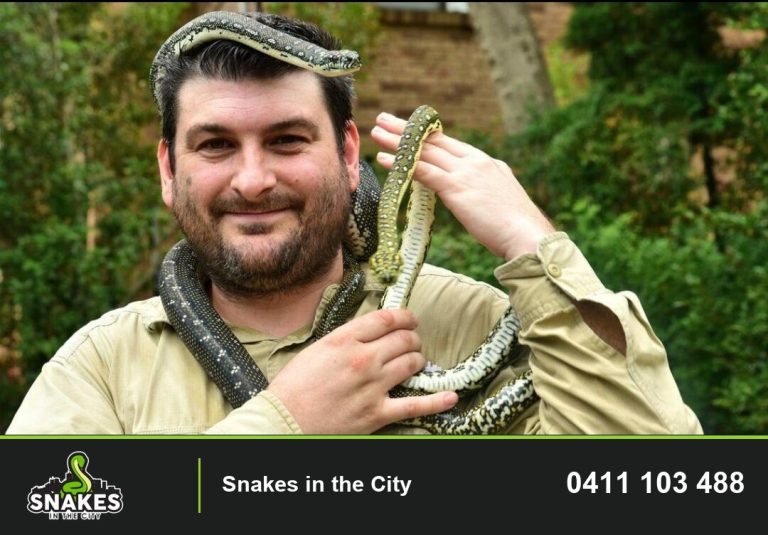
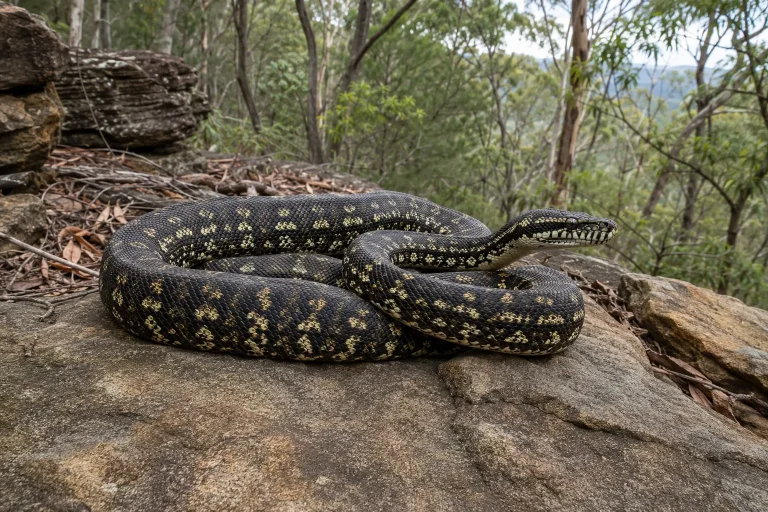
These first-hand Snakes in the City photographs introduce Harley Jones and illustrate snakes and habitat relevant to the wider region. Our office confirms the available catcher for each booking. Species cannot be confirmed from a description alone; keep a safe distance and call for advice.
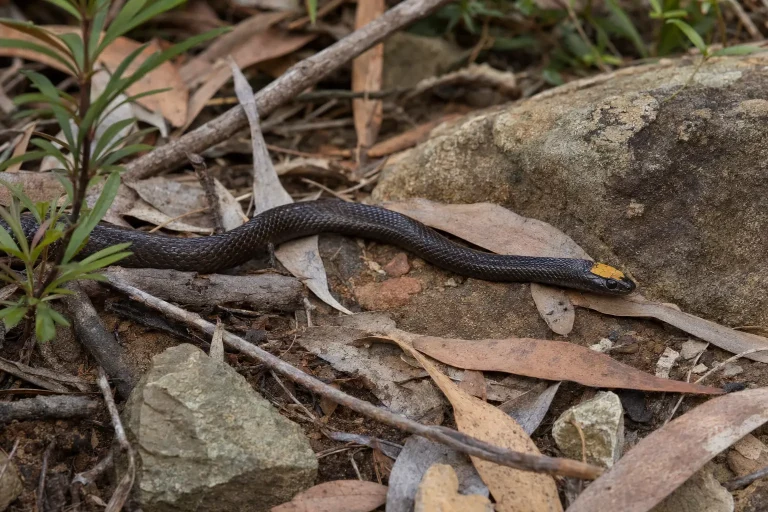
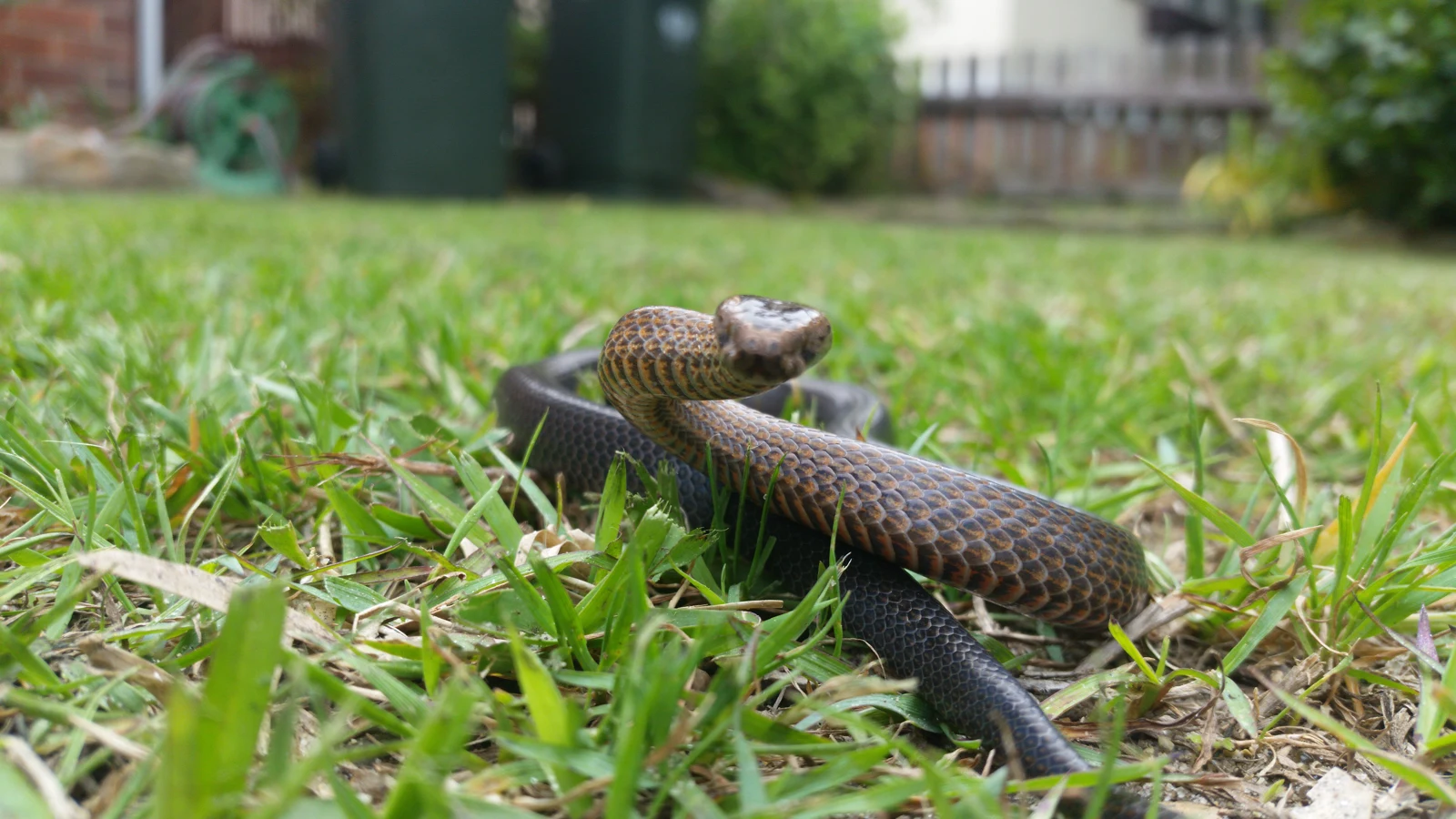
SITC’s published account records a golden-crowned snake found on the front lawn of a Turramurra home, safely captured and humanely relocated by a member of the catching team.
It shows why an ordinary residential sighting deserves a clear last-seen report. It does not establish which species is present at a different address.
This is regional context, not a promise that either species occurs on every South Turramurra property. Never rely on colour alone: age, lighting and natural variation make quick identification unreliable.
A non-venomous python associated with bushland areas of the Sydney region. Large pythons can still bite and should not be handled.
Can be associated with creeks, gullies and wetter habitat. It is venomous and should always be given space.
Once there is no active sighting, prioritise the places people need to use: the side gate, steps, clothesline, pool equipment and shed entrance. Keep these routes visible, store loose materials away from them and manage food or waste that attracts rodents.
Check accessible door seals and service openings during ordinary maintenance. Keep drainage working and avoid creating hidden piles beside retaining walls. Do not disturb reserve habitat or strip a garden on the assumption that all vegetation attracts snakes.
During an active sighting, stop maintenance and keep back. Prevention reduces opportunities for shelter near people; it cannot make a property snake-proof. See our snake safety guidance for the immediate response.
These verified contacts are included for safety, not as endorsements. A human snakebite is always a 000 emergency; do not drive the patient to hospital yourself unless emergency services direct you.
Palmerston Road, Hornsby NSW 2077
Hospital information: See the provider’s website for contact details
Suspected snakebite: call 000, not the hospital switchboard.
63 Herbert Street, Artarmon NSW 2064
24/7 veterinary option: See the provider’s website for contact details
Keep pets away from the snake and call the veterinary team for transport advice.
Call while you still know where it is, provided you can do so safely. A snake can disappear into vegetation, a roof space or stored material quickly.
Only take a photograph from a safe distance using zoom and a physical barrier. Never move closer or block the snake to get a clearer image.
If it is already inside a room and you can close the door without going near it, do so and place a towel along the door gap. Do not re-enter.
No. Maintenance can reduce cover and prey activity, but snakes can still pass through well-kept South Turramurra properties.
Give the exact address, safest access point, last-known position, whether the snake is indoors or outside, and any nearby pets, people or site hazards.
Use the guide for the actual sighting address. Turramurra and West Pymble have their own local pages; a bush track towards North Epping does not establish a vehicle route for attendance. For wider coverage, see the Ku-ring-gai snake removal hub.
Keep your distance and call Snakes in the City. If anyone may have been bitten, call 000 immediately.
Looking for broader wildlife context? The mapped place point for South Turramurra falls in square G4 of our 2025 Sydney-region observation report. A suburb can extend into neighbouring squares; this is an orientation guide, not a suburb boundary map.
View square G4 around South Turramurra in the observation report →
Counts apply to the whole square, not each suburb listed. A suburb appearing in a square does not mean a snake was recorded in that suburb. These are public observation records, not SITC call-outs, unique snake totals or a measure of danger.