.jpg)
St Ives and the northern streets
Tell us if the sighting is in an open lawn, beneath a deck or beside a bushland boundary. Give the street address and the safest gate; a reserve name alone may lead to the wrong entrance.

Snake removal for St Ives, Turramurra, Wahroonga, Pymble, Gordon, Killara, Lindfield and Roseville. Tell us where the snake is and how to reach it; our office will check catcher availability and arrange attendance.
Available 24/7. Confirm the call-out fee and estimated arrival when you call.
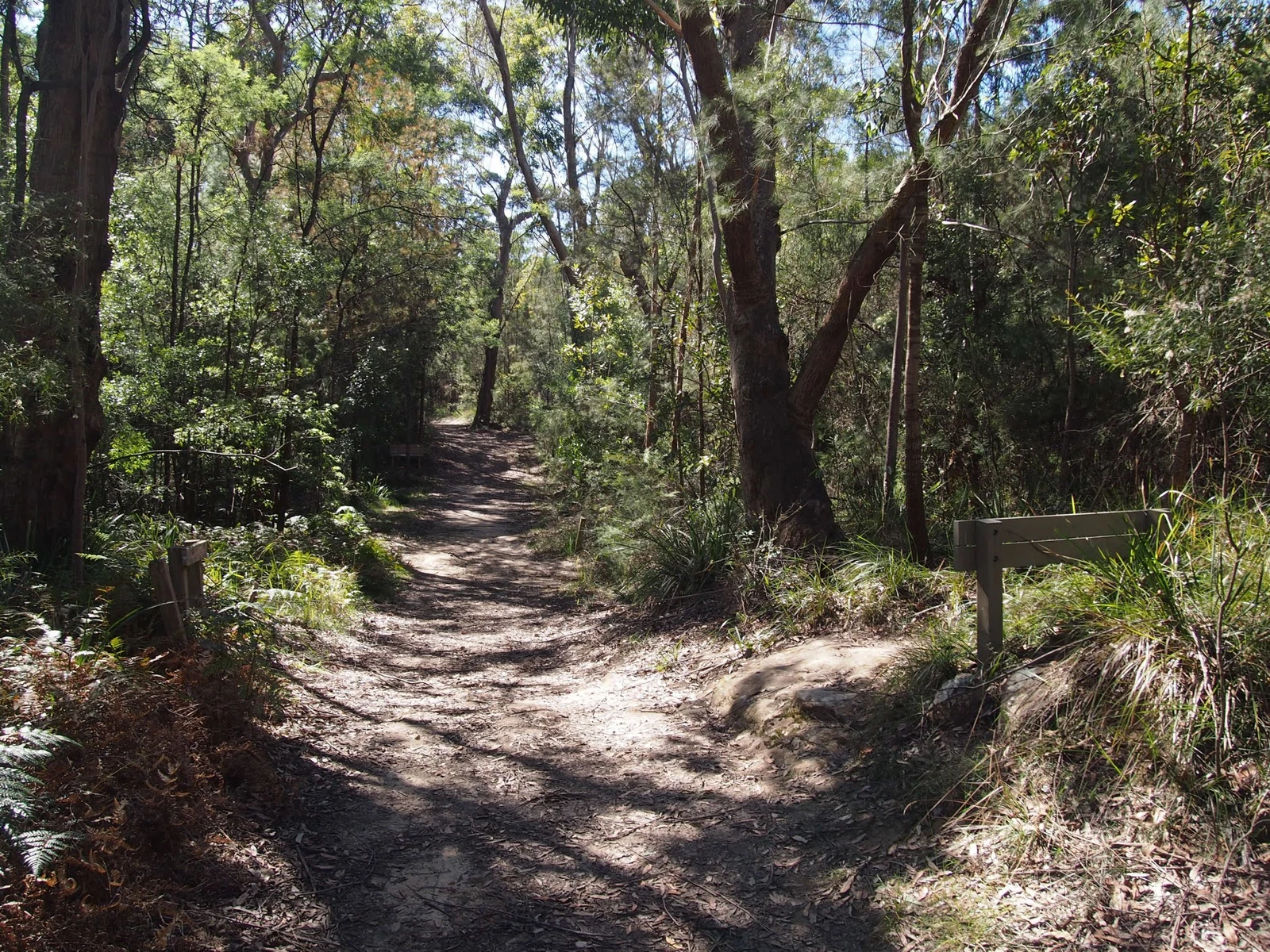
In Ku-ring-gai, a street of established homes can sit just above a wooded gully. Sandstone edges, leaf litter and connected gardens give wildlife cover beyond the reserve boundary. A snake in a yard may be moving through; the sighting alone does not tell us where it came from.
Ku-ring-gai Council reports that more than 30% of the area is bushland. The 123-hectare Wildflower Garden at St Ives is one accessible example of that landscape.
This guide covers Ku-ring-gai (also commonly written Kuringgai). For the wider service corridor towards Hornsby, see our Upper North Shore guide.
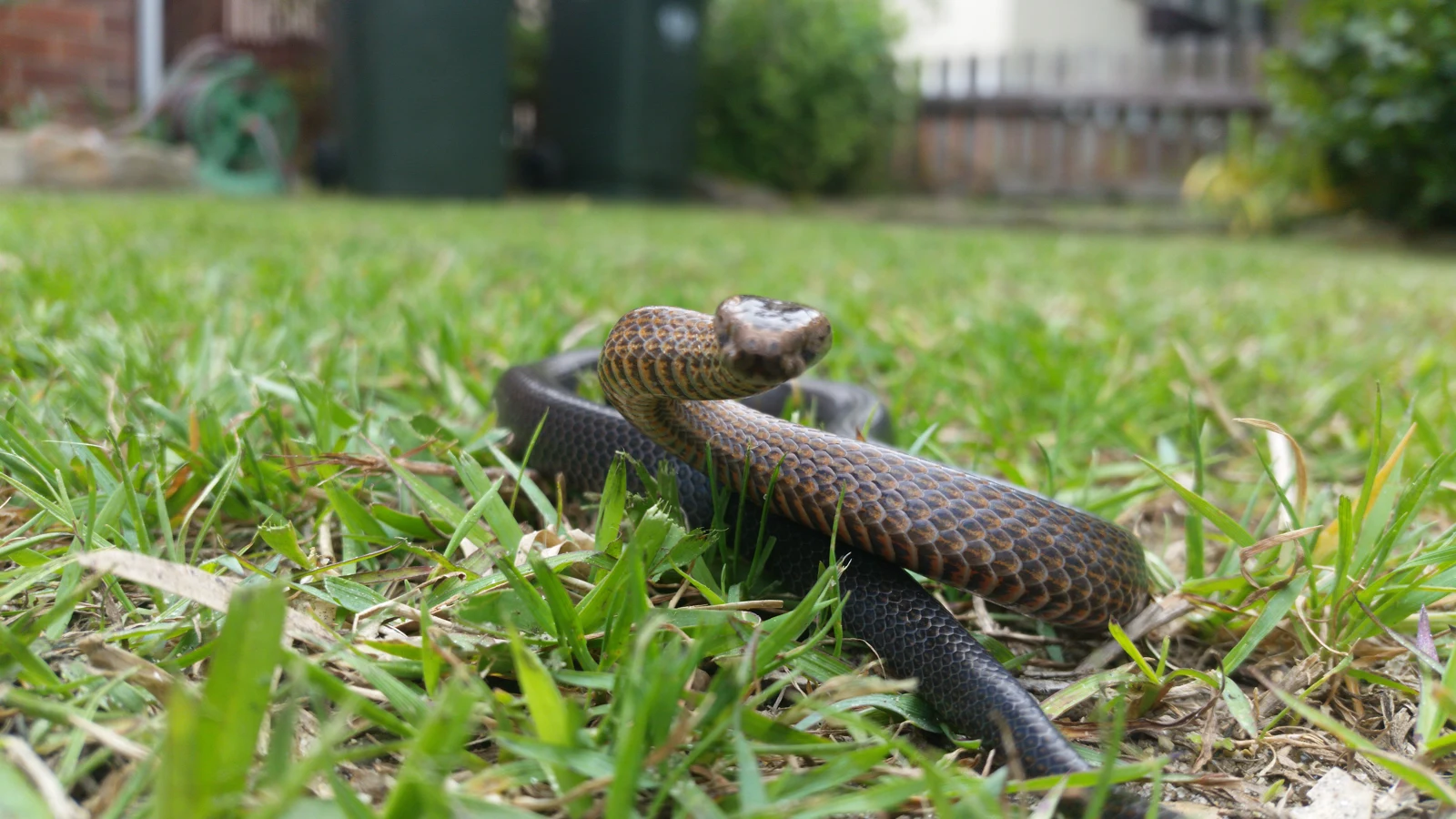
A member of the Snakes in the City catching team found this golden-crowned snake on the front lawn of a Turramurra home. The snake was safely captured and then humanely relocated.
The photograph records an ordinary residential setting, with grass and the house behind it. Local wildlife encounters are not confined to walking tracks or the edge of a national park.
The most useful details are about your property and the snake’s last known position. You do not need to know the species before calling.
Tell us if the sighting is in an open lawn, beneath a deck or beside a bushland boundary. Give the street address and the safest gate; a reserve name alone may lead to the wrong entrance.
For established gardens, describe steps, retaining walls, side access and detached garages. Keep the last-seen area quiet; moving pots or stored timber can make a concealed snake harder to locate.
At a unit block, school or workplace, identify the person who can provide entry and keep people away. Note whether the snake is inside, in a shared garden, or near a garage or service area.
Create distance first. Do not identify, corner, touch, trap or kill the snake. Never put yourself between it and an escape route.
Bring children and pets indoors or into a closed room. Give the snake several metres of space and avoid sudden movement.
If it is safe, watch from behind a closed window, fence or other secure position. Note its last-known location without chasing it.
Provide the address, access instructions, where the snake was last seen and whether it is indoors, outside, injured or trapped.
Keep the person still, apply a pressure immobilisation bandage if available, and wait for an ambulance. Do not wash the bite, cut or suck the wound, use a tight tourniquet, or try to catch the snake.
A brief glimpse is rarely enough for a reliable identification. These guides explain the differences without asking you to get closer.
A secretive, mostly nocturnal snake associated with forest and sandstone country. The Australian Museum notes its occurrence in northern Sydney. Our Turramurra photograph is a documented local example.
A non-venomous python of the Sydney region. A large snake still needs space and experienced handling.
A venomous species often associated with wetter habitat. Colour alone is not a safe identification method.
A slender climbing snake with variable colouring. Use our photo identification service if you already have a safely taken image.
Species reference: Australian Museum: golden-crowned snake.
Call 0411 103 488 with your address, the last sighting and any access restrictions. Our back office checks the working roster and catcher locations. Confirm who is attending, the fee and the estimated arrival time before the visit.
Read how dispatch works, or see what our snake removal service involves.
Meet Harley Jones and read about his experience · Media coverage
Keep people and pets away from its last known position. Note the time and the nearest wall, drain, shed or vegetation. Avoid dismantling stored material or reaching into gaps to search for it.
For prevention and first-aid information, use our snake safety guide.
Choose a local suburb guide below. For all other locations, call with the exact address to confirm current availability.
Local snake safety, property and contact information for East Killara.
Local snake safety, property and contact information for East Lindfield.
Local snake safety, property and contact information for East Roseville.
Local snake safety, property and contact information for Gordon.
Local snake safety, property and contact information for Killara.
Local snake safety, property and contact information for Lindfield.
Local snake safety, property and contact information for North Turramurra.
Local snake safety, property and contact information for North Wahroonga.
Local snake safety, property and contact information for Pymble.
Local snake safety, property and contact information for Roseville.
Local snake safety, property and contact information for Roseville Chase.
Local snake safety, property and contact information for South Turramurra.
Local snake safety, property and contact information for St Ives.
Local snake safety, property and contact information for Turramurra.
Local snake safety, property and contact information for Upper North Shore.
Local snake safety, property and contact information for Wahroonga.
Local snake safety, property and contact information for Warrawee.
Local snake safety, property and contact information for West Pymble.
Give the snake space and call to arrange help. For a suspected bite, call 000 immediately.