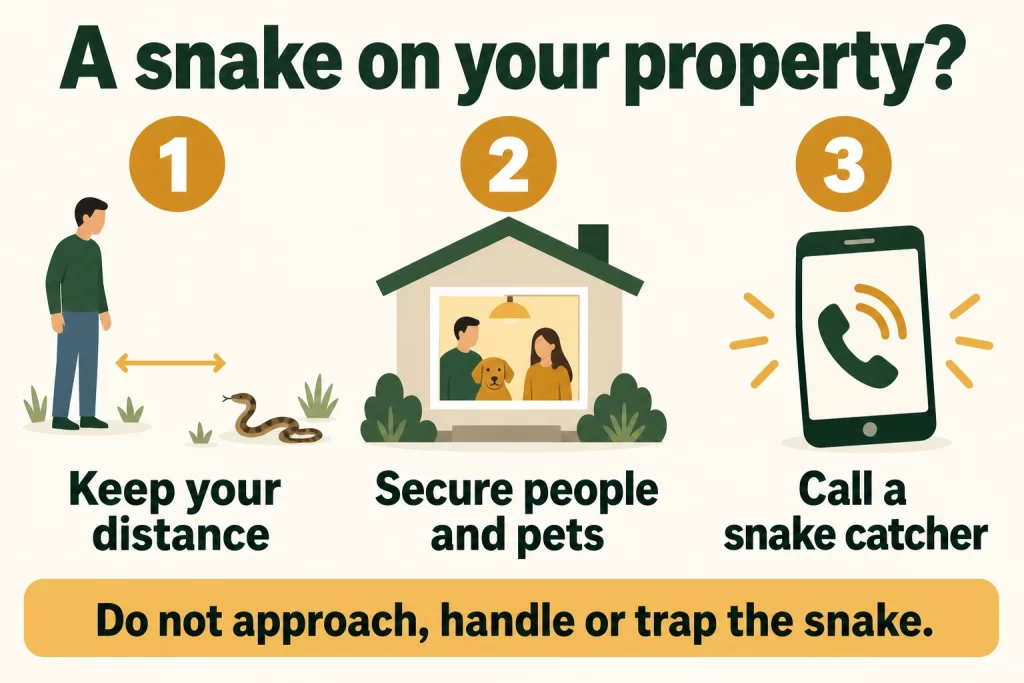
Usually found around backyards with an abundance of lizards or frogs (fishponds, unused pools, swampy areas) and usually retreats under concrete slabs, brickwork, retaining walls, roof tiles left on the ground or root systems of tree’s. Often seen searching through gardens or basking near its retreat in the mid morning and mid afternoon.
What we actually see on Sydney call-outs
Our published Sydney field stories document red-bellied black snakes in a back garden, on a warehouse hardstand and inside a warehouse. These are individual Snakes in the City encounters, not a survey of how often snakes occur in each suburb. The settings below show why the exact last-seen location matters when you call.
Toongabbie garden: trees, rocks and leaf litter
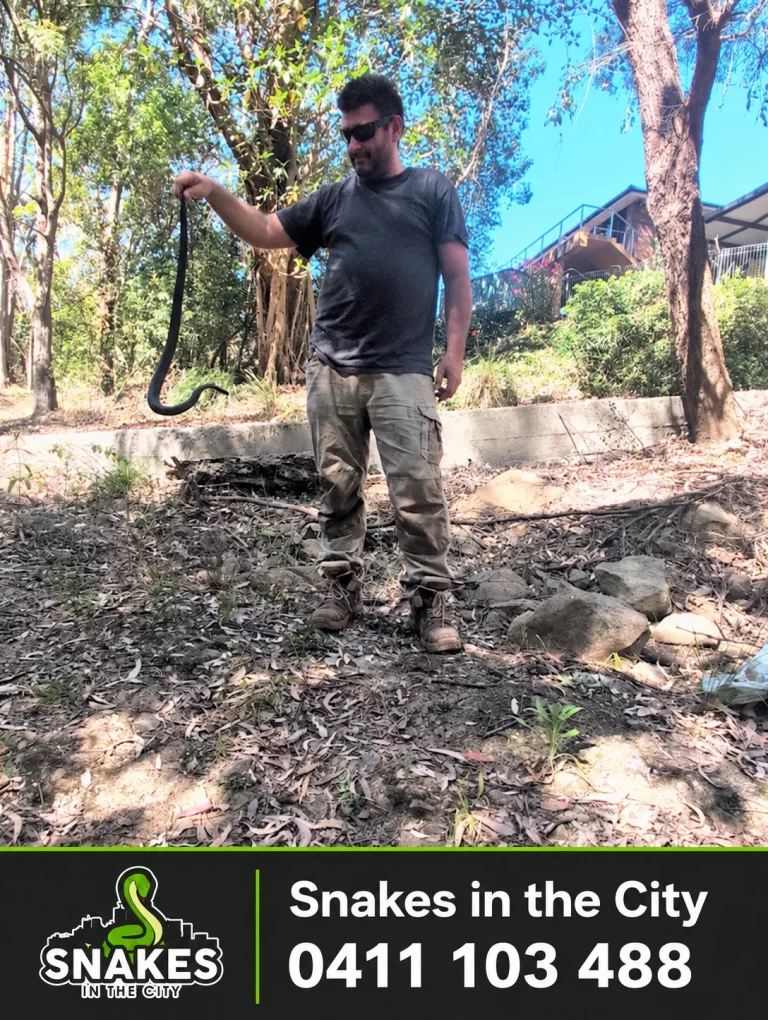
Snakes in the City attended a property on Elfrieda Street in Toongabbie and located a red-bellied black snake in the back garden. The original call-out photograph shows the garden setting, including trees, rocks and leaf litter. Read the full Toongabbie red-bellied black snake call-out for the field story and safety advice.
The garden features visible in the photograph provide context; they do not establish where this snake had been hiding or why it entered the property. Tell the catcher which garden edge or feature was closest to the last sighting, and leave rocks and vegetation undisturbed. See our Toongabbie snake-removal guide.
Seven Hills warehouse yard: a snake on the hardstand
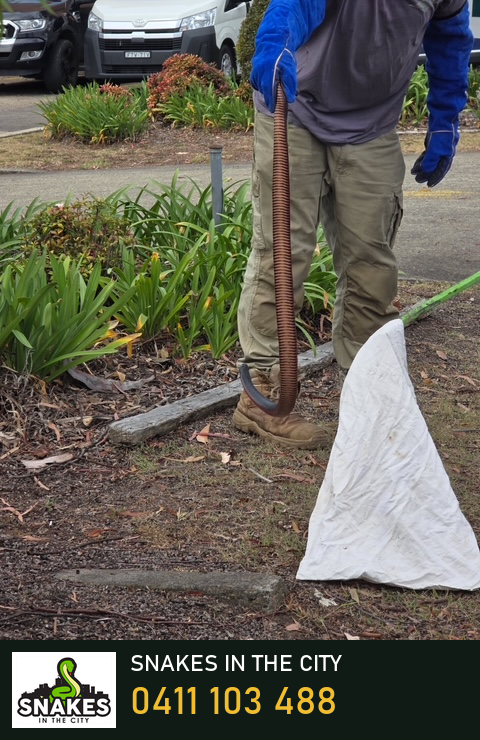
At this Seven Hills warehouse, the snake was outside on the hardstand. An experienced SITC catcher removed it and arranged humane relocation. The photograph shows its red underside during professional handling; residents and workers should never turn a snake over to check its markings.
A workplace sighting can affect deliveries, vehicles and people moving between buildings. Keep the immediate area clear and tell the catcher which entrance reaches the last-seen position. Read the Seven Hills warehouse yard field story and our Seven Hills local service guide.
Silverwater warehouse: an indoor encounter
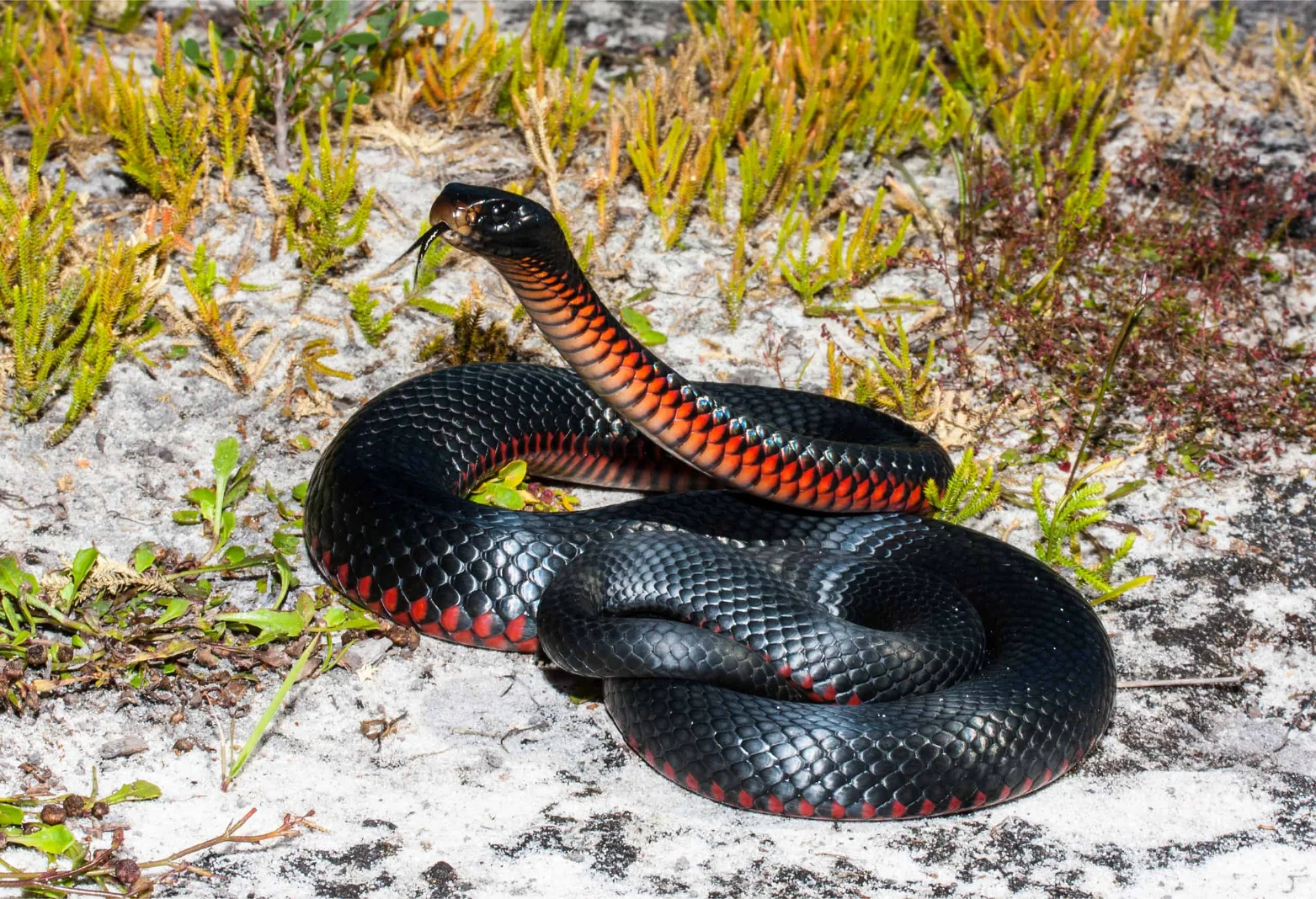
The owners of a Carnarvon Street warehouse called SITC after finding a red-bellied black snake inside. Our catcher secured and removed it for humane relocation. The published report does not establish how it entered. Its accompanying species image is illustrative, not a photograph of that animal.
For an indoor workplace sighting, report the room or bay and keep staff away from the last-seen area. Do not move pallets or stored materials to search. Read the Silverwater warehouse field story. For local coverage, see our Parramatta and Ryde service-area guide.
Where general species knowledge helps
The Australian Museum species account describes an association with moist habitat, although these snakes can occur away from water. Documented shelter includes grass clumps, logs, burrows and large rocks. They are mainly active by day but can remain active into warm evenings. These are general biological observations, not explanations of the three call-outs above.
A black back and reddish lower sides are useful descriptive features, but similar-looking species occur. Keep your distance and use our snake identification service; do not approach for a better photograph.
What to tell us when you call
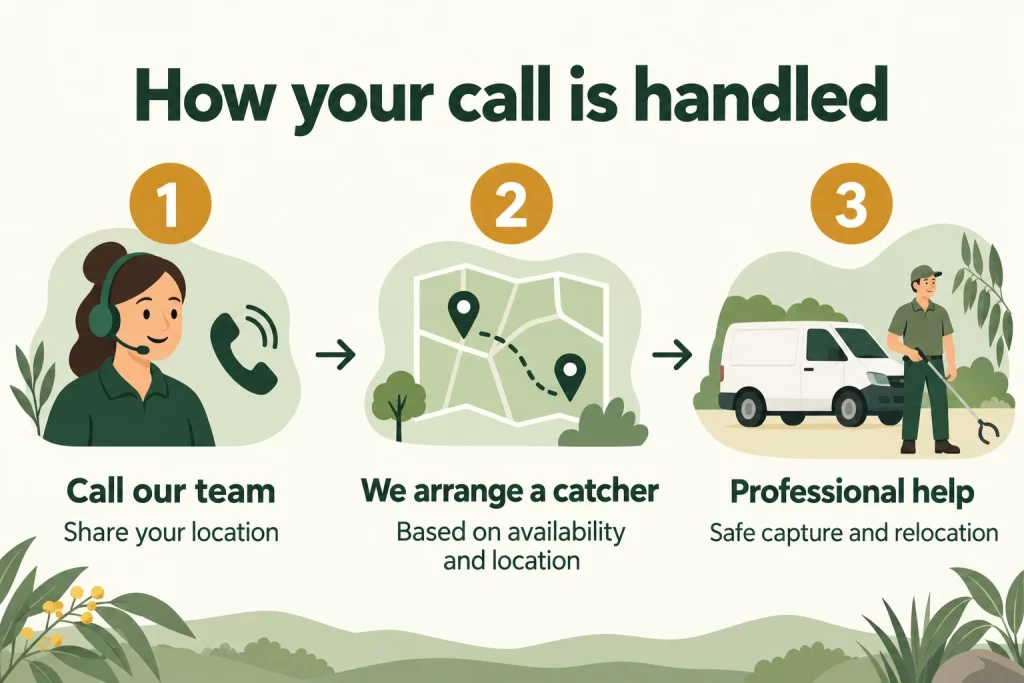
Give the suburb and exact address, whether the snake is inside or outside, its last-known position, the safest entrance and any people, pets or workplace hazards nearby. Watch only from a safe position. If it disappears, leave the area undisturbed and tell us where it went. Call 0411 103 488 for current availability and an arrival estimate. Read about Harley Jones and his experience.
Suspected snakebite: call 000
Every suspected human snakebite needs urgent medical help, even if the person feels well. Call 000, keep the person still and follow the ambulance operator’s instructions. For a bitten limb, apply pressure immobilisation first aid. Do not wash the bite, cut or suck it, use a tourniquet or try to catch the snake. See Healthdirect’s snakebite first-aid guidance.
Field-story section updated 5 October 2026. Field accounts are drawn from the linked Snakes in the City reports.