Significance to Humans
The eastern brown snake is considered to be the second most venomous terrestrial snake.
Eastern brown snakes are highly venomous, and any suspected bite must be treated as a medical emergency. Even if the bite appears minor or the person initially feels well, call Triple Zero (000) immediately. Keep the person still and apply appropriate pressure-immobilisation first aid. Do not wash the bite, apply a tourniquet or attempt to capture the snake.
General Description
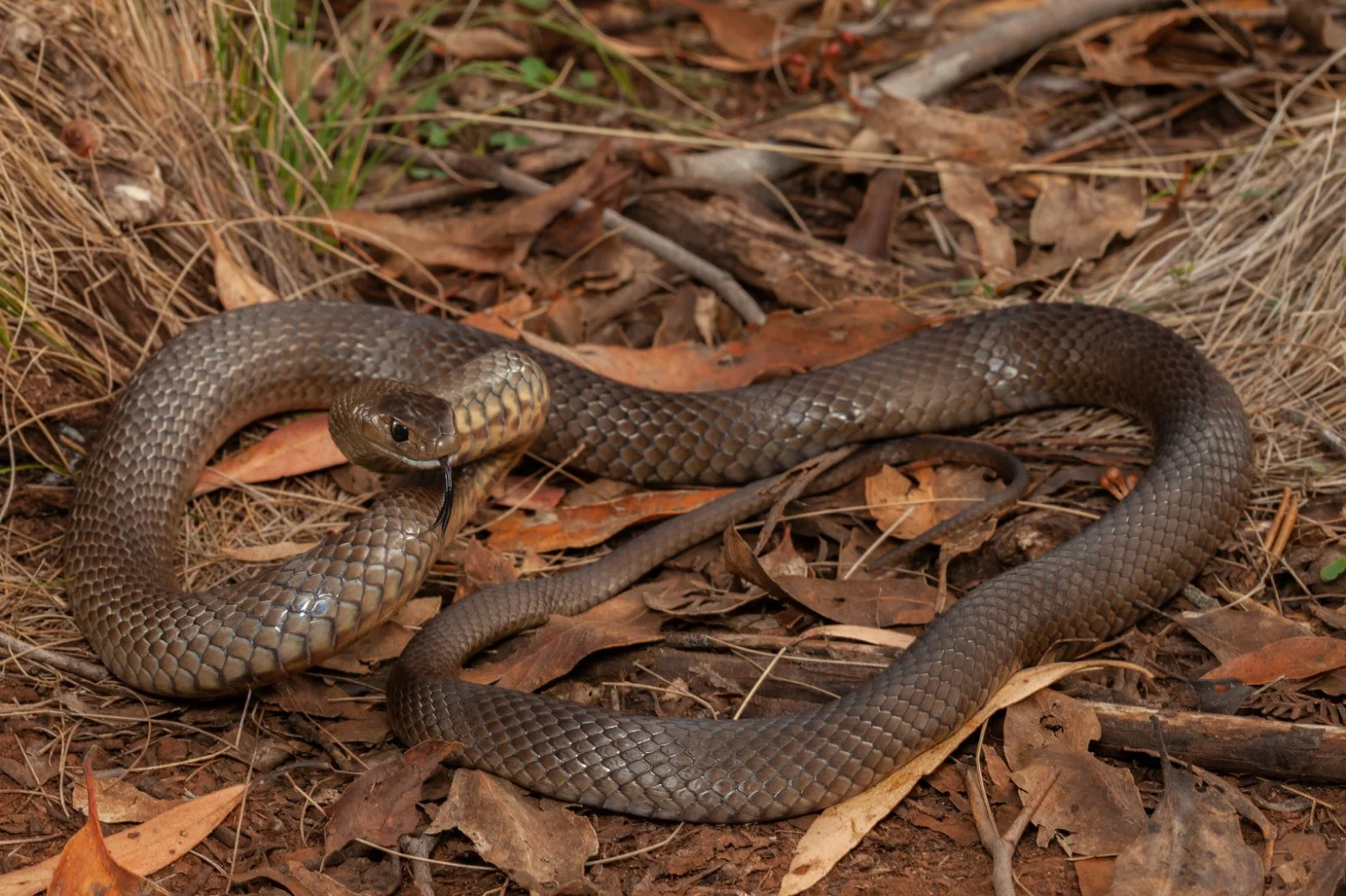
Adult eastern brown snakes are highly variable in colour. Whilst usually a uniform shade of brown, they can have various patterns including speckles and bands, and range from a very pale fawn colour through to black, including orange, silver, yellow and grey. Juveniles can be banded and have a black head, with a lighter band behind, a black nape, and numerous red-brown spots on the belly.
Average Length
Eastern brown snakes average about 1.5 metres in total length, according to the Australian Museum. Size alone cannot identify a snake, and a small snake should never be assumed harmless.
Habitat
This species uses varied habitats, including open woodland and grassland, agricultural land and the edges of towns and cities. Shelter can include logs, rocks, soil cracks, animal burrows and discarded building materials.
Diet
Eastern brown snakes eat a range of vertebrates, including frogs, reptiles, birds and mammals. Introduced rats and mice are important prey. Their presence around food and shelter helps explain why snakes may occur near modified landscapes.
Read the Australian Museum’s Eastern Brown Snake account for further species information.
Around the Home
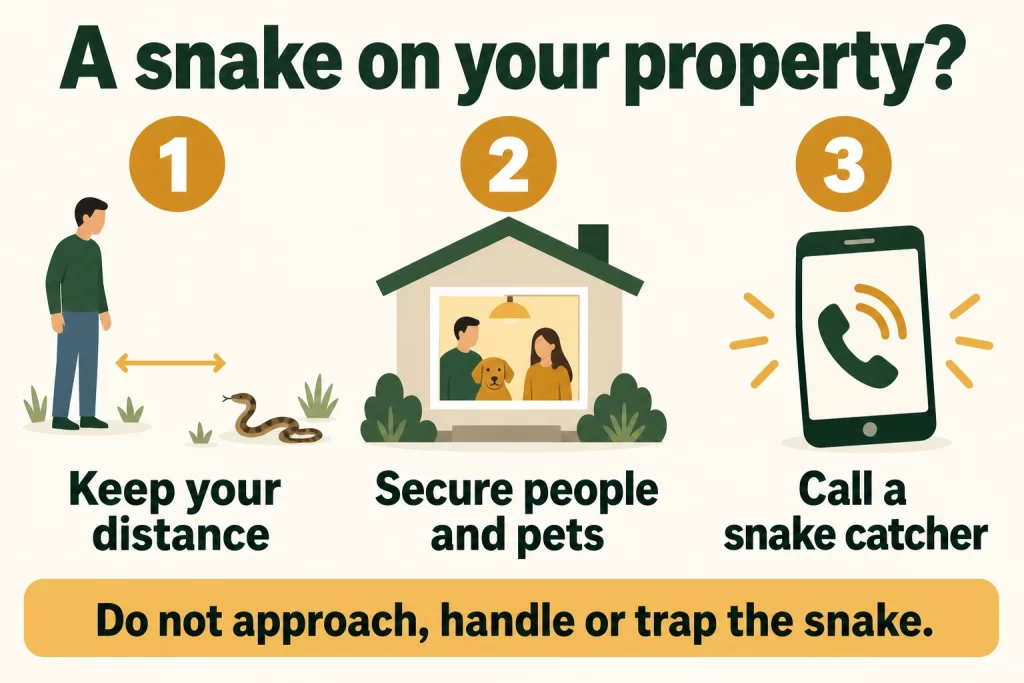
If you notice a snake, stop approaching it and keep people and pets away. Do not move stored materials to find it, block its path, or attempt to trap or handle it. You do not need to identify the species before seeking help.
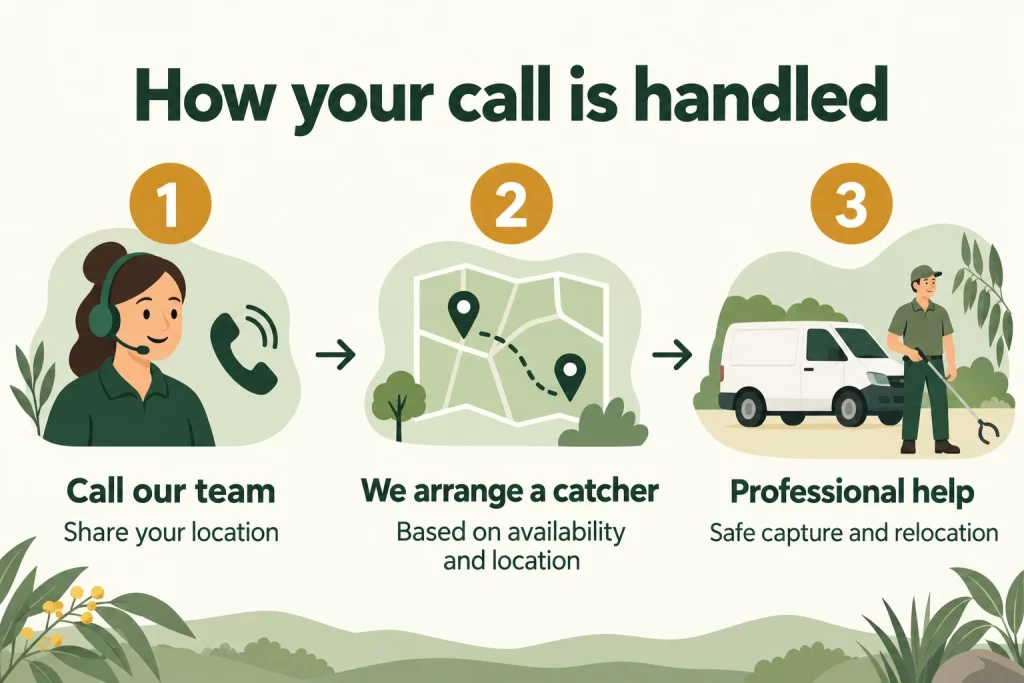
For snake removal, call Snakes in the City on 0411 103 488. Tell the team your location, where the snake was last seen and whether it is still visible. Confirm catcher availability, the call-out fee and estimated arrival when you call.