Bites from this species have been known to cause local symptoms such as significant pain & swelling, with more general reactions such as headaches and nausea also recorded. Unless handled, Marsh Snakes are very unlikely to bite. However, they have been known to bite readily with very little warning if they are picked up, so as for all snakes, they should not be handed or interfered with in any way. All bites should still be treated immediately and attended to with correct first aid.
General Description
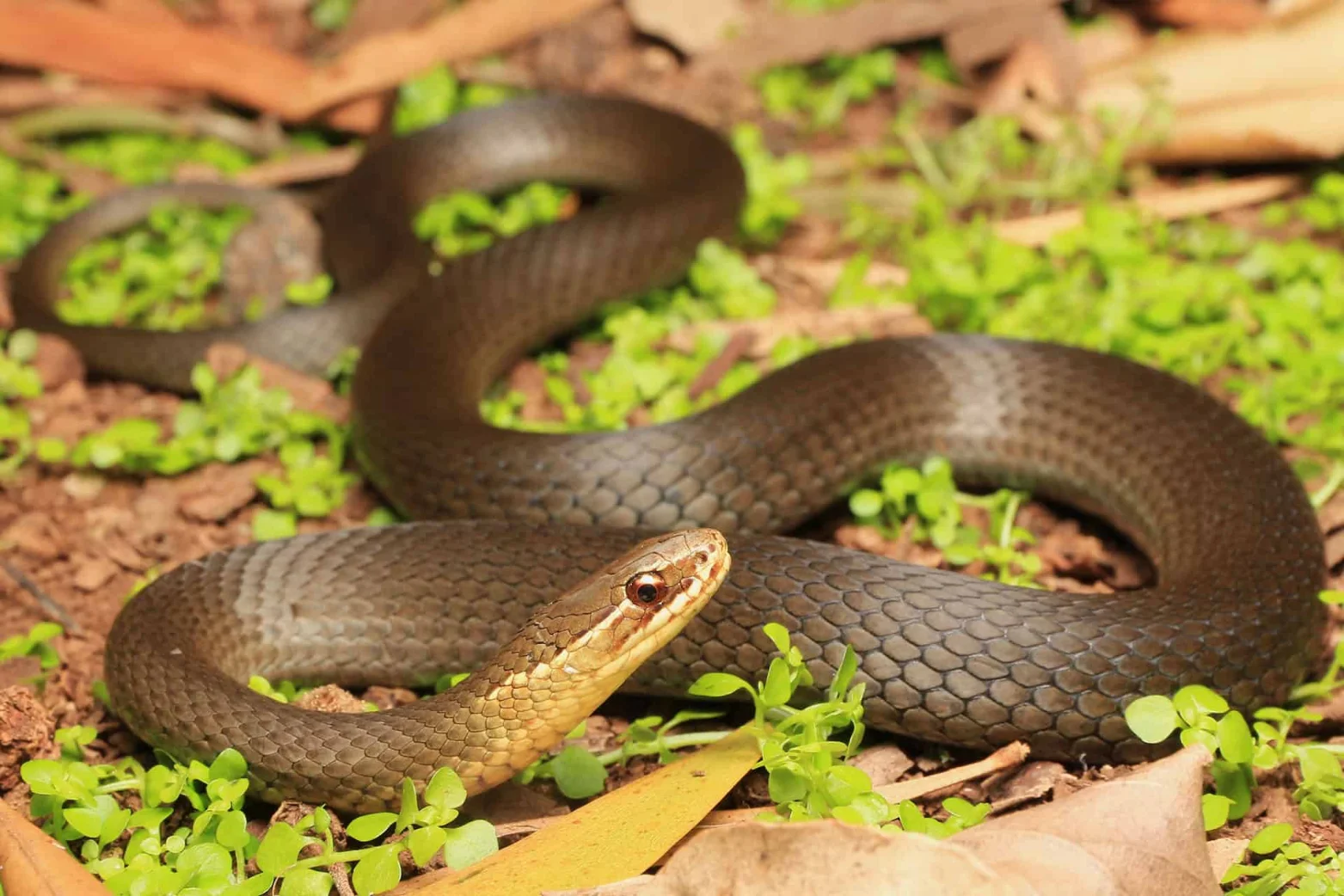
Usually coloured a fairly uniform grey above, with dark grey or black belly surface. Two prominent narrow pale-yellowish stripes on each side of face, one running from snout, through eye and onto neck area, & one below eye running from snout to corner of mouth. In juveniles the head is often darker than the body. Scales smooth. Midbody scales at 17 rows.
Average Length
Specimens found in the Sydney region are usually between 20-40cm in length, which although still a mature adult, is on the smaller side of the potential length of the species as found elsewhere.
General habits
Diurnal (most active during daylight hours), although may also be active at night in hot weather. Marsh Snakes naturally shelter under rocks, sheets of bark and thick debris, however they can be found around homes in cracks and crevices around concrete slab/driveway/footpath/stairs and occasionally in homes after they have inadvertantly wandered in.
Habitat in Sydney Region
Marsh Snakes occur in moist, well-vegetated parts of the Sydney region, including creek margins, wetlands, dams and seasonally flooded low-lying ground. They may also be encountered in gardens and around homes near this habitat.
Diet
Marsh Snakes primarily eat small frogs and lizards.