Station-side properties
Ground-floor courtyards, shared garages, bin rooms, laundries and delivery areas need controlled access and clear unit or bay numbers.
A snake at your Pennant Hills home, workplace or property needs calm, professional handling. Keep people and pets well back, maintain a safe view if possible, and call Snakes in the City for snake capture and removal.
At a school, sports field, townhouse or sloping home, “somewhere near the garden” is quickly lost. Distance plus a precise landmark gives the catcher safer information.
Move children, spectators, workers and pets indoors or behind an existing barrier. Do not stand between the snake and open ground.
Use a gate number, field, fence panel, retaining-wall tier, drain, garage bay or deck support. Remember its direction if it moves.
One adult should call and meet the attending catcher at the agreed entrance. That avoids a crowd and prevents conflicting reports.
Keep the patient immobile, apply pressure immobilisation when available and follow ambulance instructions. Never wash the site or delay care to photograph, identify or capture the snake.
Pennant Hills is not one uniform setting. Around the station and Pennant Hills Road there are shops, apartments, townhouses, schools and busy vehicle access. East and north of the centre, mature gardens and sporting land around Pennant Hills Park connect with the wider Hornsby Shire bushland network. Lower slopes and drainage lines towards Devlins Creek and Byles Creek add damp, sheltered habitat.
That mix changes the practical response. On a compact townhouse lot, the safest observation point may be an upstairs window. At a school or sports ground, staff may need to close a gate and move a group indoors. On a steep block, accurate directions such as “below the second retaining wall” are more useful than walking into vegetation.
A snake seen once may be moving between shelter, warmth, water and prey. Its presence does not prove there is a nest, and no responsible catcher can diagnose the entire property from the suburb name.
These locally relevant views help explain why access, vegetation and drainage differ across Pennant Hills. Images are illustrative—never use a photograph to identify a live snake at close range.


A catcher can interpret site features. Residents should not probe them.
Ground-floor courtyards, shared garages, bin rooms, laundries and delivery areas need controlled access and clear unit or bay numbers.
Identify the field, goal end, gate, fence or amenities building. Move teams away; do not surround the animal with phones.
For land falling towards Devlins or Byles Creek, specify upper or lower terrace and the last retaining wall, step or vegetation edge.
Do not reach beneath pots, into drains, through stacked timber or inside roof voids. The last reliable observation is safer than an amateur search.
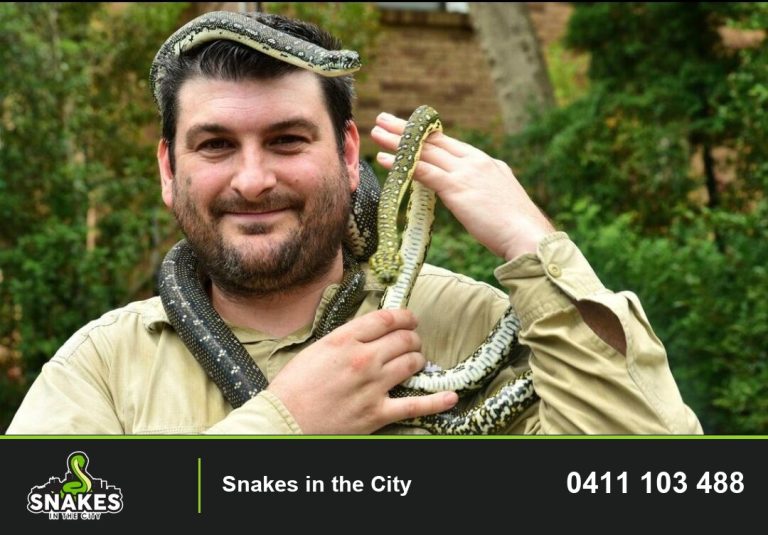
Harley’s images help explain who attends and what protected reptiles can look like in northern Sydney. They are deliberately labelled as regional examples, not claimed Pennant Hills removals.


Regional records and habitat explain what is possible, not what is present at a particular address. Colour and markings vary with age, light and individual animals, so keep your distance and leave identification to an experienced handler.
A non-venomous python associated with Sydney bushland. It may use trees, roof spaces or areas where rodents are active. It is protected wildlife and can bite if grabbed.
More strongly associated with wetter gullies, creek margins and frog habitat. Never enter reeds or dense groundcover to confirm an identification.
A small, nocturnal species that may shelter beneath rocks, logs or garden material. It is venomous; small size is not a reason to handle it.
A fast, slender, venomous species that may be encountered in open or disturbed areas. Similar-looking snakes make distance-based identification unreliable.
A highly venomous species possible across greater Sydney, especially where open ground and rodents are present. Do not block its path or attempt capture.
Other protected reptiles can pass through connected gardens and bushland. Treat every unknown snake cautiously rather than relying on a short online list.
Close internal doors if this can be done without approaching the snake. In shared garages, bin rooms or landscaped courtyards, prevent residents entering and give the catcher the strata access contact.
Move students, spectators and pets away from the area, nominate one observer behind a barrier, and record the exact field, gate, fence line or building. Do not form a crowd around the snake.
Pause work in the immediate area, isolate loading bays or storerooms and tell the catcher about forklifts, contractors, locked plant rooms and other site hazards.
Diamond pythons can climb and may follow prey, but scratching or movement in a roof void can also be caused by rats, possums or birds. Do not enter the roof space. Report where and when the sound was heard so the cause can be assessed safely.
A quick glimpse of a long body in mulch is sometimes a blue-tongue lizard. Do not handle it or step closer to check. A safe, zoomed image may help only if it can be taken without approaching.
Start at school paths, front steps, play spaces, sports amenities, garage entries and pet areas. Keep the ground visible, move loose materials off floors and manage spilled feed or rubbish that supports rodents.
Have suitable door gaps, shed bases and pipe penetrations repaired with pest-resistant materials. Building work should suit ventilation, drainage, heritage and strata requirements rather than applying indiscriminate mesh.
Contacts were checked against provider pages and are included for safety, not as endorsements. For any suspected human snakebite, call 000 and follow the operator’s directions.
Palmerston Road, Hornsby NSW 2077
Hospital information: (02) 9477 9123
Suspected snakebite: call 000.
180 Pennant Hills Road, Thornleigh NSW 2120
Call ahead and follow the veterinary team’s transport instructions.
63 Herbert Street, Artarmon NSW 2064
24/7 emergency: (02) 9436 4884
Keep pets away from the snake and phone before travel.
Provide the field or facility name, nearest gate, goal end or fence line, whether play has stopped and where the snake was last visible.
Move students inside or behind a secure barrier, stop access to that zone, assign one staff observer and keep the arrival gate clear.
Only if the control can be used without approaching the snake or trapping a person nearby. Keep residents out and give the catcher the bay and access contact.
Do not follow down the slope. Record the last fixed point and direction, then protect the boundary area from people and pets.
No. An address, safe access route and accurate last-seen landmark are more important. A zoomed image is optional only from behind a barrier.
No. Open land can still be crossed by wildlife. Good visibility and a practiced exclusion procedure are the realistic controls.
Service includes residential, strata, school, sports, commercial and construction sites in Pennant Hills, subject to access and availability. Snakes in the City operates under NSW wildlife licence MWL000102655.
Explore other Snakes in the City service pages for this part of Greater Sydney.
View local safety, property and contact information for Thornleigh.
View local safety, property and contact information for Westleigh.
View local safety, property and contact information for Beecroft.
Keep your distance and call Snakes in the City. If anyone may have been bitten, call 000 immediately.