Describe the last sighting
Give the street address and a fixed landmark: the deck stairs, retaining wall, pool gate or loading bay. Say whether the snake is still visible and whether it moved uphill, downhill or towards bushland.

Snake in a Belrose garden, beside a deck or at your workplace? Keep people and pets clear and call with the address and last-known location. Our office will check available catchers and discuss attendance.
Call-out fee applies. Confirm the fee and available catcher when you call. No weekend or public-holiday loading.
Suspected human snakebite? Call 000 immediately.
Start with the location and a safe way in. You do not need to identify the species or approach the snake before calling.
Give the street address and a fixed landmark: the deck stairs, retaining wall, pool gate or loading bay. Say whether the snake is still visible and whether it moved uphill, downhill or towards bushland.
Tell the office which entrance reaches the sighting. Mention a sloping rear yard, locked side gate, building number or workplace check-in, and nominate one contact for a managed site.
Our office checks the roster and catchers’ known locations. Ask who is available, the expected timing and the call-out fee. No extra weekend or public-holiday loading applies.
Bush-edge yards can offer several exits in seconds. Your useful job is to protect people—not to force the animal to stay visible.
Bring children and pets behind a closed door. Stop anyone entering the garden, deck, garage or path where the snake was observed.
Use a window, vehicle, solid fence or raised balcony. If the view cannot be kept without stepping into the open, leave the area and remember the final location.
Note whether it headed uphill or downhill, towards Garigal-side vegetation, a retaining wall, drain, pool enclosure, shed or building opening. A close photograph is unnecessary.
Give the street address, gate or driveway, level of the property, locked areas and any dogs. The team can use those fixed details to plan the search.
Keep the patient still, apply a pressure immobilisation bandage if one is available, and follow the emergency operator. Do not wash the bite site, cut it, suck it, use a tourniquet or pursue the snake.
Belrose sits on a developed sandstone ridge beside Garigal National Park. Council’s Belrose Reservoir Bushland Reserve protects a patch of threatened Duffys Forest vegetation on Forest Way, while the Heath and Bare Creek trail system drops from the Ralston Avenue and Wyatt Avenue side of the suburb into the Middle Harbour Creek catchment.
That landscape is interrupted by homes, schools, community facilities and the Austlink Business Park, where offices, warehouses, distribution areas and large-format retail create very different access and safety problems from a steep rear garden.
A snake may be passing through rather than living on the property. Water, prey, warmth and temporary shelter matter more than suburb boundaries.
Observe these features from a distance. Never lift, dismantle or reach into them after a sighting.
Split-level decks, sandstone retaining walls, pool pumps, stair voids and undercrofts can break the line of sight on sloping lots.
Leaf litter, groundcover, stormwater edges and gaps beneath fences can form a route between a garden and reserve vegetation.
Loading areas, pallet storage, service yards, playground edging and construction material require a controlled exclusion zone rather than a crowd.
Food matters as much as cover: rodents, frogs, lizards and spilled animal feed can influence where a snake travels. Seeing one snake does not establish that it lives or breeds on the site.
These Snakes in the City photographs introduce Harley and show animals recorded elsewhere in northern Sydney. The office will confirm who is attending your call-out. Do not approach an unknown snake to compare it with a photograph.
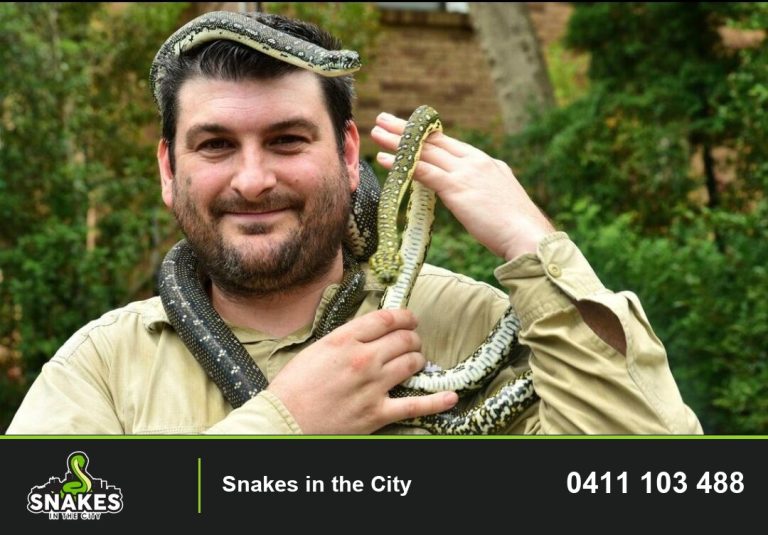
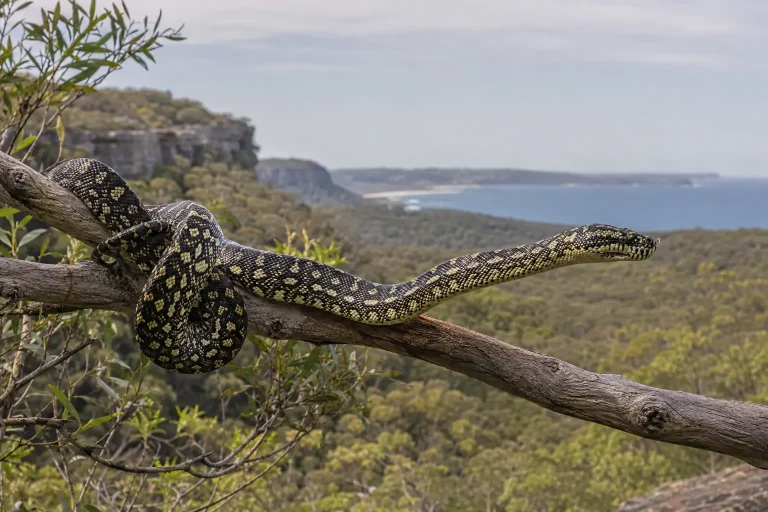
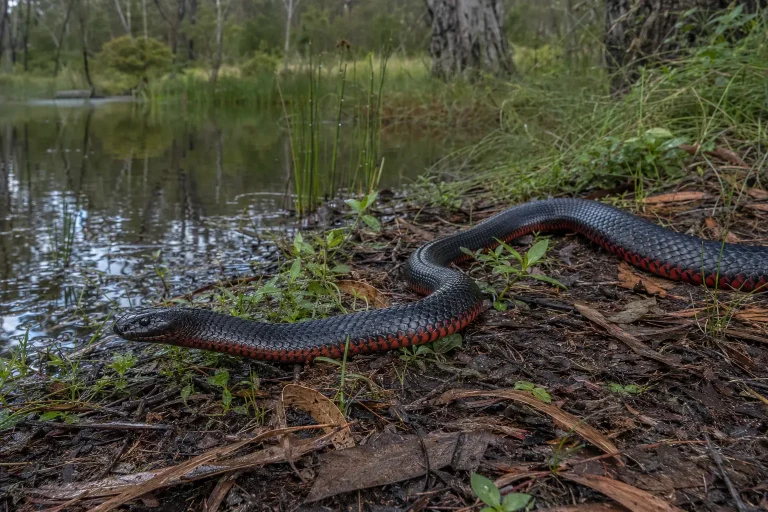
Belrose is not one uniform bush-edge suburb. The developed ridge around Forest Way and the business precinct gives way to sandstone slopes, Duffys Forest vegetation, the Belrose Reservoir reserve and tracks descending through Garigal National Park toward Middle Harbour.
Steep rear yards, decks, retaining walls, pools and narrow side passages can make the last-seen point more important than a close photograph. Stay inside or above the slope and use a fixed landmark.
Redirect people, stop work in the immediate bay and appoint one observer. For a construction or commercial site, provide the gate, induction contact, loading access and the exact item of cover.
Frogs around drains, pools and damp gullies can be relevant to red-bellied black snakes. Rodents around food waste, pet feed or stored goods can attract hunting snakes and pythons.
Trying to force a snake back into bush places a person between the animal and shelter. Withdraw behind a barrier, maintain a safe view and call with the current situation.
Belrose Reservoir Bushland Reserve: Forest Way properties can sit close to a small, high-conservation reserve containing threatened Duffys Forest vegetation beside Garigal National Park.
Ralston and Wyatt Avenue trailheads: the Heath trail begins on this side of Belrose before descending toward Bare Creek. On a sloping block, tell our team whether the animal moved uphill, downhill or toward a drain or reserve boundary.
Austlink Business Park: warehouses, storage areas, loading zones and distribution uses require one site contact, a stopped work area and an exact bay, gate or tenancy. A vague business-park address is not enough.
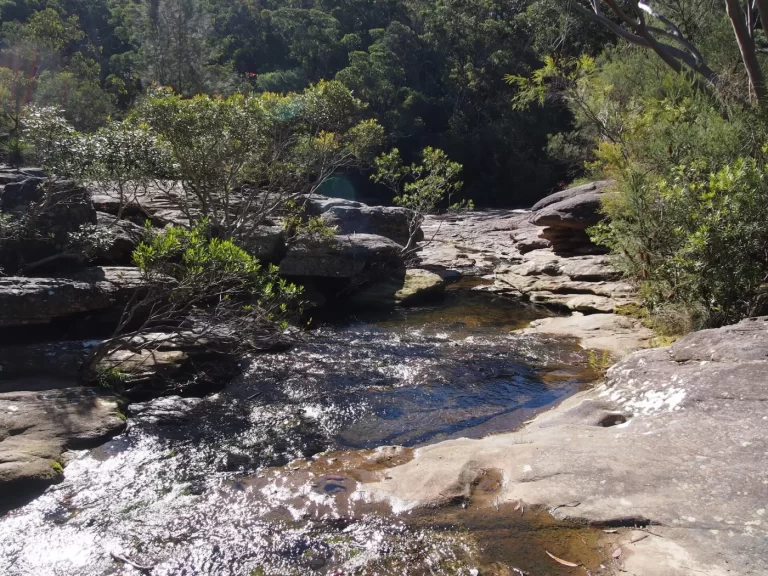
Belrose access map. Give the street, best gate, slope direction and last-seen feature when you call.
This is regional habitat context, not a prediction for a Belrose address. Never rely on colour alone: age, lighting and natural variation make quick identification unreliable.
Mature trees, sandstone, roof spaces and sheltered bush-edge gardens can provide suitable cover. It is non-venomous, but a householder should still give it space and avoid handling it.
Creeks, damp gullies, drains and frog-rich gardens are relevant habitat clues. It is venomous and requires professional handling.
This fast, slender species can use dry woodland edges, rocky ground and gardens. It is venomous and may be confused with other small brownish snakes, so do not make a safety decision from a hurried look.
A small, nocturnal snake associated with damp sandstone country, rocks, logs and leaf litter. The pale crown can be difficult to see and is not a safe identification test.
There is no ethical “snake-proof” promise. A better plan removes unnecessary hiding places while preserving a clear route for people to use doors, bins, pools and paths.
These verified contacts are included for safety, not as endorsements. A human snakebite is always a 000 emergency; do not drive the patient to hospital yourself unless emergency services direct you.
105 Frenchs Forest Road West, Frenchs Forest NSW 2086
Hospital information: (02) 9105 5000
Suspected snakebite: call 000, not the hospital switchboard.
70 Pringle Avenue, Belrose NSW 2085
Local clinic: (02) 9452 3155
Call first and state that snake bite is suspected.
16 Myoora Road, Terrey Hills NSW 2084
After-hours emergency care: (02) 9452 2933
NEVS lists snake bite among the emergencies it treats and operates after hours 365 days a year.
Call with your exact address for current availability and expected timing. Our office checks the working roster, other call-outs and catchers’ known locations. Travel and access can affect arrival; there is no fixed response-time promise.
The office arranges an available member of the Snakes in the City team. Harley may attend, but he does not personally handle every call-out. Ask who is being arranged for your Belrose address.
A call-out fee applies. Confirm the fee and attendance arrangements when you call. The fee covers travel, the catcher’s time, equipment and expertise, not only the capture itself. No extra weekend or public-holiday loading applies.
The phone line is available for enquiries 24/7. Attendance depends on the available catcher, current jobs and your location. Ask the office about the arrangements for your property when you call.
Give the exact street address, building, gate or loading bay and the last place the snake was seen. Nominate one site contact and explain any locked access or check-in requirements. Keep people away from the immediate area while attendance is arranged.
Update the office with the last reliable sighting and direction of movement. Leave cover undisturbed and keep people and pets clear. A capture cannot be guaranteed if the snake has left or cannot be found; discuss the attendance arrangements when you call.
No. A snake may simply cross while seeking warmth, water, prey or shelter. The catcher assesses the actual sighting and property rather than assuming permanent residence.
Remain on the safe level. Note the last-seen point from a secure position and explain whether it moved uphill or downhill. Do not lean over the wall or descend after it.
Belrose is connected to nearby bushland-edge suburbs, but this page deals with Belrose’s own ridge, reserve, creek and business-park conditions. Use the neighbouring guide that matches the actual address.
Hospital, commercial and established residential properties south-east of Belrose.
Steep residential streets beside the Garigal and Middle Harbour Creek landscape.
Homes, schools and businesses around the southern side of the local bushland corridor.
The parent regional guide and full local service-area list.
Local facts, service links and contact details reviewed 29 August 2026.
This update adds practical detail for the places, access conditions and property types that distinguish this suburb. It complements the safety and service information already on this page.
Bush-facing home: Bring pets indoors through a separate route. Leave rock walls, decks and vegetation untouched and mark the last point.
School or childcare site: Move students as a group, stop access to the affected path or oval and nominate one staff contact at the correct gate.
Retirement living: Keep residents indoors or in another common area, control walkers and mobility routes, and organise building access before arrival.
Warehouse or commercial property: Isolate the bay, dock or storage edge, park plant and explain security or induction requirements.
Keep doors, decks, play areas and pool routes visible. Raise long-term storage, contain animal feed, reduce rodent access and repair suitable gaps. Trim dense garden cover beside high-use areas, but do not clear public reserve vegetation or remove bush rock. Contact the land manager for hazards beyond the property.
Call with the address, last-known location and safest entrance. Confirm the available catcher, timing and call-out fee with our office. Keep the immediate area clear while help is arranged.

