
Bungarribee · Blacktown and North-West Sydney
Snake Catcher Bungarribee
Found a snake beside your Bungarribee home, on a work site or near the parklands? Move people and pets away, leave the animal an escape route, and tell us exactly where it was last seen.
Have the street number, nearest cross street and access instructions ready. We can discuss the situation, current availability and the attendance fee before a visit is arranged.
Where new housing meets creek country
Bungarribee has a different setting from a completely built-up town centre. Nearby Bungarribee Park contains open grassland and protected wetlands around Bungarribee Creek and Eastern Creek. Greater Sydney Parklands describes restoration of the Cumberland Plain landscape here. These are living habitats, even where roads, paths and residential fences sit close by.
That setting helps explain why a reptile might cross a property, but it cannot tell us how many snakes occupy a street. A garden can offer temporary cover between larger patches of vegetation. On a newly landscaped block, stacked edging, loose pavers and gaps behind retaining walls deserve particular attention after a sighting has been resolved; do not lift them to look for a snake.
At a house or building site
Give the actual property entrance, rather than the nearest park landmark. Explain whether gates are locked, workers are present or the snake went beneath stored materials. Pause activity in that part of the site and keep machinery away until the area can be assessed.
At Bungarribee Park
The main entrance is at Doonside Road and Holbeche Road. The Runway and Greenbelt car parks are useful location references. If you are near a shelter, track or Warrigal Run, name it and report the last position to the responsible park staff. Do not follow a snake into creek vegetation.
Official park facilities and directions and the Bungarribee precinct map can help identify a location. A park sighting does not necessarily require capture; an animal moving away from people may be left undisturbed.
Which snakes are relevant to this landscape?
Eastern brown snakes and red-bellied black snakes are useful species to understand in western Sydney. This is regional habitat guidance, not a record of a snake at your property or a claim about Bungarribee’s most common species.
Open ground: eastern brown snakes
The Australian Museum describes eastern browns in varied habitats, including grassland and disturbed country. Rodents can provide prey around human development. Their colour varies considerably, so a pale, dark or banded animal should not be identified from colour alone. Read the SITC eastern brown snake guide without approaching the animal.
Damp margins: red-bellied black snakes
Creeks, wetlands and other moist places suit the feeding habits of red-bellied black snakes, which eat frogs and other small animals. A snake beside a drain is not automatically a red-belly, however. Both this species and eastern browns are venomous: the safe response is distance, not a closer inspection.
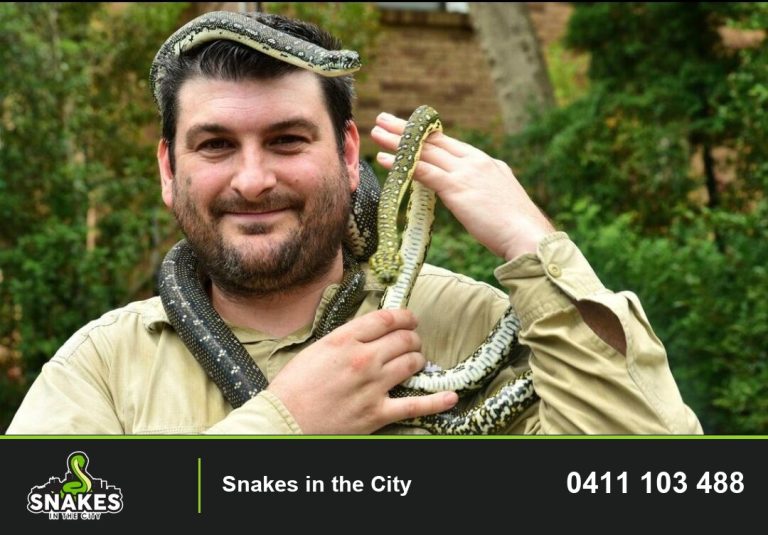
Diamond pythons and golden-crowned snakes are also part of the broader Sydney fauna. A python may climb into shelter, while small nocturnal snakes can remain hidden under ground cover. A lace monitor is a lizard, not a snake. Avoid using size, climbing behaviour or a partly hidden body as proof that any unidentified reptile is safe to touch. Our identification information explains the limits of casual identification.
When the snake disappears behind a fence
Note the time and the precise gap it used. Watch only from a protected position that does not bring you closer, and update us if it moves again. Do not send a neighbour into the next garden to flush it out. If it entered your home, leave the room and close the door only if you can do so without passing the snake.
Once the immediate problem is over, keep frequently used paths visible, store materials above the ground where practical and secure food that attracts rodents. Have gaps around external doors and service entries assessed. Check that wildlife is out before sealing a cavity. None of these measures guarantees a snake-free property.
Medical and veterinary help near Bungarribee
Human bite: call 000, keep the person lying still, and apply pressure immobilisation as directed. Do not wash, cut or suck the bite or use a tourniquet. Do not catch the snake for identification. Follow Healthdirect’s first-aid instructions.
Blacktown Hospital has an emergency department at 18 Blacktown Road, Blacktown NSW 2148. Switchboard: 02 9881 8000. This is reference information; a suspected bite needs an ambulance call, not a call to the switchboard. Official emergency-department information.
For pets: SASH Western Sydney provides 24-hour emergency veterinary care at 1 Rowood Road, Prospect NSW 2148; call 02 8609 9444. Minimise your pet’s movement and phone immediately for transport advice, even if it seems to recover. Provider details and veterinary snakebite advice. These independent providers do not endorse SITC. Details checked 24 September 2026.
Help across the parklands neighbourhood
Bungarribee belongs in our Blacktown and North-West Sydney service area. For an address beyond the suburb, see Doonside, Rooty Hill or Eastern Creek. Tell us which side of the parklands you are on so access is clear.
Meet Harley Jones and read what to do while waiting for advice.
Species references: eastern brown, red-bellied black, diamond python and golden-crowned snake, Australian Museum. Local features and health contacts are linked above; property precautions are general guidance applied to these settings.