1
Move people and pets
Bring children and animals indoors or into a secure area without crossing the snake’s path.

Penrith sits where a busy regional city meets the Nepean River and the western edge of the Cumberland Plain. A snake can turn up beside a CBD loading bay, beneath a suburban deck, around a pool near the river or on an active worksite. There is no single ‘Penrith property’, so useful advice starts with the actual place in front of you.
Give it room. Do not corner, touch, trap or kill it, and never put yourself between the snake and the way it appears to be travelling.
Bring children and animals indoors or into a secure area without crossing the snake’s path.
Watch from behind glass, a fence or another protected position. If it disappears, remember the last fixed marker and direction.
Give the exact address, access details, last position and whether the snake is indoors, outside, injured or trapped.
Keep the person still and follow the emergency operator’s instructions. Apply a pressure immobilisation bandage if available. Do not wash, cut or suck the bite, use a tight tourniquet or try to catch the snake.
The central streets around High Street, the station and Westfield are built-up and busy. Travel a few minutes west and the scene changes to the Nepean River, Tench Reserve, the weir and the Great River Walk. East and south are established houses, light industry, health and education sites, new development and drainage corridors. Those contrasts are why a city-centre call is handled differently from a riverside yard.
Penrith Council monitors Peach Tree Creek in Penrith and the Nepean River at nearby Tench Reserve and Devlin Road. Council also notes that the city lies within the Hawkesbury-Nepean catchment, with waterways and riparian corridors cutting through developed land. These official records are useful landscape evidence; they are not proof that a particular snake species is present on a street.
At a house, tell our team whether the snake is near a door, shed, retaining wall or pool equipment. At a business, school or worksite, stop activity in the immediate area and name one site contact. Around the river, do not go down an embankment or into reeds to keep watching. A safe last position beats a close photo every time.
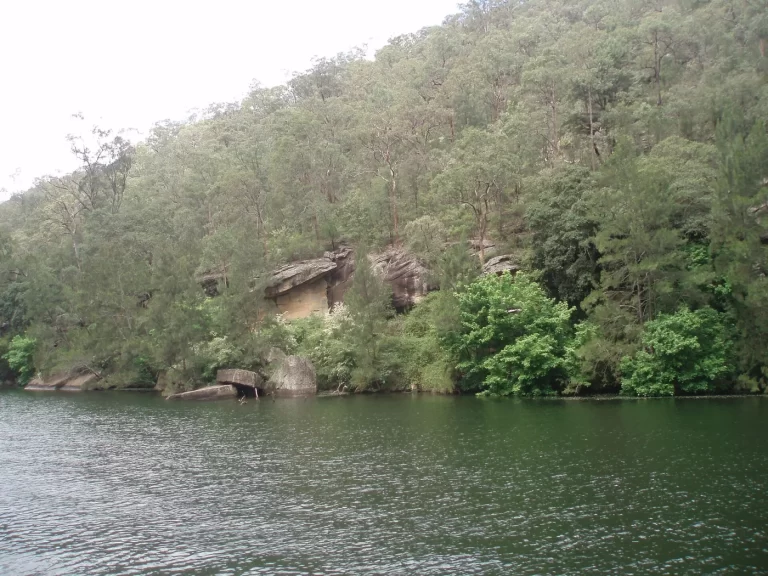
These named places are included because they explain the suburb’s real terrain. They do not prove that a particular snake occurs at a particular address.
The river corridor is Penrith’s clearest natural landmark. Tree cover, lawns, drainage and water sit beside homes, sport and busy recreation areas, creating a very different setting from the CBD.
Council includes Peach Tree Creek among its monitored waterway sites. The creek and connected drainage are part of the suburb’s real water network, even where surrounding streets feel fully urban.
Shops, garages, campuses, workshops and hospital-related sites bring security doors, loading zones and crowds. On these calls, controlled access is as important as the last sighting itself.
Do not search these spaces yourself. Use the descriptions below to give our team a clear, undisturbed starting point.
Use the house, window or upper terrace as the watching point. Do not walk down toward reeds, rockwork or a riverbank after a snake that is already moving away.
Close the immediate room, loading bay or storeroom. Keep customers clear, provide the business name and arrange an entrance that does not cross the sighting area.
Stop work in the affected zone, park machinery and nominate a supervisor or security contact. Give the building, gate, lot or field—not just the main street address.
In our published Penrith field report, a homeowner reported a brown snake moving near a deck. The account explains Harley’s assessment and removal, including why a caller’s colour description is not a final identification. Read the Penrith garden call-out report.
These are Harley’s own regional field images. They show two very different habitat settings, but neither photograph is presented as a Penrith call-out.
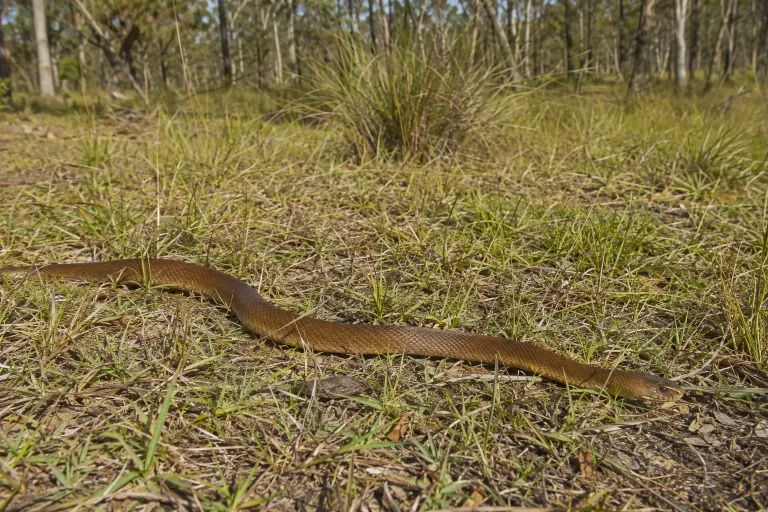
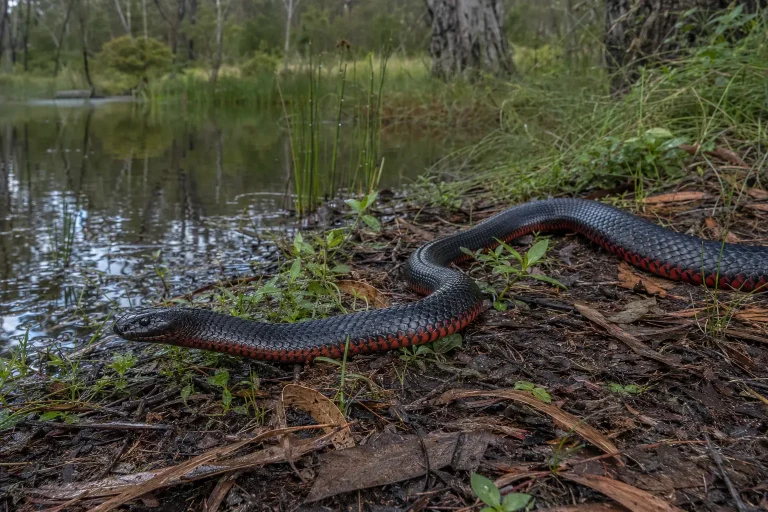
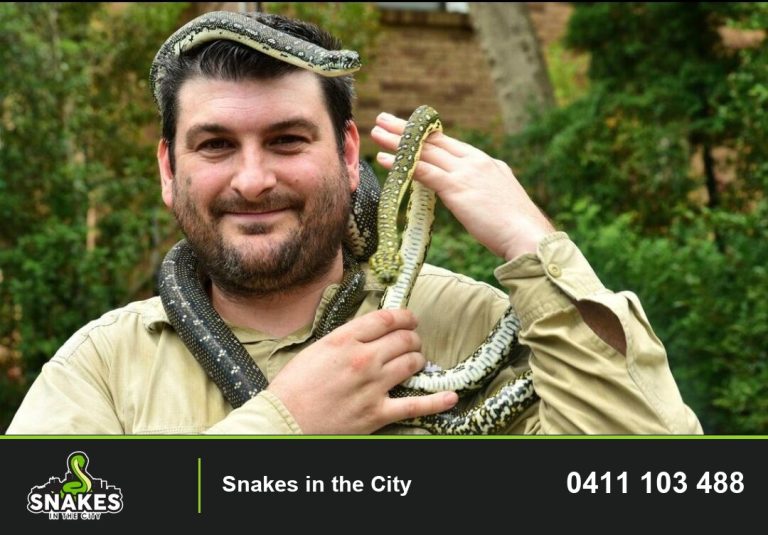
Harley Jones, Snakes in the City.
This photograph identifies the catcher who may attend. It is not a staged local sighting or a stock photograph.
Dry open ground, river and drainage habitat, and mature suburban gardens all occur within the wider Penrith district. That makes habitat a better conversation starter than colour, but still not a safe identification method.
Open ground, sheds, building edges and places with rodent activity can provide useful habitat clues. Colour is wildly variable, so a tan, grey or dark snake should never be identified from colour alone.
Creeks, wetlands, dams, drains and frog-rich gardens are the habitat clues people often associate with this species. The red flank is not always visible, especially from above or at a distance.
Mature trees, roof spaces, rockwork and sheltered gardens can suit a diamond python. It is non-venomous, but an unknown snake still needs space and should not be handled by a householder.
An unknown snake stays unknown until it is assessed properly. Natural variation, juveniles, shadows and distance make colour matching unreliable.
No normal home, garden or rural block can be guaranteed snake-free. The useful goal is better visibility, fewer concealed shelter points and less food for rodents.
These verified contacts are included for safety, not as endorsements. A human snakebite is always a 000 emergency; do not drive the patient to hospital yourself unless emergency services direct you.
Derby Street, Kingswood NSW 2747
Hospital information: (02) 4734 2000
Suspected snakebite: call 000, not the hospital switchboard.
1 Rowood Road, Prospect NSW 2148
24/7 veterinary option: See the provider’s website for contact details
Keep pets away from the snake and call the veterinary team for transport advice.
Yes. Keep the immediate area closed, stop work or public access and nominate one person with keys and site knowledge to meet the attending catcher.
No. Wetter habitat can occur around creeks, drains, ponds and shaded gardens away from the main river. A location still cannot confirm the species.
Give it room and do not go down the bank or through vegetation after it. Note the last safe landmark and tell our team which direction it travelled.
No. Maintenance can improve visibility and reduce shelter or prey, but no normal property can be guaranteed snake-free.
Give the exact address, whether it is inside or outside, the last fixed position, the safest entrance and any nearby children, pets, crowds, machinery or locked gates.
Local landscape facts were checked against: Nepean River and Tench Reserve · Peach Tree Creek · CBD, health and employment areas. Snake safety follows Healthdirect and NSW Environment. Local details reviewed 28 August 2026.
These links connect Penrith with nearby service pages and its wider regional service area.
Local property, access and contact information for Emu Plains.
Local property, access and contact information for Kingswood.
Local property, access and contact information for Glenmore Park.
Regional guide: View Penrith and the Lower Blue Mountains service area.
This update adds practical detail for the places, access conditions and property types that distinguish this suburb. It complements the safety and service information already on this page.
Penrith City Council identifies the Nepean River, Wianamatta–South Creek and numerous tributaries as part of the LGA's waterway network, and monitors Peach Tree Creek in Penrith. Along the Nepean and around Tench Reserve, vegetated banks and recreation meet businesses, homes and busy paths. In the CBD, the main challenges are access, crowds, loading areas and complex buildings.
A river-adjacent call needs a clear landmark and safe approach. A CBD call needs a building, level and manager. A school or health precinct needs the site's incident lead. A warehouse needs a bay, aisle or dock and stopped traffic around the last-seen point.
Eastern brown snakes and red-bellied black snakes occur in the wider Penrith region. Dry storage and open ground can differ greatly from creek, drain and pond habitat, but those conditions do not identify a snake. Diamond pythons and other reptiles may also be encountered across greater Sydney. Distance is the correct response to all of them.
Riverside yards and parks: Do not follow into reeds, rocks or the bank. Use a track, jetty, car park or reserve landmark.
CBD and mixed-use buildings: Clear the foyer, shop, basement bay or loading zone and organise keys and a contact.
Education and construction sites: Stop movement through the affected section, preserve the last-seen location and prevent bystanders gathering.
Home storage: Leave timber, sheets, garden waste and pool equipment untouched until the situation is assessed.
Keep your distance, bring people and pets away and call Snakes in the City with the last safe location. If anyone may have been bitten, call 000 immediately.
.jpg)