24/7 availability · Cost-effective snake removal · No weekend or public-holiday loading · Greater Sydney · How we arrange attendance
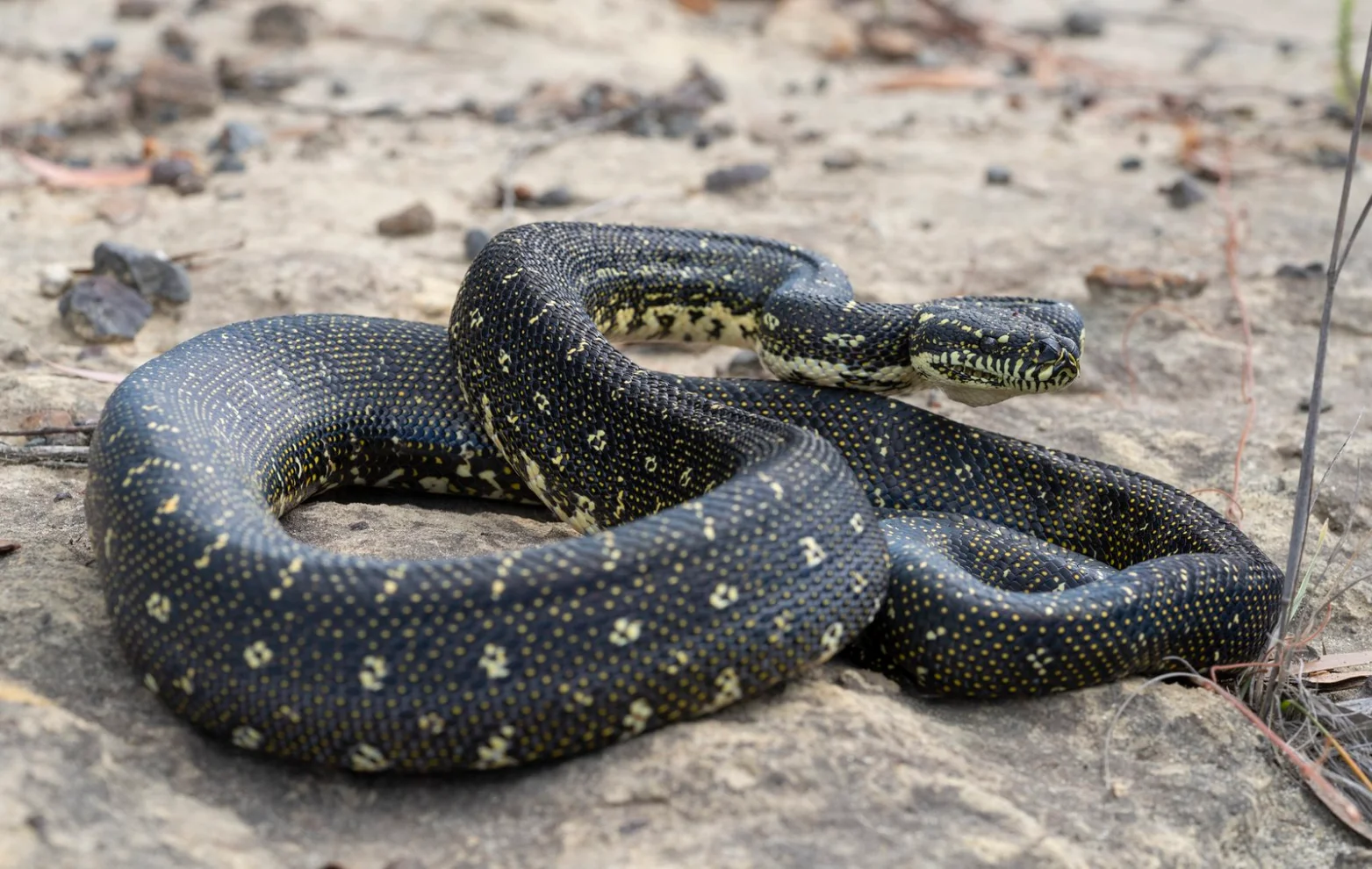
Illustrative species image · not a call-out photograph
Significance to Humans
Are Diamond Pythons venomous? No. Diamond Pythons (Morelia spilota spilota) are non-venomous, but can inflict a painful bite. The Australian Museum lists a size range of 2–3 metres and describes mostly nocturnal habits, with daytime basking in trees and occasional use of roofs and rafters.
Bites may cause substantial lacerations or punctures. Keep people and pets clear and do not attempt to handle an unidentified snake. For help, call 0411 103 488.
They are quite variable in colour and pattern, typically being predominantly dark olive to black in colour with most dorsal scales having a yellow (or cream) spot in the centre (hence spilota, meaning spotted). Along the body and tail are numerous clusters of yellow or cream scales that form ‘rosettes’ that look a bit like diamonds (hence their common name). The underside is white, cream or even yellowish in colour, although it is often spotted with black.
The average adult size of this subspecies is usually about 2 m (6.6 ft) in total length, although they are known to reach maximum total lengths of about 3 m (9.8 ft), with very rare specimens recorded at up to 4 m (13 ft). They also are known for living in the forests of New South Wales.
Head is distinct from the neck. Deeply pitted scales (infralabials) along bottom jaw and to a lesser extent the upper jaw (supralabials) with small “granular scattered scales on top of the head. Midbody scales in 40 – 60 rows.
Average Length
Around 2.1 metres but large specimens exceed 3 meters.
Habitat in Sydney Region
Occupies all habitats from rainforest, wet sclerophyll forests and dry woodland through to suburban backyards and the periphery of highly disturbed farmland.
General Habits
Mostly nocturnal and slow-moving, Diamond Pythons may also bask in trees during the day. They sometimes shelter in roofs and rafters. Keep pets away and do not approach or handle a python.
Diet
Mostly mammals such as rodents, possums etc; also some reptiles, birds & frogs
Local distribution
Diamond Pythons occur in coastal New South Wales, including Sydney bushland and national parks. Our documented Threlfall Street, Eastwood call-out provides one suburban example; it does not establish their presence or abundance in every Sydney suburb.
Around the Home
Will utilise all above ground environs such as roof and wall cavities, exposed beams of verandahs and pergolas, sheds and garages. Often resides in the heavy foliage of trees and shrubs. At ground level will utilize dense vegetation, miscellaneous large ground litter such as stored building materials and accumulated garden debris.
Recent Sydney Diamond Python call-out — Eastwood
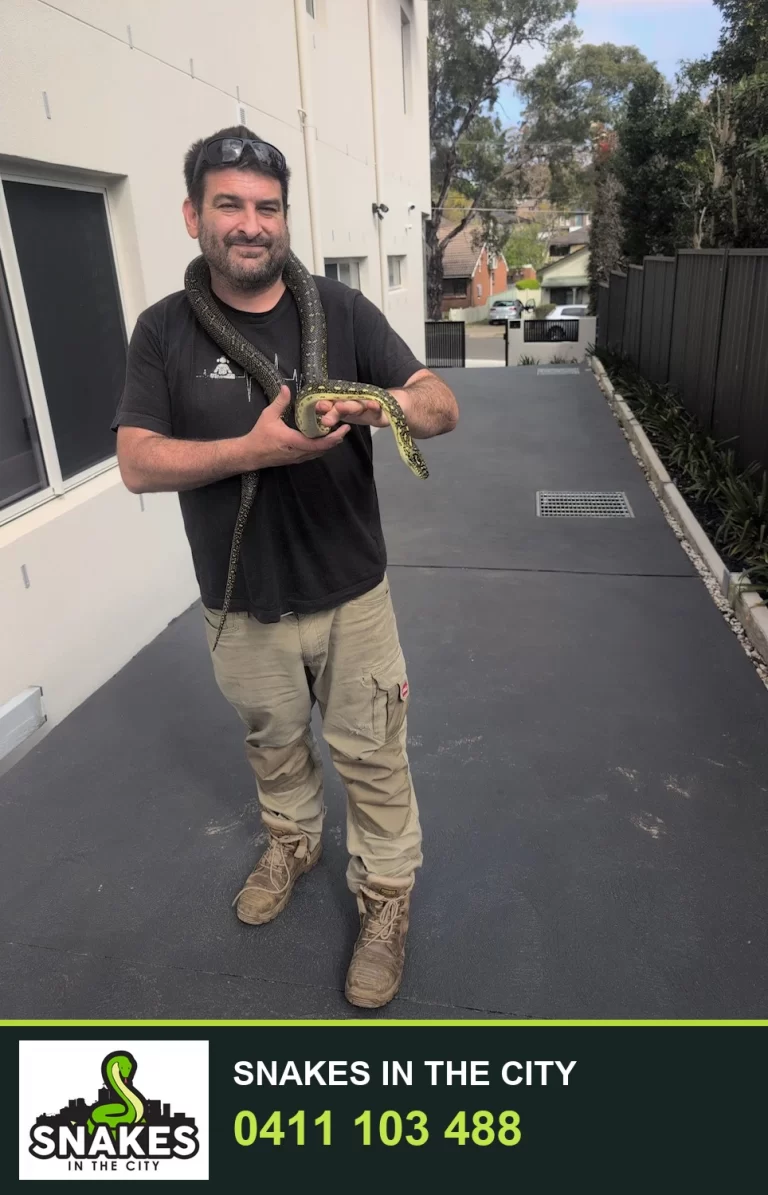
A Snakes in the City catcher with the python from the Eastwood call-out. Professional handling pictured; do not attempt to handle a snake.
Builders on Threlfall Street in Eastwood found a Diamond Python and called Snakes in the City. A catcher attended, secured the snake and humanely relocated it. Read the full Eastwood Diamond Python call-out for the field story and safety advice.
Python removal in Sydney
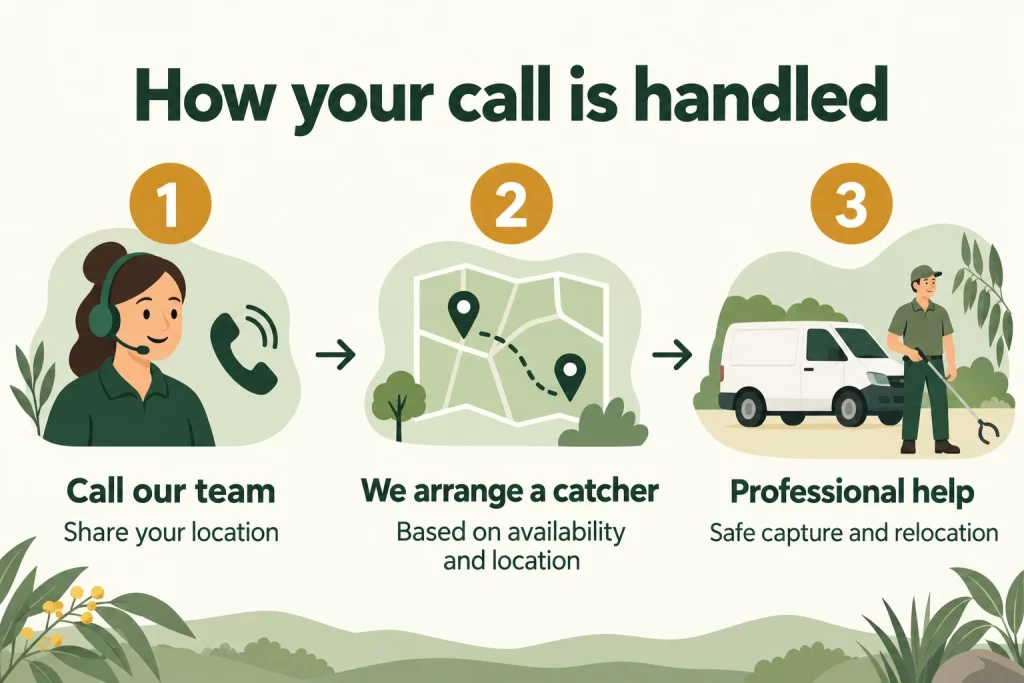
If a python is inside a building, trapped or close to people or pets, keep clear and call 0411 103 488. Do not attempt to lift or move it. Our back office checks available catchers and their known locations to arrange professional capture and humane relocation.
Need a snake catcher in Sydney? Snakes in the City provides licensed snake removal. Call 0411 103 488 any time with the address so we can confirm catcher availability and give you an estimated arrival time.
Snake safety at a glance
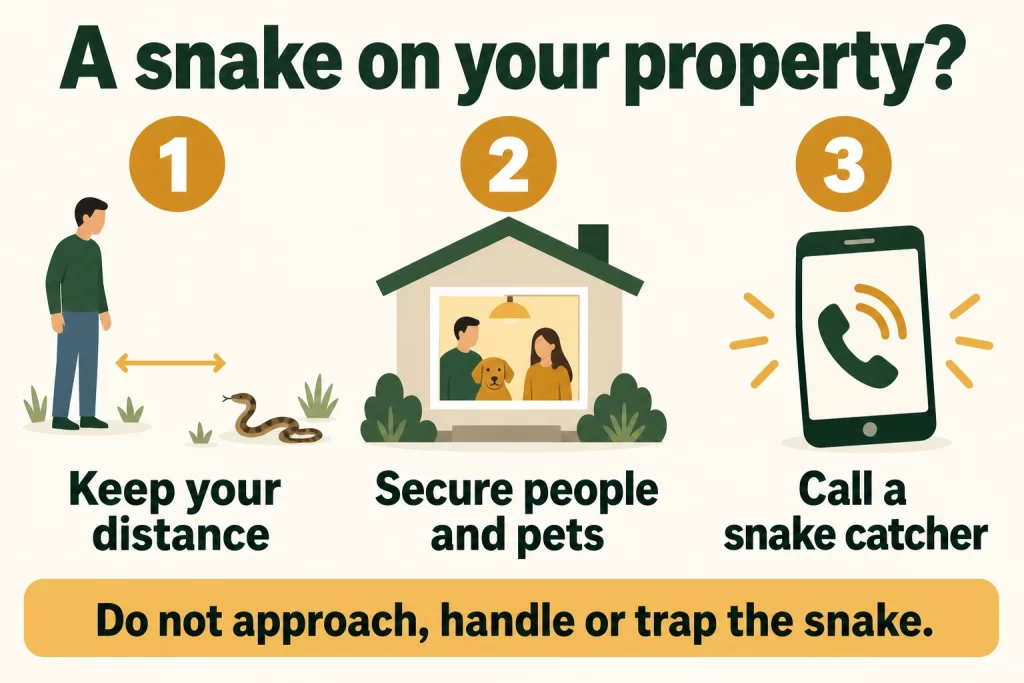
A snake on your property?
Keep your distance, secure people and pets, and call a professional snake catcher. Do not approach, handle or trap the snake.
How your call is handled
Our office takes your location and arranges an available catcher. Allocation depends on availability and location.